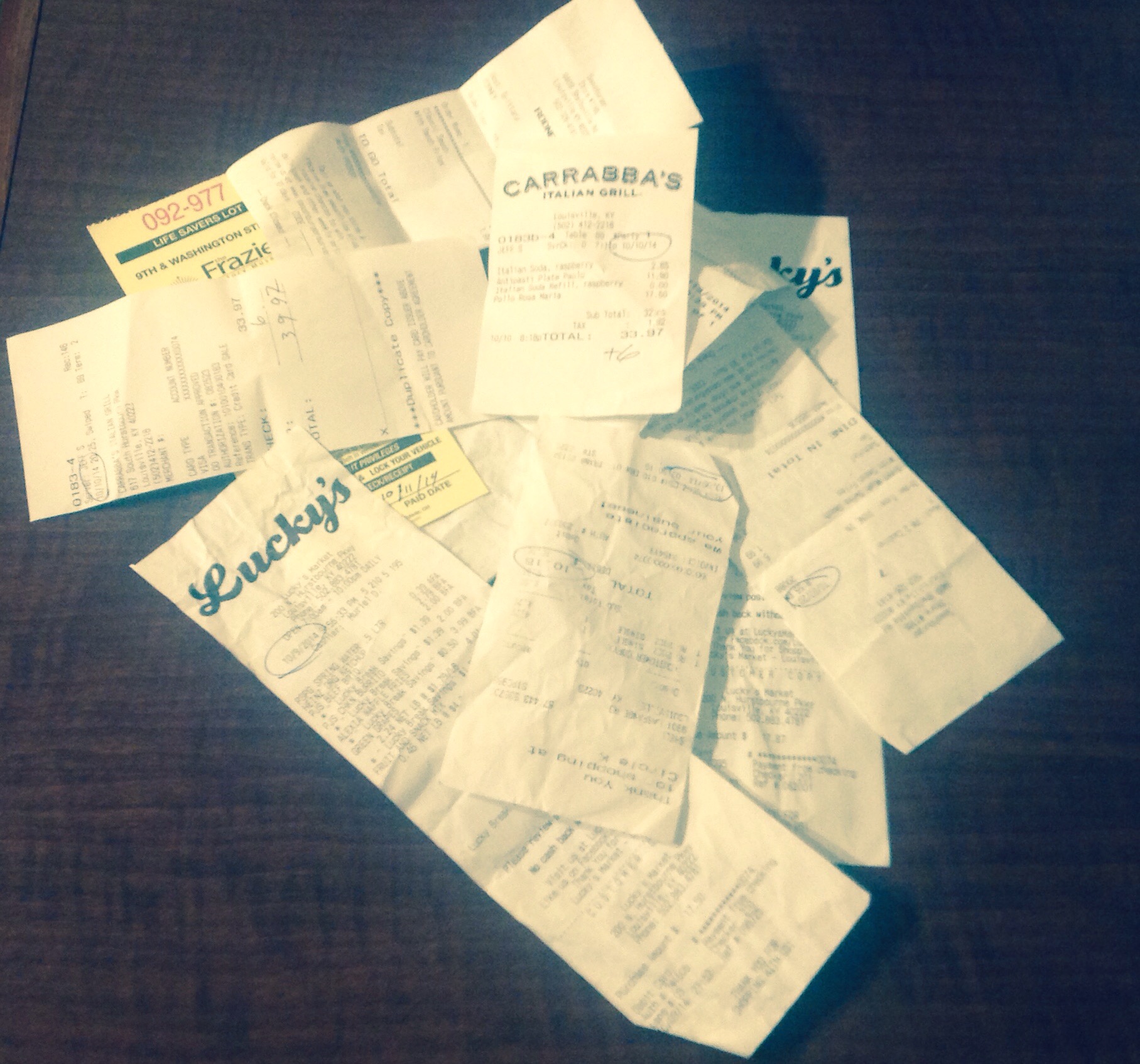
Rodney, I have a question about your expense report.
Yeah, I thought you might.
You wanna explain this?
Sure, I noticed in the company handbook that if you go on a business trip and stay with friends you can use the money you saved from the hotel to buy something for the person whose house you stayed at.
So, what did you buy?
I bought them a vacuum. It’s a little more than a hotel stay for that week would have been so I only expensed the portion that would have been the cost of a week at the Marriott.
Do it again and you’re fired.
It took me a long time to figure out how I screwed this up. At the time, much earlier in my career, I was sure that I was right. I even went to Human Resources because my manager was threatening to fire me for following the company handbook.
My current company has a fairly typical expense policy. They figure “about” $10 for breakfast, “about” $10 for lunch and “about” $15 for dinner. For a total of $35 / day for food.
I try to make it a policy never to spend over $30. Maybe in a ten day trip I might have one day where I use the entire $35, but most days, I want to keep it between $0 and $30. That’s actually not hard to do. The hotel I’m staying at has a complimentary breakfast, so that meal is taken care of.
I’m staying at a Marriott Residence Inn, and for much of my visit, I’m the only out-of-towner from my company. So, I end up cooking several nights. When we have gone out, often one of the executives picks up the check. Even then, I order mid-menu or lower.
Before I explain why I behave this way (and you probably should too) one more story of how I screwed up on this. Our team went out to eat at Sizzler restaurant. It’s popular on the west coast. It has a pretty good salad bar, but you can also order entrees. My boss was taking his team out to eat for lunch. My younger, dumber self ordered steak and lobster.
I cringe even writing that line. Fortunately, he understood I was young and dumb and didn’t say anything, but I’m positive he noticed.
So, why not? Why not spend the maximum daily food expense? Why not expense a vacuum cleaner instead of just buying my hosts a nice dinner and calling it good? Why not order from the top half of the menu instead of the bottom?
Because, unless your job involves being in the restaurant industry, you aren’t getting paid for your food choices. You get zero bonus points for ordering an expensive meal. You could get major negative points for doing so. You have a travel budget so that you can go to whatever far off location the company needs you and conduct actual company business, not so you can go eat at fancy restaurants.
We have a client named Tammi. Tammi spends time at our site helping our agents learn the client’s software. Tammi is good at her job, but the thing that most people will tell you about her is that she spends way too much time planning her lunch and dinner locations.
You don’t want people to think of you as “That guy who worries more about what restaurant he’s going to than his job.” Don’t commit any unforced errors. In other words, don’t give people a reason to think you are overly concerned with squeezing every penny out of your expense report.
And given the choice, don’t expense a vacuum cleaner. . .ever.
Rodney M Bliss is an author, columnist and IT Consultant. His blog updates every weekday at 7:00 AM Mountain Time. He lives in Pleasant Grove, UT with his lovely wife, thirteen children and one, soon to be two grandchildren.
Follow him on
Twitter (@rodneymbliss)
Facebook (www.facebook.com/rbliss)
LinkedIn (www.LinkedIn.com/in/rbliss)
or email him at rbliss at msn dot com
Tell your friends about this!

Here’s where I spent part of my Saturday.

You might not recognize the name of the company.

Hillerich and Bradsbry Company? Who are they and why do they have a really, really big bat in front of their factory? Well, technically, it’s front of their factory and museum. I’ll bet if you’re a baseball fan, you’ve always wanted to tour the Hillerich and Bradsbry museum, huh?
Here’s a better picture of the entrance.

As any of my readers who are baseball buffs know, Hillerich and Brandsbry is the company that makes Louisville Slugger baseball bats. And on Saturday, I got to tour their factory and museum. . .and it was awesome.
Those of you who have read my poor scribblings for awhile know that my three great loves are my lovely wife, my 13 children (and one grandchild) and baseball. (The Four Most Exciting Words In Sports.)
First, the factory.
Pictures weren’t allowed during the factory tour, but this view of the factory is visible from the hallway.

The tour started with a special treat. Saturday the museum was celebrating Ted Williams day. Ted Williams was the last major league baseball player to end the season with better than a .400 batting average, hitting .407 in 1953. A feat that not even the steroid era could match.
Our factory tour started out with a short book reading by Ted William’s daughter, Claudia.
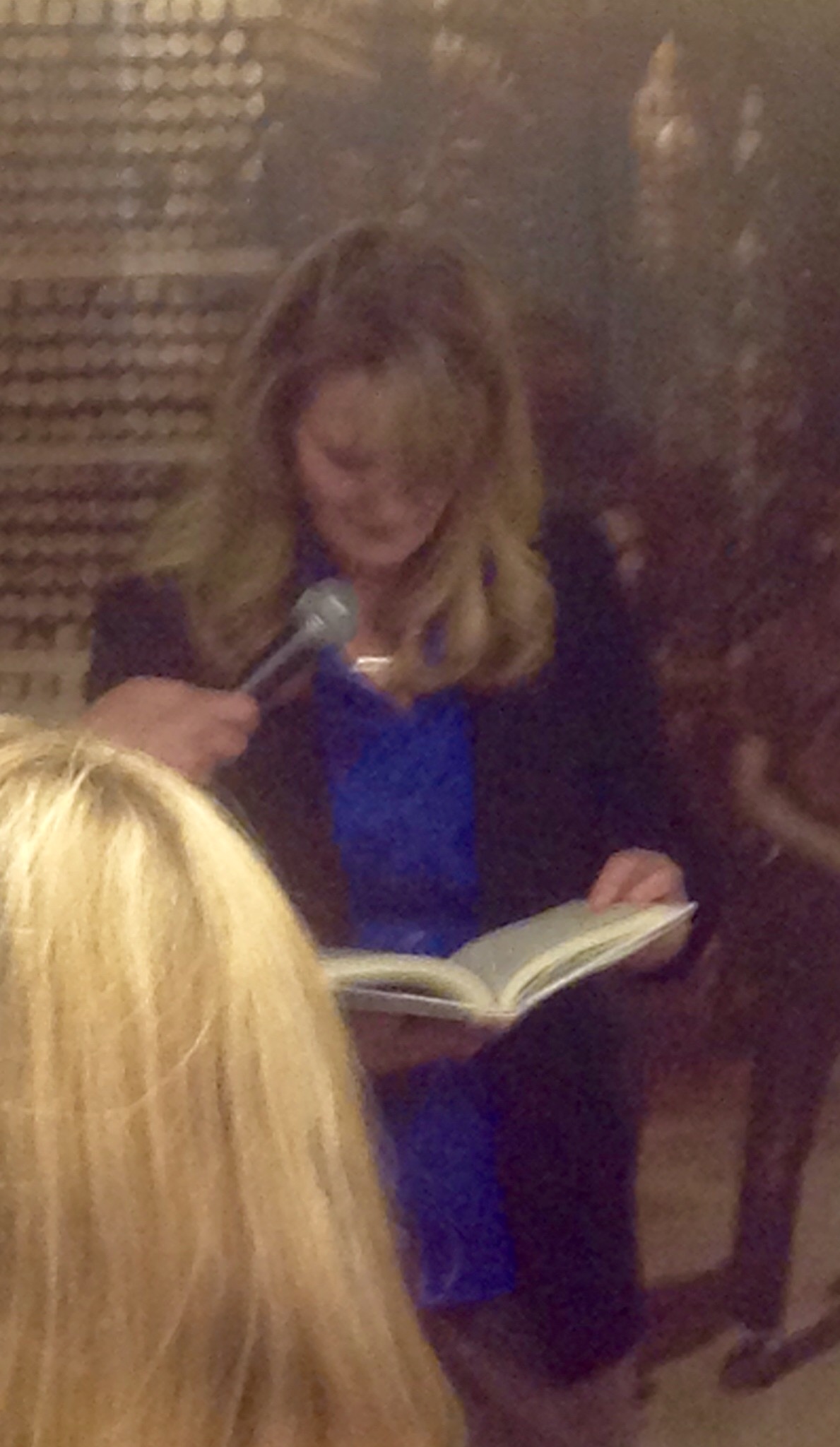
She read an funny anecdote about meeting President George HW Bush with her dad.
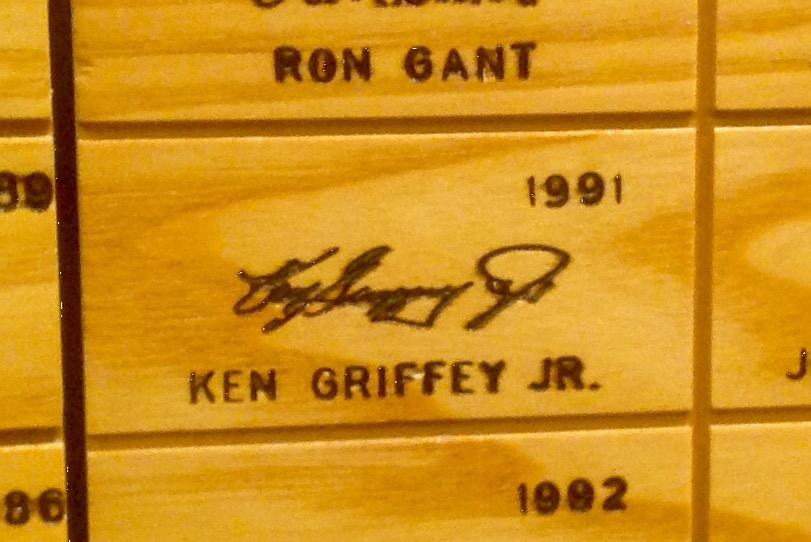
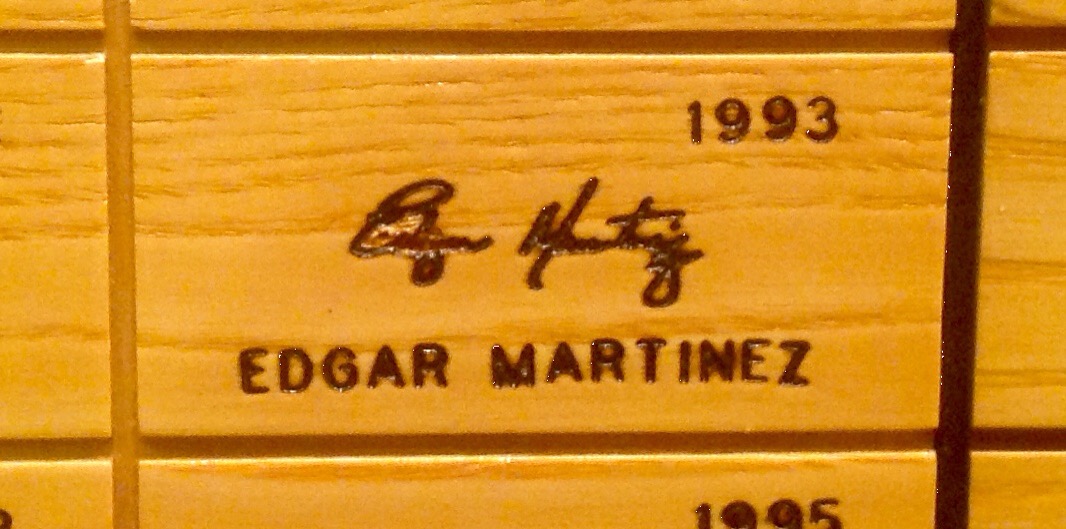
The tour was fascinating. Every Louisville slugger ever used in the major leagues has come out of that factory. Millions of baseball bats, thousands of home runs, every home run that Ken Griffey Jr, or Edgar Martinez were hit with bats from that factory.
George Sisler, who set the record for most hits in a season (257) in 1920 used Louisville Sluggers. The record stood for 84 years, until Ichiro of the Seattle Mariners broke it in 2004 with 262.
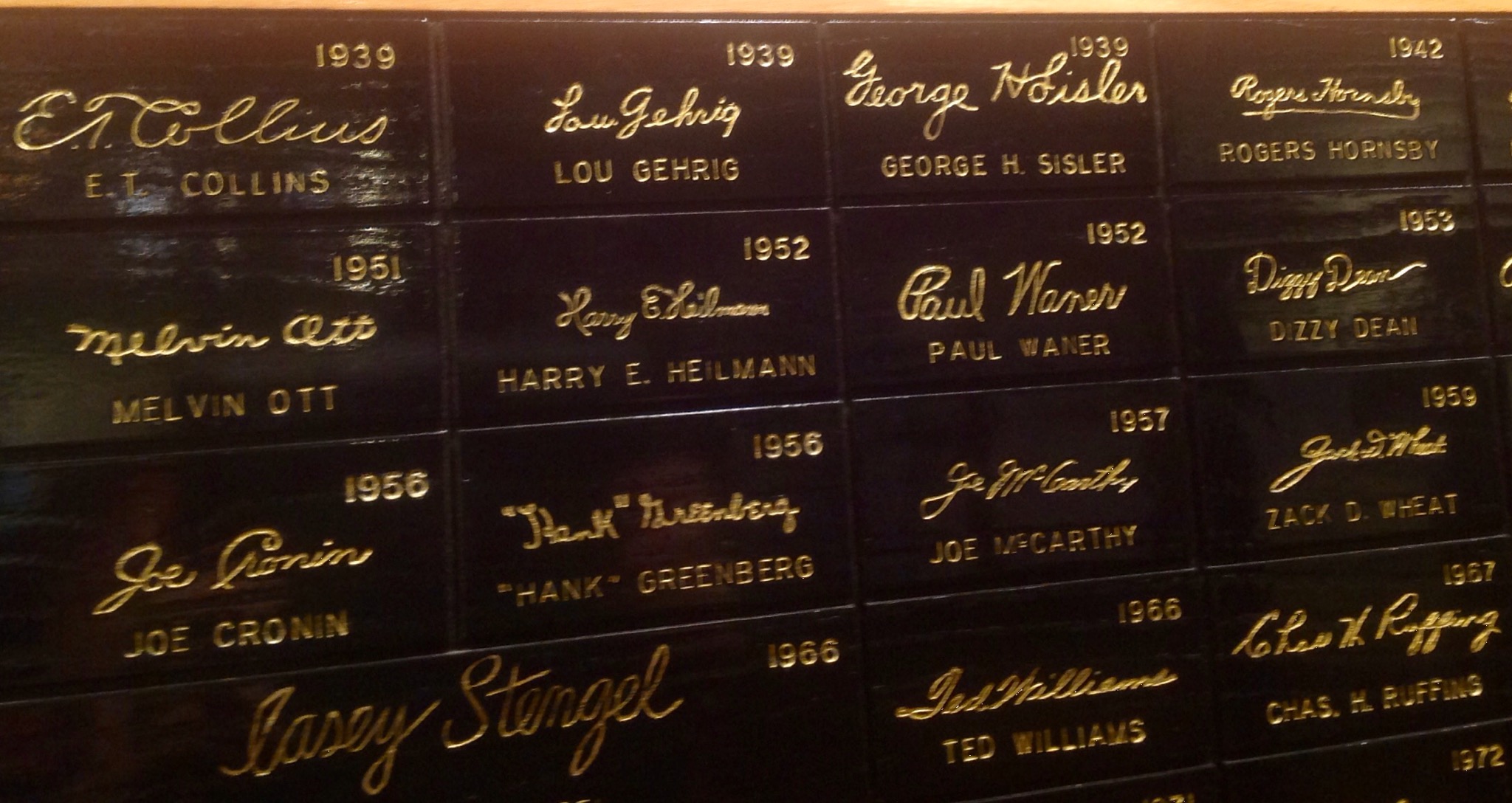
As a baseball fan it was fun to be able to take some of the “nubs” that get cut off the bats during the manufacturing process.

As cool as the factory was, the museum was better.
The Museum
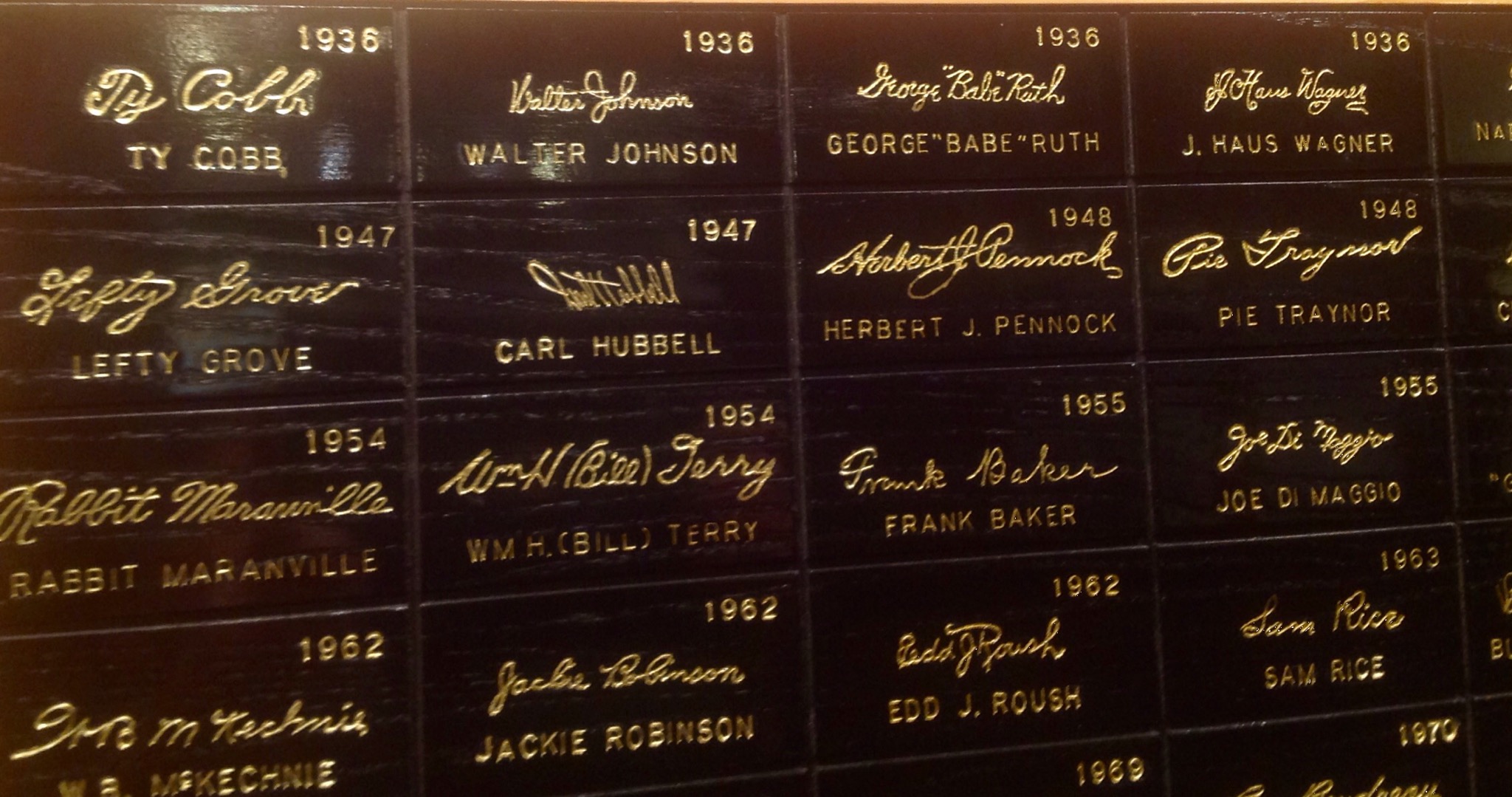
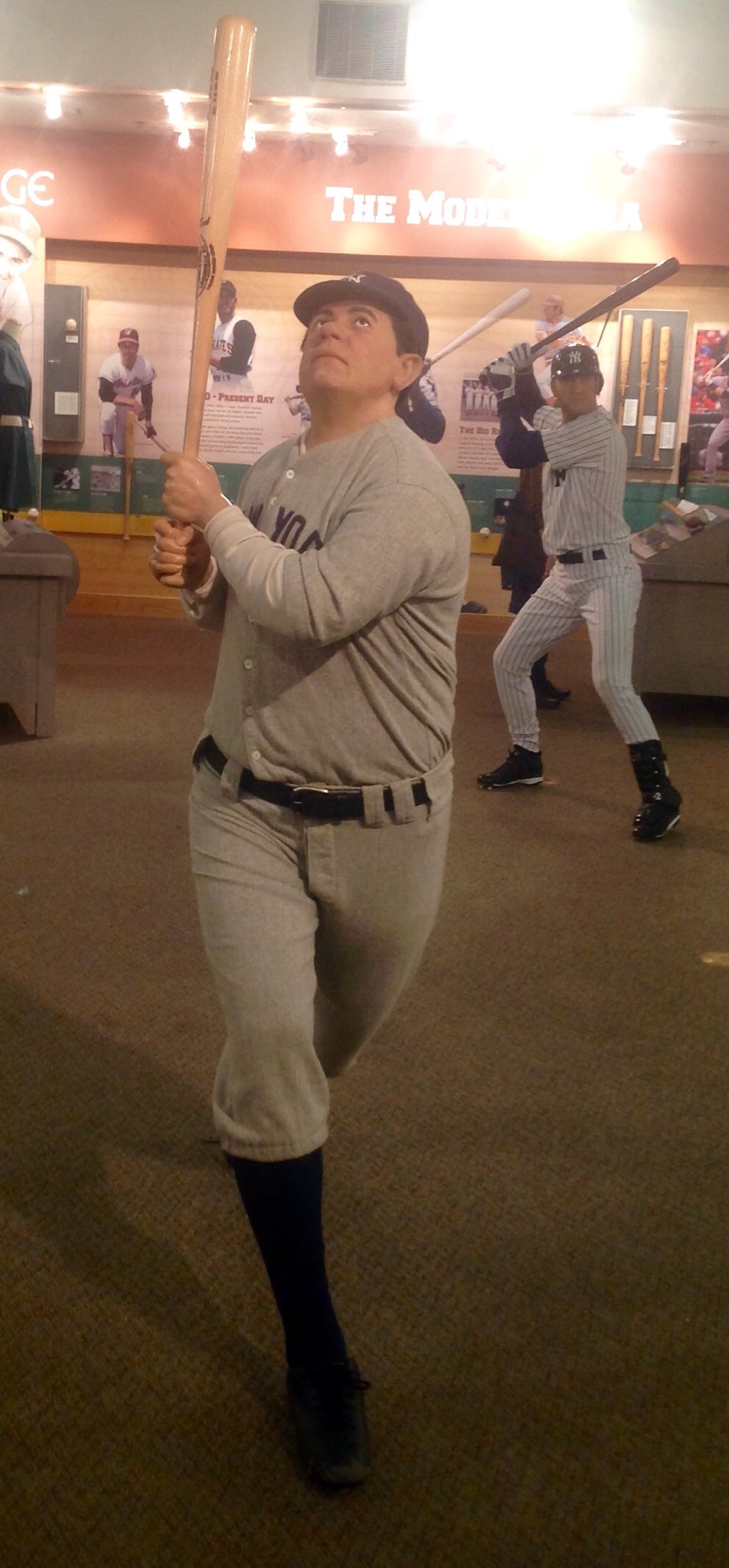
Because as impressive as the other names I mentioned were, one of the other players to use Louisville Slugger baseball bats was George Ruth. Folks called him Babe.
There’s a lifesized statue of him inside.
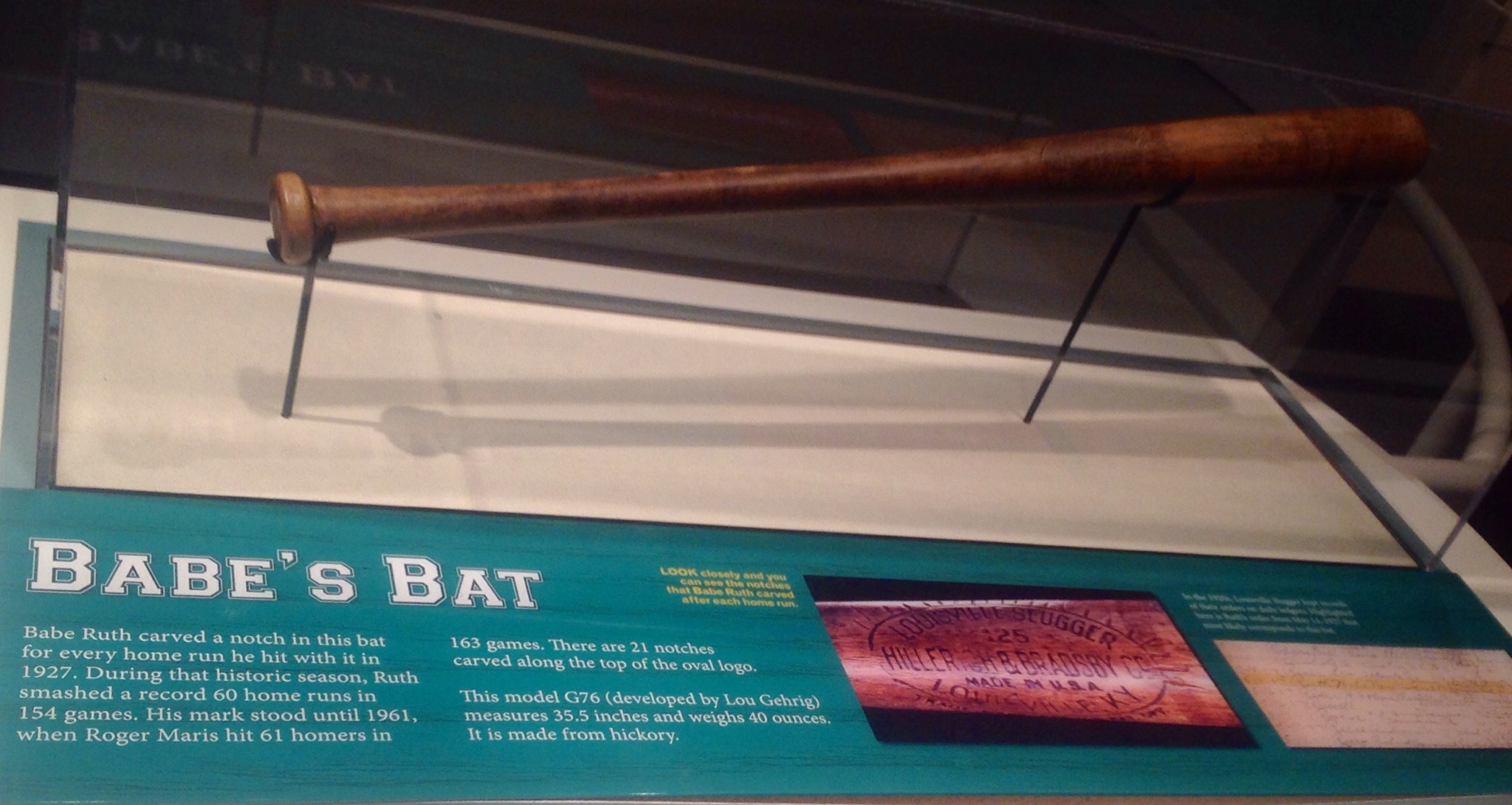
Anyone can put up a mannequin, but the museum had one of his actual bats.
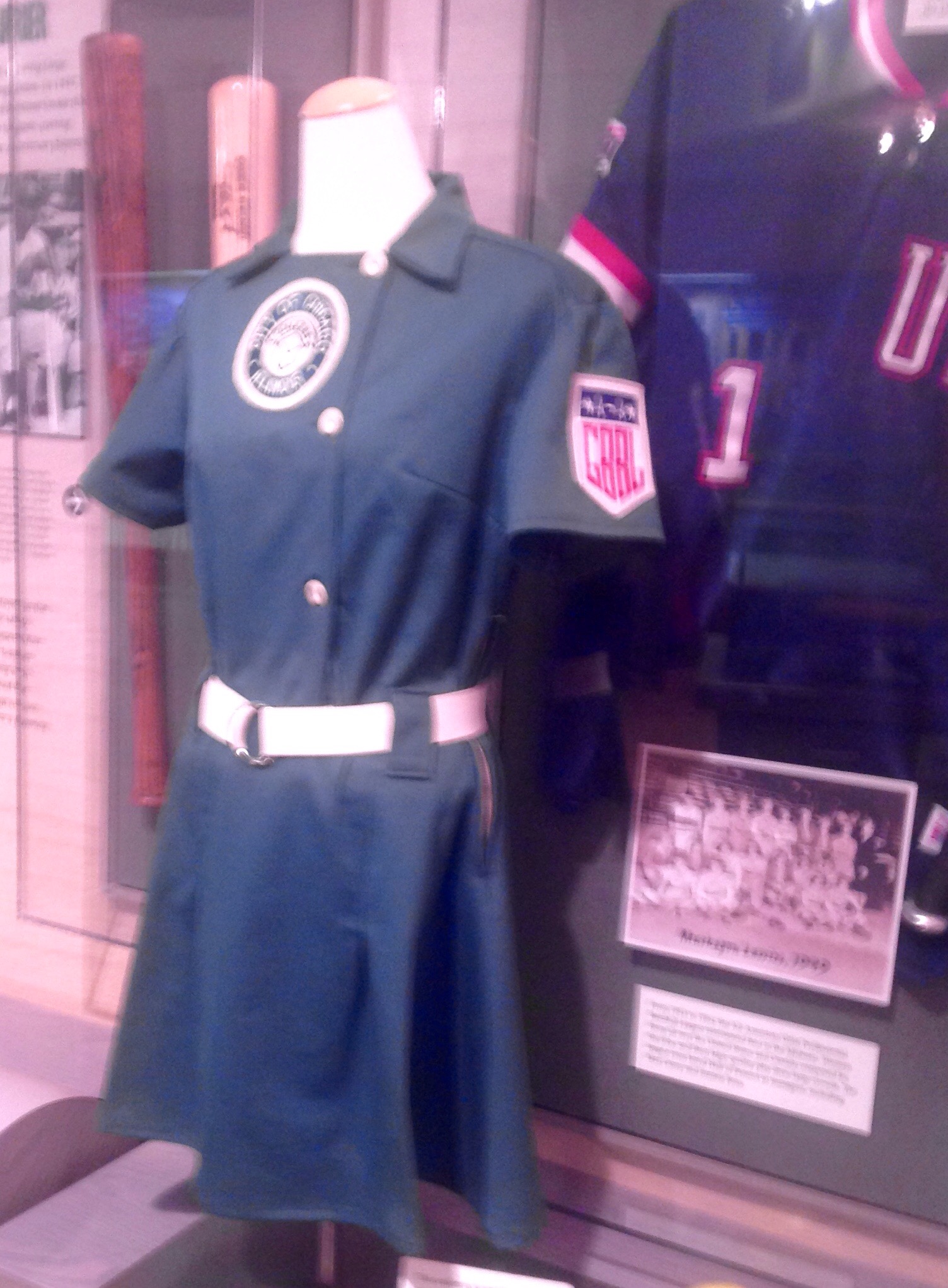
The museum also had general baseball memoribilia, including this original uniform from the All American Girls Professional Baseball League, made famous in the 1992 film “A League Of Their Own.”
As you might expect in a baseball bat museum there were plenty of baseball bats. Including the very first baseball bat that Hillerich and Bradsbry ever made for a ball player named Pete Browning.
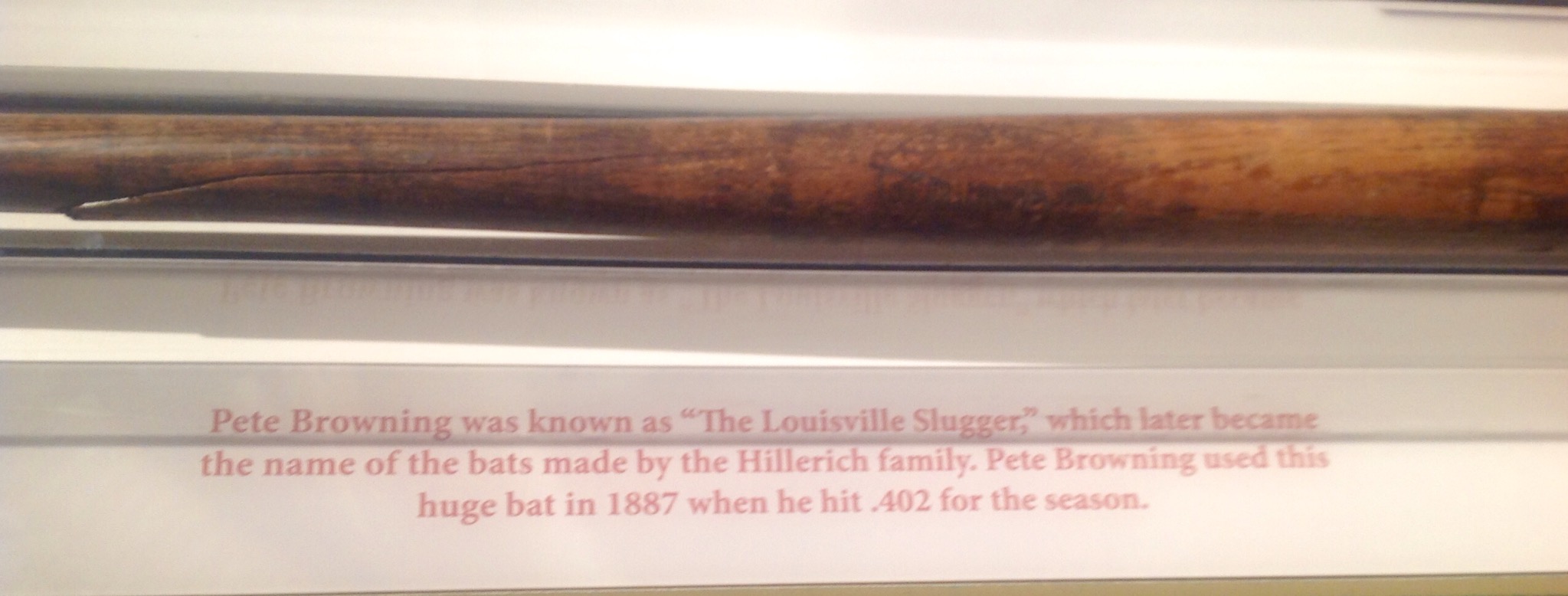
Browning had a nickname. . he was known as the Louisville Slugger.
Rodney M Bliss is an author, columnist and IT Consultant. His blog updates every weekday at 7:00 AM Mountain Time. He lives in Pleasant Grove, UT with his lovely wife, thirteen children and one grandchild.
Follow him on
Twitter (@rodneymbliss)
Facebook (www.facebook.com/rbliss)
LinkedIn (www.LinkedIn.com/in/rbliss)
or email him at rbliss at msn dot com
Tell your friends about this!
You pass.
I should have been excited. For two months I’d been working with my team to prepare for a client audit. Normally our security team travels to our remote locations for the security audit.
To prepare for an audit, I have to work with about a half dozen different teams; desktop, network, security, facilities, account management, email, identity management.
To pass an audit, every team needs to complete a series of pre-audit tasks. (Man, does this sound boring as I write it.) Anyway, it wasn’t boring because I arrived the day before the audit in Kentucky and every single team still had pre-audit tasks that were not yet complete. I didn’t have a single team that I could mark as 100% done.
Our project has been a rush job from the beginning. Normally it takes 90-120 days to bring up a new call center. With this one we had 75 days. And they kept carving pieces off my schedule.
First, it took the contracts team an extra 10 days to get the contract for the building signed. That time seems like it’s not that big a deal because it comes off at the beginning of the project. You are still weeks and weeks away from the go live dates. But, like the last seat in a chain of roller coaster cars, you know that the bottom is going to drop out at some point.
Then, the previous tenant took an extra week to vacate the building. That might not have seemed like a problem, except the previous tenant was also one of out clients in another location. If we played hardball in Kentucky, we’d have to make up for it in another state.
Since we build call centers all the time, we have a pattern. We know what needs to be done. One of the items that always gives us headaches is turnstiles. We have a subway style turnstile that you have to go through to get onto the production floor. The turnstile is controlled by a card reader.
We ordered this turnstile weeks and weeks before we were going to need it. We had been burned too many times in the past with delays related to turnstiles.
Yesterday was our audit. Guess which pieces still wasn’t done as our clients came walking through the door? They almost turned around and walked out.
Clearly we came too early. You’re not ready.
Wait, let’s go and look at the classrooms and we’ll give Tony a chance to resolve this little glitch.
I gave Tony a “You’re killing me” look as the client headed down the hall. The day before the audit, our five classrooms were two days away from being ready to use. They were full of boxes, we had headsets still in packages. There was bits and pieces of wire, packaging, drywall, and any number of other things scattered around.
As the project manager, I don’t have a lot of skills (The Day I Found Out I Had No Skills.) So, I did lots of the unskilled labor. I swept, dusted, vacuumed, hauled trash.
All the time as I was running a vacuum around another set of tables, in the back of my mind was my list of 20 items that still needed to be done. And the only item on my list I could accomplish myself was cleaning the room.
Slowly as the evening turned into night and night into predawn, we reached a point where I knew we were going to make it. Well, I thought I knew because Tony told me the turnstiles were done.
At 6:30 AM I went home to my hotel, showered and changed into a coat and tie.
I probably would have done better during the audit if I hadn’t been running on zero sleep and a cross-country flight the day before.
When we came back from the classrooms, Tony had the turnstiles working.
Okay, that’s good enough. You pass. You can start your training classes next week.
I should have been excited. I should have felt like celebrating. Instead all I felt like was sleeping.
Rodney M Bliss is an author, columnist and IT Consultant. His blog updates every weekday at 7:00 AM Mountain Time. He lives in Pleasant Grove, UT with his lovely wife, thirteen children and one grandchild.
Follow him on
Twitter (@rodneymbliss)
Facebook (www.facebook.com/rbliss)
LinkedIn (www.LinkedIn.com/in/rbliss)
or email him at rbliss at msn dot com
Tell your friends about this!
“Rodney, you’re an IT guy. What is “the cloud.”
What do you mean?
I mean when a company says they store your data in “the cloud” where does it get stored? is it actually stored. . .I don’t know. . .in the air? Like a cloud?”
My friend Darren is a banker. He’s a very smart guy, currently working on his MBA. So, his question wasn’t from lack of intelligence. He’d seen the ads and didn’t understand “the cloud.”
Here’s a really simple definition.
The cloud = The internet
Cloud providers will explain that “No, it’s really not the internet because with our product, you can host your own cloud, and unlike the internet “the cloud” has protections and safeguards” and blah, blah, blah. It’s easiest to think of it as the Internet. And there isn’t one cloud, there are many. Your data is not stored in the air. It is stored on a server somewhere. More likely a series of servers scattered across multiple data centers to provide redundancy. What makes a cloud different than the internet at large is that a cloud has a login and a password. If you want to get to a “the cloud” you need a login and a password from your provider. Also, you share the cloud with other people, but protections keep you from seeing their data and keep them from seeing yours. The cloud has some huge advantages and some pretty serious potential pitfalls.
Strength
The real strength of the cloud and the reason that companies are moving to it is ease of use. If your data is stored in the cloud, you can typically get it from anywhere. Sharing data is easy. No more emailing a copy of a document to ten people and having ten separate replies. You can put your document on a cloud location and give everyone access to that cloud. Also, it’s really, really easy to expand the space you need. Your provider can expand your amount of free space on the fly.
Weakness
Security. Cloud providers will disagree with me strongly. In fact, they will tout their security as a benefit rather than a drawback. And in some ways they are correct. They are going to typically have state of the art encryption and security software and update it multiple times per day. However, if they are a USA based company they are subject to some laws, including The Patriot Act that expose your data to government spying. A friend from Microsoft was trying to get me to move our corporate email to the cloud.
Rodney, why don’t you want to go to online storage for your email?
Security.
But, we are totally secure. we can secure our data better than you can in your datacenter.
That’s true. But, tell me, if the government came to you and said, “We want you to give us access to that company’s email . AND we do not want you to inform the company we are watching,” would you do it?
At this point, my friend got kind of quiet.
Of course you would. Legally, you have to. We have never turned down a Discovery request, but I want to know who is looking at my executive’s email.
My mother asked me if she should move her little 6 person financial investment firm to the cloud for email.
Sure, Mom. It will save you money by not having to hire someone in to maintain an on-site Exchange server.
But, what about security?
Don’t worry about it. In your case, you’re a small enough firm that the government isn’t going to be interested in snooping through your email.
But, for a large corporation? Yeah, the government might come knocking. And according to the patriot act, your cloud provider has to give them access. Ironically, the Patriot Act is for our own safety. But, we give up some privacy in exchange for that safety.
I explained to my friend that no, his data wasn’t floating in space somewhere. Although when you consider you use ETHERnet to access your CLOUD, his confusion is understandable.
Rodney M Bliss is an author, columnist and IT Consultant. His blog updates every weekday at 7:00 AM Mountain Time. He lives in Pleasant Grove, UT with his lovely wife, thirteen children and one grandchild.
Follow him on
Twitter (@rodneymbliss)
Facebook (www.facebook.com/rbliss)
LinkedIn (www.LinkedIn.com/in/rbliss)
or email him at rbliss at msn dot com
Tell your friends about this!


I realized yesterday that I’m starting to get the hang of this cloud computing. The pictures above are yesterday’s sunset in Louisville, Kentucky. I spent about 7 hours yesterday wafting through those clouds. Well, these ones at the end, and the clouds between Louisville and Salt Lake City with a completely unnecessary stop in Detroit.
Okay, it was necessary to get from one plane to the next, but did I have to deplane at gate 22 and need to board a plane at gate 78 twenty minutes later? Did you realize that Detroit’s terminal is a mile long? After I walked the majority of that I realized they have a train. . .for a single terminal. . .a TRAIN.
Detroit gets a bad rap. I’m sure it’s a wonderful city. But, as we were walking off the plane I could see that the plane was being met by two of Detroit’s finest with a warrant and a picture.
Anyway, landing in Louisville, where we are opening a new call center, I was reminded just how much cloud computing I’ve been doing lately. (Five Percent Travel.)
Tomorrow, I’ll explain the other type of cloud computing. Today I just want to look at the clouds.
Tell your friends about this!
Summer is coming to a close. This is really my favorite time of year. However, this year I’m facing the coming fall with a major regret.
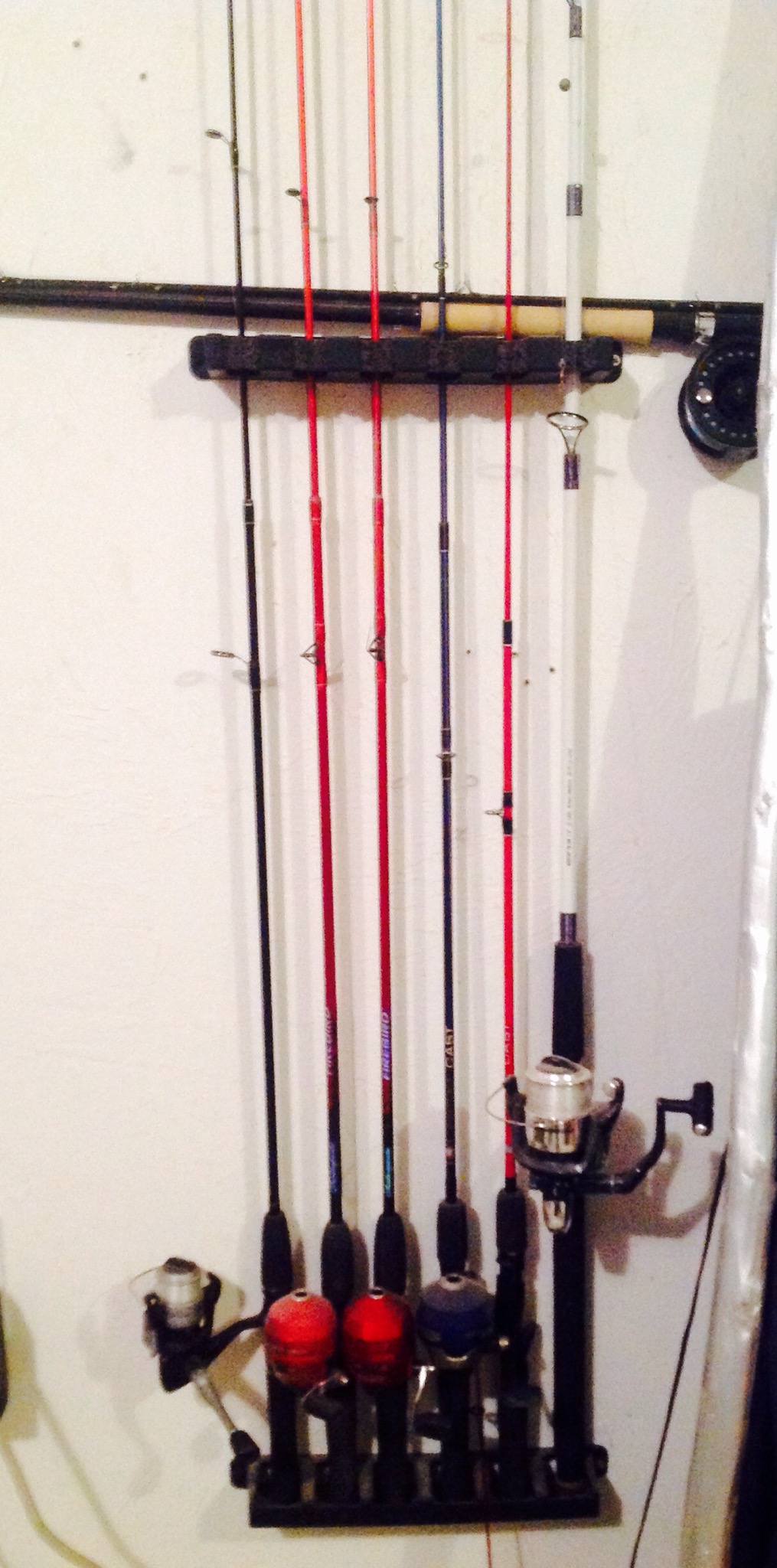
Not once did I get to see my pole tip bend as a fish literally took the bait. Not a single afternoon spent on a lakeshore watching a red and white bobber drift with the current waiting on a rainbow.
What I have been doing this summer is lots of working and lots of traveling. And that’s a good thing.
I went to work for a major telecommunication company back in March. The ramp up was pretty intense. And then the travel was substantial and has become a little nuts. I’m gone ten days this month and ten days in November.
Some people got to go fishing with my gear. My son and son-in-law had some fish tales. They attended a family reunion that I had to miss because of work. Two years ago it was at that same family reunion that my then daughter’s boyfriend asked me if he could marry my daughter. And he did it about 6:00 AM while we were pulling rainbows out of a small lake. Yeah, wish I could have been fishing.
I’ve always thought looking for work resembled fishing. Maybe it’s because I love to fish and I hate to look for work and if I can make the one seem like the other, I can’t hate it as much.
I spent nearly 13 months self-employed. Self-employed is what computer and IT guys call it rather than say unemployed. I did odd jobs. I wrote a lot. I got to spend an insane amount of time with my kids, but I also was looking for a position.
Here’s where it looks like fishing to me. When you go fishing, you take different bait. We have one bait we make at home. It’s one part diced black licorice and four parts velvita cheese. Okay, it’s not really cheese, but the fish don’t seem to care. We also have traditional power bait, and worms, and lures. You fish and you try to figure out what the fish are biting on today.
If one bait doesn’t work, you switch to something else.
The same thing happens in a job search. You try networking. You try job boards. You try placement services.
Also in fishing if the fish where you are aren’t biting, you move.
You apply locally. You apply out of state. You apply at small shops. You apply at big shops.
The advantage of the job hunt is that you can fish with multiple poles at once. Utah just changed it’s law this year. You are now allowed to fish with two poles at the same time on a regular fishing license. In the past you had to pay an additional fee. But, in a job search you can fish with as many poles as you want, in as many locations as you want.
Often if you spend very much time at the same spot on the lake, you start to recognize certain fish, especially the big ones. You try like crazy to land that one. Sometimes you catch fish too small to keep. I’ve had job offers that would have cost me money in higher gas to accept. You have to throw those back.
During my job search I had several lines in the water. Occasionally, in fact often, the fish would steal my bait and I’d have to restart. There were a couple of REALLY big ones that I was fishing for.
In the end, you have a catch limit of one. I found a nice one and despite some travel fatigue, I’m very happy with my choice.
Of course, not as happy as if I could have spent the summer fishing.
Rodney M Bliss is an author, columnist and IT Consultant. His blog updates every weekday at 7:00 AM Mountain Time. He lives in Pleasant Grove, UT with his lovely wife, thirteen children and one grandchild.
Follow him on
Twitter (@rodneymbliss)
Facebook (www.facebook.com/rbliss)
LinkedIn (www.LinkedIn.com/in/rbliss)
or email him at rbliss at msn dot com
Tell your friends about this!
Lud·dite
?l?d??t/
noun
a member of any of the bands of English workers who destroyed machinery, especially in cotton and woolen mills, that they believed was threatening their jobs (1811–16).
a person opposed to increased industrialization or new technology.
I didn’t realize I was in such good company. I wasn’t trying to make a statement or anything it just seemed like the right thing to do.
No, you may not have an iPod until you are at least 13 and you pay for it yourself. And I get to lock it down and keep the password. And you can only use it for an hour per day. And you have to turn it in every night.
The rules closely matched our computer rules.
All computers have passwords that kids don’t know.
Kids get 20 minutes per day of non-school work time.
Computers are in the family room with the screens facing the middle of the room
I have nine computers in my house, including my own file server and a dedicated firewall server. And my kids have to ask permission every time they want to use one. My kids are between the ages of 11 and 14. None of them have their own computer. A few have shelled out the money for iPods, but the iPods are locked down pretty tight.
They are only allowed to install apps when I specifically unlock the ability. And even then, we use my Apple ID. That means that anything they install appears on my iPad.
My kids are convinced that we are way too restrictive. By “we” I mean my lovely wife and myself. We’ve both been involved in the computer industry for 25+ years.
We really don’t care.
Our kids tell us that their friends, ALL their friends have more computer freedom than they have.
We really don’t care.
Recently I discovered that our approach to technology was not unique. I was reading a story about Steve Jobs. A reporter asked him,
Your kids must really love the iPad.
They’ve never used it. We limit their exposure to technology.
Wow. Steve Jobs didn’t let his kids have iPads? How much must THAT have stunk for his kids at school.
Hey, I just got the new iPad. Tell your dad it’s AWESOME!
Yeah.
The article went on to talk about other technology executives who limited the amount of exposure their kids had to technology. Their reasons matched up very closely with my own reasons. I understand how dangerous this stuff can be.
I don’t just mean pornography and chat rooms, and those are very real dangers. But, the fact that computers tend to stifle creativity and imagination.
I came home from work last week and there were 12 kids in my yard. Less than half were mine. They were playing a weird version of baseball/tennis/soccer. I didn’t get the actual rules, but there seemed to definitely be a rule book.
My kids would like nothing better than to get to sit in front of a computer all day and play games. But, I figure that’s why they have parents. It’s my job to understand what their needs are and then make sure those needs get met.
And sometimes you meet those needs as much by what you don’t give them as by what you do. It’s kind of cool to realize that men who understand technology better than I do came to the same realization.
Rodney M Bliss is an author, columnist and IT Consultant. His blog updates every weekday at 7:00 AM Mountain Time. He lives in Pleasant Grove, UT with his lovely wife, thirteen children and one grandchild.
Follow him on
Twitter (@rodneymbliss)
Facebook (www.facebook.com/rbliss)
LinkedIn (www.LinkedIn.com/in/rbliss)
or email him at rbliss at msn dot com
Tell your friends about this!
I’m thinking about buying a new car. I’ve narrowed it down to one of two vehicles. Tell me which one you think I should get.
Car A:
Lexus ES300
Good condition
Gold
Moon roof
Six Cylinder
NEW: fuel pump, engine mount, power steering pump, water pump, timing belt, thermostat, antenna
New lights and bulbs all the way around.
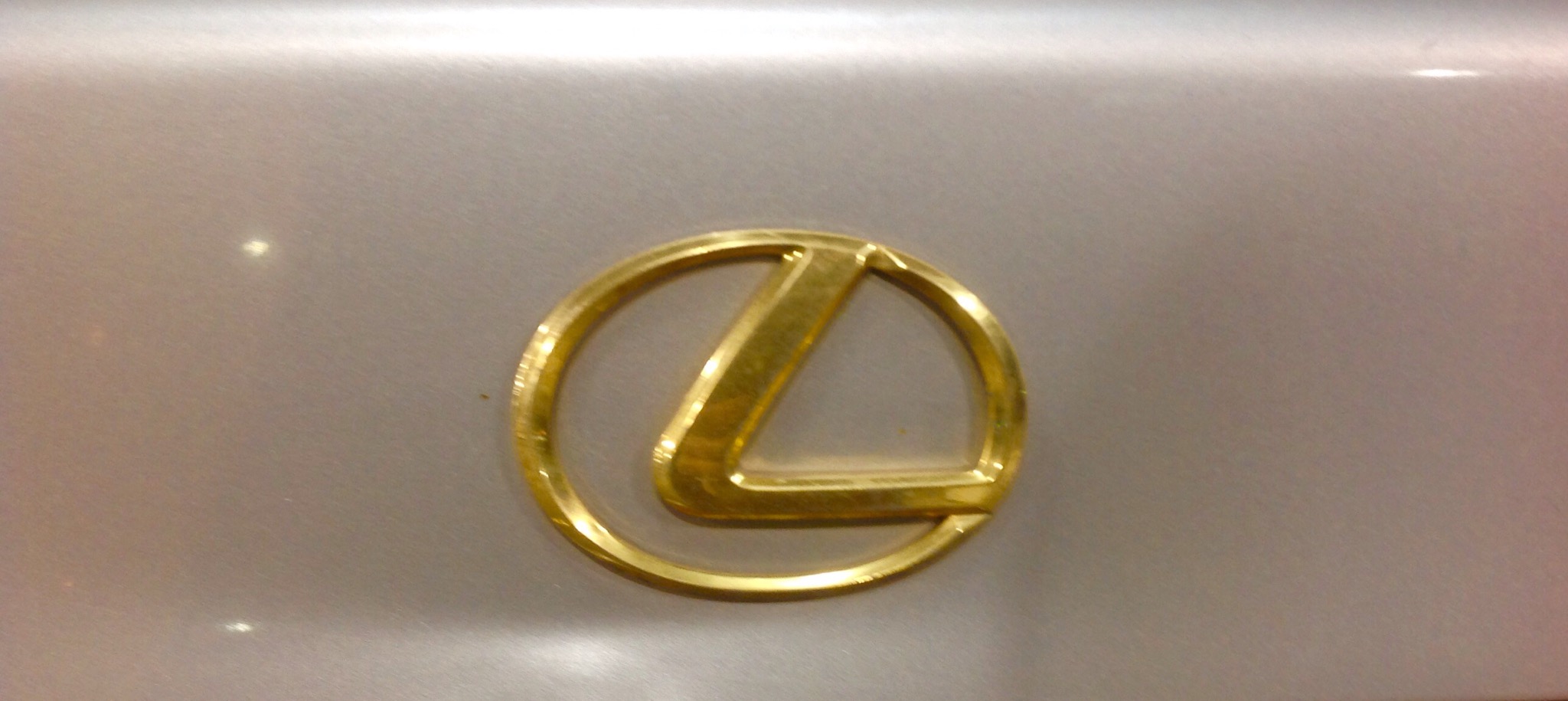



Okay, the next one doesn’t sound quite as nice.
Car B:
Lexus ES300
Mostly Gold in color (Some discolorizution)
Extensive engine work done recently
Still a leak on back valve cover and transmission.
240,000 miles

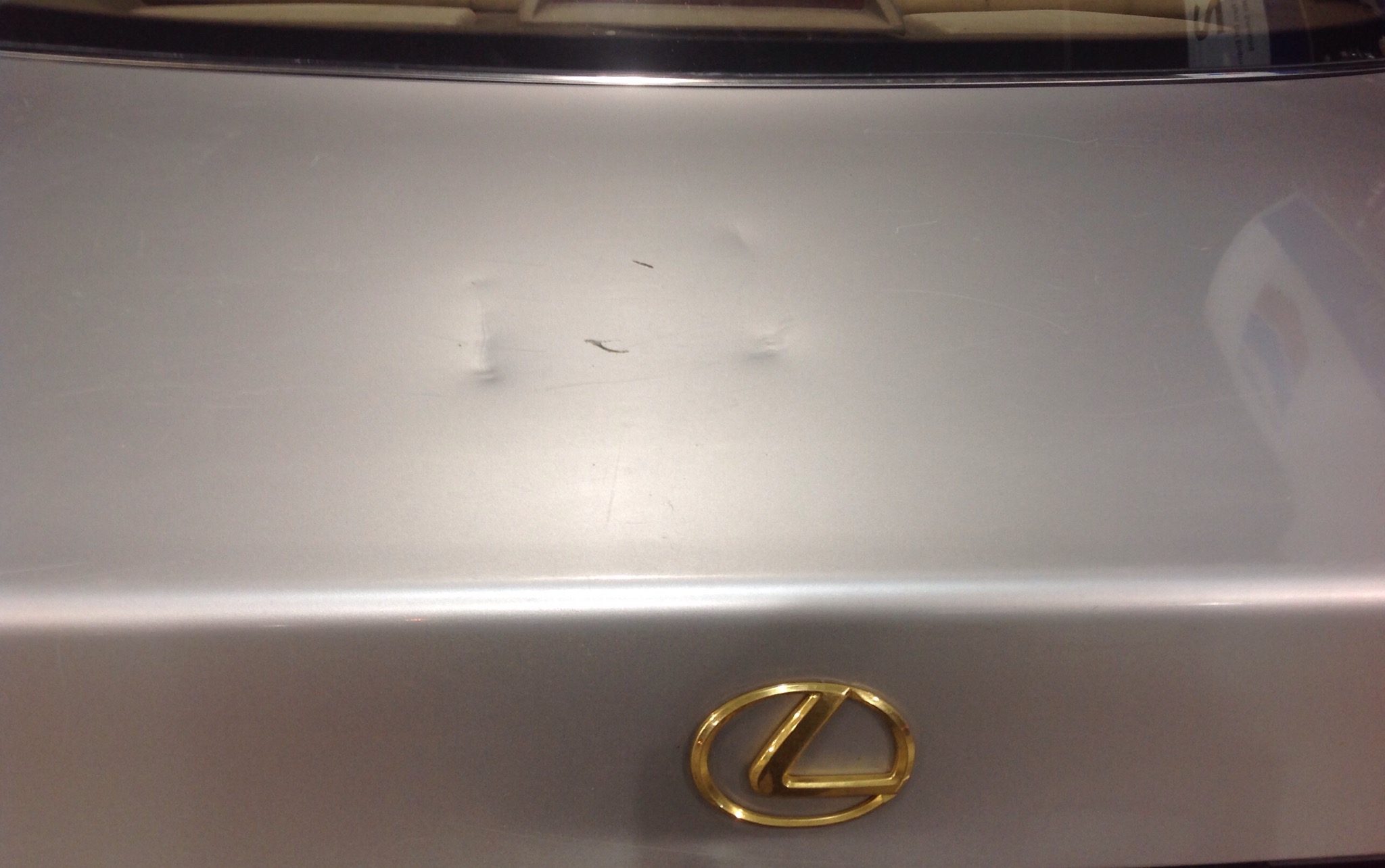


I’m trying to decide which one is the better deal.
I’ve been a trainer since very early in my IT career. I remember taking a train-the-trainer class on WordPerfect 4.2 with some other support operators. A fellow student was teaching us about how to download soft fonts.
Before we get into the steps, realize it’s kind of hard to get soft fonts to download the first time.
Fortunately the instructor stopped her.
If you tell people it’s going to be hard, they will believe you. Break it down into small enough chunks of instructions, and anything can be a explained simply.
I’m reminded of a story of a young lieutenant leading his first patrol and he realized he didn’t know where he was.
Sergeant, help me out here. I have no idea where we are.
Can I speak to you privately, sir?
Go ahead and speak freely Sergeant.
Sir, if you ever admit you are lost in front of the men again, I will frag you myself.
Probably not a true story, but an important point. As leaders, we are expected to lead. Now, does that mean you should lie? Absolutely not. But, you need to also not give your team reason to doubt your leadership, or doubt the company direction.
As a leader you do not have the luxury of indecision. The difference between a lie and a giving a less than complete answer? Much of the time it is confidence.
Rodney, I can’t believe the company is going to stop paying for our home internet access. That’s like taking a $600 per year pay cut. And they STILL expect me to handle issues from home when something comes up after hours!
You might be 100% in sympathy with your employees. You might have done the math and realized that you too are taking a $600 pay cut with the new policy. But, if you want to maintain credibility, you need to be confident and avoid the temptation to bad mouth the company or your leadership chain.
I understand how you feel. Obviously, the company has to constantly reevaluate their benefits package and balance that against their needs. I’m sure they considered the impact on the employees, but this is the direction we are headed at this point.
The way you present ideas and decisions can be the difference between success and failure, a team that will unite and follow you even when they disagree and vs a team that will constantly drag their heels and look for ways around unpopular policies.
As a manager you really need to consider yourself a salesman at times. You are selling management to the staff and in turn, selling staff suggestions to management. And like a great salesman, you need to understand how to accentuate the positives.
So, the decision between the two cars? It was easy. They are both the same car, just presented in two different lights.
Rodney M Bliss is an author, columnist and IT Consultant. His blog updates every weekday at 7:00 AM Mountain Time. He lives in Pleasant Grove, UT with his lovely wife, thirteen children and one grandchild.
Follow him on
Twitter (@rodneymbliss)
Facebook (www.facebook.com/rbliss)
LinkedIn (www.LinkedIn.com/in/rbliss)
or email him at rbliss at msn dot com
Tell your friends about this!

You are an email administrator running the Novell GroupWise email system.
The world’s most popular email system Microsoft Exchange/Outlook gets hit by a virus that causes hours and days of lost productivity as your peers have to restore from backup.
Do you:
A) Send your unfortunate colleagues text messages
– I would have emailed, but your systems seems to be down – LOL!B) Get another cup of coffee and congratulate yourself on recommending a system that wasn’t susceptible to viruses
C) Write a report
If you picked anything but C) you need to reevaluate your position. (Okay, you can pick A) also. That kind of razzing never gets old.)
But, the best answer is C) Write a report.
Why?
Because you don’t want to be thought of as the electric company. Now, I’ve got nothing against the electric company. As an IT guy, electricity is literally the lifeblood of my systems.
But, here’s the problem with the electric company:
Anything less than perfection is viewed as a failure.
When you come into work each day, you expect the lights to come on. You expect your computer to power up. And because you expect it, you are not surprised, nor impressed when it does. In fact, just the opposite. If it doesn’t turn on for some reason, you are surprised, confused, annoyed. And you really don’t care about the details. You don’t want to know that a transformer on 42nd Street blew and they were trying to route power from the substation on 139th, but the bleed off from the wires was too great at that distance. . . blah. . .blah. . .blah.
All you care about is that the lights didn’t come on and you can’t get your work done.
The standard for the electric company is perfection.
Let’s go back to our email administrator. (And this applies to any position where you made a decision that ultimately saved your company from suffering downtime.) Email is expected to work, just like electricity. If it doesn’t, people are surprised, confused and possibly annoyed. It costs money to have systems offline.
The report you need to write is a report that explains how much money you just saved your company. Had you installed Microsoft Exchange, your system would be down right now.
You need to find out the average TTR (time to recovery) for your colleagues at other companies. THAT is how much time, and money you just saved your employer. And don’t forget to multiply that number by the number of employees.
But, why a report? Why not just be happy you saved your company a ton of money? Why draw attention to yourself? Because, your boss has been pressured to move to Microsoft Exchange, or Google Mail, or something. It happens constantly.
Your report shows in black and white (and hopefully some pretty pie charts) exactly how much money the decision to go with GroupWise saved you. And you need to show that. Because, otherwise your email system, or backup system, or ticketing system, or whatever system you are in charge of, risks becoming the electric company. It just works. And we never know the extraordinary efforts that might have gone into the keeping the lights on.
If you want to keep the lights on in your office, if you want to avoid having your boss switch email systems on a whim, it’s your job to constantly be selling him on your current solution. Especially when things are going well, you need to make some noise about your successes, or management will start holding your to the standard of perfection.
Rodney M Bliss is an author, columnist and IT Consultant. His blog updates every weekday at 7:00 AM Mountain Time. He lives in Pleasant Grove, UT with his lovely wife, thirteen children and one grandchild.
Follow him on
Twitter (@rodneymbliss)
Facebook (www.facebook.com/rbliss)
LinkedIn (www.LinkedIn.com/in/rbliss)
or email him at rbliss at msn dot com
Tell your friends about this!
For the last three years I’ve been privileged to be involved with the Timpanogos Storytelling festival. (The Power Of Story) I’m also a member of Toastmasters Olympic Orators club. Yesterday I gave a speech about storytelling. It’s longer than my normal posts. And it’s more about my family than I normally share here.
Tomorrow I’ll return to posts about business and leadership. Today, let me just tell you a story.
The Stories Of Our Lives
Welcome. Madame Toastmaster, fellow Toastmasters and honored guests, I’m happy to have the opportunity to speak to you today.
Stories.
Stories not only describe our lives, they define them. We are here because at some level, we love stories. Stories predate literature. They probably predate language, although, it’s hard to say since there were no writers to record it for us.
Stories tie our societies together. They also tie us to our children and to our ancestors.
Did you know that when John Glenn, the first American to orbit the earth was preparing for his mission on Gemini 6, that NASA didn’t think to include a camera? They didn’t have time to build a custom one so they went to a local drug store and bought an Ansco Autoset 35mm camera, manufactured by Minolta.
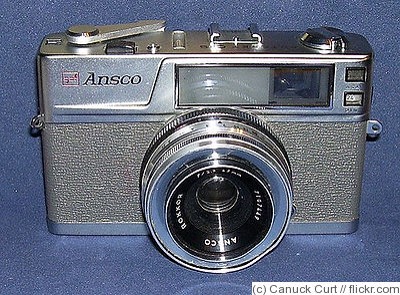
(Photo credit: collectiblend.com)
NASA was full of brilliant scientists, but they had not yet realized the value of storytellers.
Here is a picture that John Glenn took on that maiden flight with that drug store camera.

(Photo credit: abovetopsecret.com)
He noticed “fireflies” outside his capsule. He knew they weren’t actual fireflies, but that’s what they looked like. Later they were determined to be ice crystals coming off the spacecraft, but the world still, 50 years later knows, them as “Glenn’s fireflies.”
NASA learned, of course. By the time of the Apollo missions and the moon landing, NASA had figured out how to broadcast the entire thing live from 240,000 miles away. Anyone who was alive that day, 20 July 1969, can tell you the story of where they were when they heard and saw Neil Armstrong make that “one small step for man and one giant leap for mankind.”
The storytelling continued as we pushed our boundaries out to Mars. The Mars rover Curiosity carries with it a very high quality camera, of course. And the rover has a way to calibrate its camera.

(Photo credit: space.com)
This photo shows the coin that the designers of Curiosity mounted near the camera calibration panel. It is dated 1909. What it does not reveal is what makes the penny particularly rare. On the obverse, or the back side of the coin, are the initials (“VDB”) for Victor David Brenner who was the sculptor who created this image.
Brenner’s initials were deemed to be too prominent, and were removed from subsequent mintings within days of the penny’s initial release back in 1909.
Ken Edgett, who bought the coin with his own funds, said that he selected the coin to continue a tradition that began on Earth.
“The penny is on the MAHLI calibration target as a tip of the hat to geologists’ informal practice of placing a coin or other object of known scale in their photographs,” Edgett, principal investigator with Malin Space Science Systems, said prior to Curiosity landing.
The penny was also symbolic.
“Everyone in the United States can recognize the penny and immediately know how big it is, and can compare that with the rover hardwarehttp://images.intellitxt.com/ast/adTypes/icon1.png and Mars materials in the same image,” Edgett said. “The public can watch for changes in the penny over the long term on Mars.”
NASA learned the value of telling a story.
Stories tie us together as a society.
Stories also tie us to our children.
My family has a tradition of storytelling. As many of you know, I have 13 children. Every year on their birthdays, they get to pick the menu. And after a meal of corndogs and macaroni and cheese is consumed with not a green vegetables in sight, my son or daughter will turn to either my lovely wife or me and say, “You tell my story.”
Earlier this month, my son had a birthday. And he directed that request to me.
To China
I settled into my seat as the Boeing 777 lifted off from LAX in the early morning darkness. I was going to China. I was going to get my son.
We decided to adopt from China because our first adoption, was a boy of Asian descent. We didn’t want him to be the only adopted child who was Asian. So after a couple years when we felt it was time to expand our family again we looked to China. We were planning to adopt a little girl, because that’s what you get when you adopt from China, you get infant girls.
My lovely wife was looking through the list of waiting children on our agency’s website and saw a picture of a little boy, not quite two years old. She had the strong feeling as many adopted parents do that “this is my child.” But, it didn’t make sense. We already had two boys about that same age. But, the feeling wouldn’t go away.
As she was looking at his picture, our 6 year old daughter walked past the computer, “He’s cute. We should adopt him.”
When you adopt what’s called a “waiting child” it’s recommended that you send some things to the orphanage. We took pictures of our house, his new room, all the members of our family and a picture of my wife and me and put them into a book. In fact, we made two books. One to send and one to keep. We then had a friend write the names of each person in Chinese next to the picture. The other thing we sent was a blanket. You take a blanket, again we bought two, and you sleep with that blanket for several nights. Each of us has a smell. Babies learn the smell of their mothers simply by being held and fed. Sleeping with a blanket will give it your smell. We then sent one of the picture books and one of the blankets to china.
Months went by, full of home studies and paperwork. Visas and passports. Finally, the day arrived that resulted in me occupying a seat on a transpacific flight to China.
I touched down in the early morning hours. Several families were adopting kids all at the same time. We met our guide, Richard at the airport. I’m pretty sure it wasn’t his birth name since he was native Chinese. Everyone else was adopting from elsewhere in China, so all of them got on connecting flights. Richard then called for our car and drove me to our hotel, the world famous White Swan hotel. I checked in, showered, shaved (remembering not to drink the water) and then we headed for Shenz Zen. You have to travel through military checkpoints to move around in China. It was an interesting experience to literally have a man with a gun standing between me and my son.
Our papers were in order so we were waved through. Eventually we arrived at the orphanage. A big beautiful building with gleaming chrome exterior. I was escorted into a conference room where I met the orphanage director and many of the Aunties, the women who are the primary caregivers. After presenting each of them with a gift as is the custom, one of them left and returned shortly leading a little boy in a blue shirt and yellow shorts by the hand. He was holding a blanket and clutching a picture book.
When he saw me, he immediately came over and climbed up on my lap. He opened up the picture book to the picture of my lovely wife and me, pointed to my picture, looked up at me and with a big grin said, “Baba.”
It takes ten days in country to adopt from China. It was a magical time. Mostly, we were free every day to explore the city of Guangzhou. We would walk down the street hand in hand, this big white American and this small quiet Chinese boy. The shop keepers would ask, “Is a boy? Is good.” They showered my son with toys. I asked Richard if this was because boys are more desired in Chinese culture. “No, it’s because he is so cute.”
Finally, all the paperwork was done, and it was time to climb back on another airplane, this time with my son in tow and head back to the United States. We changed planes in LAX and completed the last leg home to Seattle. The terminal we landed in has a long hallway and then turns a sharp corner as you come out of the secured area. As we made that turn, my lovely wife was seated waiting for us. My son, let go of my hand, ran to her, climbed up on her lap, opened his picture book to our picture, pointed at her picture and said, “Mama.”
My son is now 14. He has heard that story every year for the past 12 years. And he never tires of it. He would rather skip the cake and presents at his birthday than skip the story.
Stories tie our children to us.
Captain Bliss
They also tie us to our ancestors. I had grown up hearing that my family, in fact, all the Bliss’ in America descended from a pair of brothers that fought in the Revolutionary War. About a year ago, thanks to the internet, I did some research. I call it research, I really went to a genealogy site, found my name and started clicking back. Eventually, I found a man named Captain Abdiel Bliss. Born in 1740 in Rehoboth, Massachusetts. He fought at the battles of Lexington and Concord the day the war started. A month later he fought at Bunker Hill.
In my research I also discovered something called the Society of the Cincinnati. After the war was over, the officers of the continental army got together and formed a society. Membership was open only to officers who had been in the army. When they died, the membership slot was open to their oldest son. If the eldest son died without a son it went to the next oldest son and so on.
I thought, “I wonder who holds the spot for my ancestor?” The genealogy site allowed you to search both backwards to ancestors and forward to descendants. I started tracing the male descendants of Captain Bliss. One by one each male line petered out. And finally, I realized I was tracing MY line. My great grandfather had one son. My grandfather had one son. My father had 4 sons. My oldest brother had no children. My next oldest brother had two sons. My next oldest brother had 5 daughters, and then there was me with my five sons.
The rules of the Society of the Cincinnati said that if the rightful heir didn’t want membership they could grant it to someone else. Would my brother want that membership? I decided to do more research before I approached him.
I wrote to the Massachusetts chapter of the Society of the Cincinnati. I got a very polite, but very firm letter back saying that my ancestor was not a Revolutionary War officer and his descendants were therefore ineligible. Here was a mystery. This time I really did do some research, teasing out alternate spellings and looking at troop lists.
Eventually I got another letter from the Society. They had also done research and had come to the same realization that I had. Captain Abdiel Bliss was an officer in the War, but was not in the Continental Army. He was part of the militia. As such, he was ineligible. The person I was writing to said they were sorry. I wasn’t. Sure, he wasn’t in the Continental Army, but it was still pretty cool to realize that you are descended from one of the original Minute Men.
Stories tie us to our ancestors.
One more quick story.
Mormon Pioneer
As many of you undoubtedly know, the state of Utah was settled by Mormon pioneers. July 24th, 1847 Brigham Young led a group of men, women, children and 5 dogs into the valley. The names of those first pioneers are on a statue in downtown Salt Lake City and on a monument at “This Is The Place” park up Immigration Canyon.
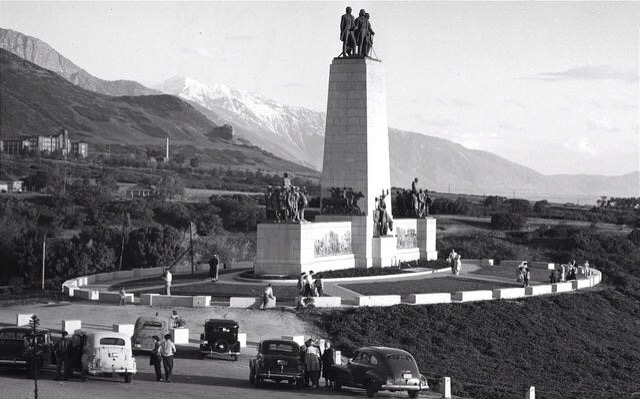
(Photo credit: Deseret News)
One of those names is Thomas Woolsey, my great-great-great-grandfather. He was a member of the Mormon Battalion. He was the designated postman. He made the trip back and forth between the battalion and the saints as they made their way west. He was captured and escaped from Indians. He built the first permanent house in the Salt Lake valley. He died and is buried in Southern Utah.
My children, especially those who are adopted know that their family is descended from pioneers and revolutionaries. Stories tie the generations together.
But Rodney, MY family doesn’t have any of those exciting stories. I’ve never been to China and my ancestors didn’t fight in the Revolution or found Utah. I don’t have any stories.
Wrong. In years of telling and listening to stories, I’ve discovered what many people already know. Everyone has a story. Are you married? There’s got to be a story there. Are you not married but almost were at one point? That’s probably a better story. Do you have children? I defy anyone to spend a day with a young child and not come away with at least one interesting story. Do you have a favorite vacation? A favorite movie? A cherished book?
Because it’s not the setting of our stories that make them memorable, it’s the people we choose to populate them with.
My charge to you today is twofold. First, find your stories. Find your own personal stories, whether it is a trip to China, or the move to a new house, or the thrill of getting a new job. Find your stories and those of your ancestors: aunts, uncles, parents, grandparents. Search out and gather your stories.
And then, share them. If you have children, tell them to your children. Make sure they understand that you and they came from somewhere. That they are result of a long line of people who lived and breathed, loved and lost. Pirate or priest doesn’t really make much of a difference. Our history and our stories are what make us who we are.
These are the stories of our lives.
Rodney M Bliss is an author, columnist and IT Consultant. His blog updates every weekday at 7:00 AM Mountain Time. He lives in Pleasant Grove, UT with his lovely wife, thirteen children and one grandchild.
Follow him on
Twitter (@rodneymbliss)
Facebook (www.facebook.com/rbliss)
LinkedIn (www.LinkedIn.com/in/rbliss)
or email him at rbliss at msn dot com