I’ve been a world expert twice in my life that I can remember. The first was while at WordPerfect (How I Saved the EPA, Don’t Tell Pete!) The second time was after migrating MeritCare’s 7000 users from Exchange 5.5 to GroupWise. (Fire, Flood and Famine!)
In both cases, my area of expertise was both extremely narrow and fleeting. How I got to that point was similar in both cases. Both Daniel Priestley (Book Review: Become A Key Person of Influence) and Timothy Ferriss (Book Review: The 4-Hour Workweek) talk about the process of becoming a world expert. Essentially it’s all about establishing credibility, getting endorsements and having some actual talent or skill. Interestingly, the last one is the least important in my opinion. I’m a Brad Paisley fan. In his song Celebrity he writes
Some day I’m gonna be famous.
Do I have talent? Well, no.
These days your don’t really need it,
Thanks to reality shows.
The world is full of people whose opinion is valued for no reason other than they have convinced the world that their opinions should be valued. The Kardashians, Paris Hilton, Donald Trump on anything except money. Perhaps he listened to Toval “When you’re rich, they think you really know.”
But, in my case, fortunately, I actually had a skill, or I acquired it.
Establishing Credibility
Both Priestley and Ferriss agree that you need to write a book. The contents are less important than the fact that you managed to write a book. I’ve written several. . .they are hard work. Today’s blog entry is the ninety-second for www.staging.rodneymbliss.com. In all those months of writing, I’ve put down about 50,000-70,000 words. (And I’ve had a blast doing it.) But, a decent sized book is 50,000-150,000 words.
So, if you can string tens of thousands of words together people think that counts for something. And it does. In my case, the Microsoft Exchange Connectivity Guide was lucky enough to be one of the first books on Microsoft Exchange, and Becky Wynn, my co-author and I did a pretty good job of explaining how to make Exchange talk to other systems.
When it came time to explain to MeritCare why they should pay $250 / hour to have me oversee their migration, I came with some credibility.
Early in my career, when I was working on WordPerfect Office we didn’t really think about publishing. I simply was the guy who saved the EPA. I also had the backing of Alan Ashton, WordPerfect’s president.
Getting Endorsements
I love LinkedIn. I think it’s a fantastic tool. (Feel free to connect.) However, a few months ago they added an “Endorse” feature. Basically, you can endorse your connections for certain skills and knowledge. The concept is okay, I guess. But I’ve been endorsed by people who had no idea what my skillset was. I’ve been prompted by the system to endorse people for skills I have no clue about.
But, endorsements, real endorsements are vital. I mentioned that while running Purple Crayon Consulting, 100% of my business came from referrals. I never advertised. The people who were referring customers to me were some of the very best in their fields or areas of expertise. My customers trusted me because my customers trusted them.
When it came to WordPerfect Office, I had the backing of the company president, but eventually, I built up a reputation with our System Engineer and Field Sales teams. If the Sales guys could get the customer to pay for me to come onsite, they did their best to really sell my skill set.
Actual Talent or Skill
In some fields, it’s possible to fake it. In consulting, at least with the companies I worked with, it wasn’t.
One of my WordPerfect Office customers had two gateways. They connected the email to two slightly different mini-mainframe systems. MEMO was one of them, I’ve lost the name of the other. Messages from these two system could come in through either of two gateways. However, when someone responded, the response had to route to a particular gateway based on the recipient’s name. Anyone who’s worked with Office or GroupWise knows that messages build a “return route” on their way in and replies follow that route back out.
I had to figure out how to strip off the return route so that the system would look at the name and route it based on the recipient. It couldn’t be done. It was impossible. It took me two solid weeks of lab work to accomplish it. I really wish I’d written a book back then.
At MeritCare, with the migration work, I had a different problem. I was an expert on Microsoft Exchange. In addition to the book I wrote, I’d written hundreds of pages of training materials, and I’d also helped write the certification exam. I was also a WordPerfect Office expert based on my SWAT Team days.
The piece I wasn’t an expert on was the actual tool we were planning to use, GWMigrate. I knew it as well as anyone except the Development team, which was British, not that it mattered. But, this is where being known as an expert helped bridge the gap.
I certainly knew more about the migration process than the client. And I was confident that we could accomplish what the customer wanted. The fact that it had never been done before, while slightly concerning, didn’t bother me hugely.
To Sum Up
And that’s the point. I was an expert, I wasn’t necessarily the expert. But, my areas of expertise were incredibly narrow: WordPerfect Office and Exchange to GroupWise migration. When you go to stake out your own piece of sky, remember to go deep not broad. This is a topic that Ferriss hits very hard and often in The 4-Hour Workweek; Look for a niche and then find a microniche and attempt to dominate in that space. Chances are there won’t be a lot of competition, and if you establish credibility, secure trusted endorsements and have a bit of skill in the area, it can lead to success.
I’ll stay with the consulting theme this week and mix in some Microsoft stories at the end of the week. Here’s the schedule.
Monday: Un-Book Review. . .Purple Crayon Club
Tuesday: On Being a World Expert
Wednesday: Overplaying a Recommendation (This one still makes me cringe to think about it.)
Thursday: No Camping . . .But the place I saw the sign will surprise you
Friday: Don’t Pollute The Waste Streams. . .Not all garbage is created equal
About the author
Rodney M. Bliss is an author, blogger and IT consultant. He lives in Pleasant Grove, Utah with his lovely wife and 13 kids.
Follow him on
Twitter (@rodneymbliss)
Facebook (www.facebook.com/rbliss)
LinkedIn (www.LinkedIn.com/in/rbliss)
Tell your friends about this!


Okay, it’s not really a book review, although this is a real book. In it, Harold uses a purple crayon to draw magical pictures that come to life. In Harold’s Fairy Tale, he meets a king, a fairy, a giant witch and visits an enchanted garden, which has no flowers; all of which spring from his imagination. Clearly Harold is a very lonely child.
But, this book, actually Harold’s crayon is what inspired the name of my first consulting company, Purple Crayon Club. The name was both an inspiration and really stupid.
The idea was that Harold’s purple crayon could make things come to life. That’s not a bad image for a consultant. We try to work magic for our clients. Sometimes we are called on to literally start with a blank page, or an empty whiteboard and draw a solution to the customer’s problem. That’s what I wanted Purple Crayon Club to accomplish.
One of the benefits was that people remembered me. Well, my company anyway, and since most of the time I was a one man shop, it was me. I had clients that I didn’t see for several months. When I returned it was
Hey, you’re the purple crayon guy!
Many consulting company names blend together. Take any three terms from the following list and add “consulting” and you’ve got a new name.
Advanced
Network
Internet
Agile
Technologies
Systems
Purple Crayon let me stand out from the crowd.
A downside was that it’s not a particularly serious name. But, 100% of my work came from referrals. So, I didn’t have to put an ad in a trade journal with my company name and try to convince people I deserved $150 / hour based on my company name.
There were some downsides. The biggest was that we constantly got mistaken for a day care center. We eventually replaced “Club” with “Consulting.” That helped. . .a little. The history of our little company can be seen in our business cards.

The first card was based on an existing template. Unfortunately, none of the crayons were actually purple. No one seemed to notice.

After I went to work for Microsoft my wife took over PCC. Our logo was homemade. Notice that her email address was more CompuServe than internet.
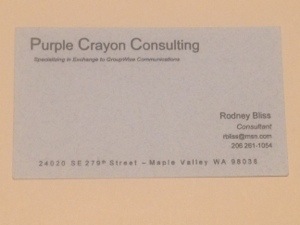
After I left Microsoft I started working on Exchange to GroupWise communication. I was going for a “subdued” look on this card. What I got instead was a boring card.
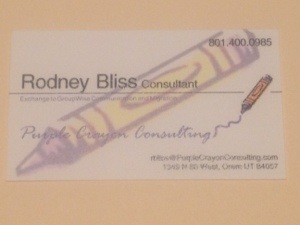
Eventually I got better at both the consulting and the logo. This is still my favorite business card. I think I created it in PowerPoint. Hey, you use what you know.
Not sure I have any great advice for how to pick a company name. I decided I wanted to go for a friendly look. It accomplished that, but added it’s own challenges as well.
I’ll stay with the consulting theme this week and mix in some Microsoft stories at the end of the week. Here’s the schedule.
Monday: Un-Book Review. . .Purple Crayon Club
Tuesday: On Being a World Expert
Wednesday: Overplaying a Recommendation (This one still makes me cringe to think about it.)
Thursday: No Camping . . .But the place I saw the sign will surprise you
Friday: Don’t Pollute The Waste Streams. . .Not all garbage is created equal
About the author
Rodney M. Bliss is an author, blogger and IT consultant. His current consulting company is 13 Kids Productions. He lives in Pleasant Grove, Utah with his lovely wife and 13 kids. . .it’s a production.
Follow him on
Twitter (@rodneymbliss)
Facebook (www.facebook.com/rbliss)
LinkedIn (www.LinkedIn.com/in/rbliss)
Tell your friends about this!

I’m a man of faith, but even if I weren’t I think I still would have said a little prayer before clicking the START button on my migration servers. It was 5:00 Friday afternoon. The start of “Migration Weekend” at MeritCare hospitals. For the past eight months we’d been planning the migration from Microsoft Exchange 5.5 to Novell GroupWise. All the planning, the meetings, the trips to Fargo, ND (You Don’t Get To Pick Anymore.) All of it for this moment.
I’d run my tests.
I’d built in my buffer.
But when it came right down to it, there were no guarantees that our plan was going to work. No one had ever tried a migration this big, and we had to complete it in the next 36 hours.
If it didn’t work, there were going to be a whole lot of angry people who’d spent a whole lot of money. My reputation. . .Novell’s credibility. . .
I was stalling and I knew it.
Okay. Here goes.
CLICK
Not sure what I was expecting, the GWMigrate tool on Workstation1 grabbed the first batch of 50 names and started converting them and moving them into our brand new GroupWise post office. I quickly started the other 9 Workstation machines and got ready to deal with the first error messages. (There are always errors that crop up.)
Tim, if you want to go kick off the machines in the lab, I think I can cover these.
I knew the first 30 minutes was crucial. If we made it past that point, it would indicate that we’d worked out the show stopping bugs.
I sat transfixed by the animated icon that was moving “Microsoft blue” messages though the converter to “Novell red” messages.
After about 10 minutes Workstation3 suddenly flashed an error. It had found a corrupt account and was announcing it was skipping that account and moving on. I noted it in our log and started to breath a little easier.
Maybe we’ll make it through without. . .
FIRE
BEEEEP. . . .BEEEEP. . . .BEEEEP
In a panic I scanned my servers. They were all happily humming along chugging through the first 500 of the nearly 7,000 accounts we were migrating.
BEEEEP. . . .BEEEEP. . . .BEEEEP
That’s not a computer sound. What is that? It’s really loud!
BEEEEP. . . .BEEEEP. . . .BEEEEP
Fire alarm. The fire alarm is going off and I’m tucked away in the basement of a former hospital that had been converted to offices.
I looked at my servers. I knew that the minute I walked out the door they were going to start throwing errors. And even if they didn’t, we’d broken up the user list and were feeding them to the migration servers in 50 user chunks. All of my servers would need a new file within the next 30 minutes or so.
No job is worth dying for. . .well, no computer job. . .but, I’d put too much time into this project to run at the first sign of trouble.
(Yes, I was actually talking myself into staying in a burning building. Crazy? Stupid? I know. But, it was pretty important.)
Finally, with a last glance at the servers I reluctantly opened the door to the hallway. . .and immediately was hit by the smell of burning popcorn.
No way.
No way am I leaving for burnt popcorn. Besides Workstation6 had just flagged another problem account. Trying to block out the noise, I went back to babysitting my migration servers. On our webcam in the lab, I saw that my coworker Tim had the same idea. He was hunched over a server reading through an error report.
Eventually the fire alarm stopped. I really can’t tell you when. I presume at that point they told everyone who had actually evacuated that it was safe to reenter the building. I heard the firemen were pretty upset to get called out for burnt popcorn. I knew exactly how they felt.
FLOOD
We survived the first half hour and Tim and I settled into a routine. After about 5 hours we hadn’t seen anything that we hadn’t seen in the testing. The smell of burnt popcorn was nearly gone and we started to relax a little.
Hey, Rodney is that normal?
Huh? What?
That water soaking the carpet under the migration computers.
What?
Sure enough, a flood was slowly spreading from one corner of the room and getting dangerously close to our migration servers. One of the MeritCare employees on the project spoke up.
Yeah, that happens every time we get a really heavy rainstorm. It’s why we never put offices in this space.
Well, we can’t let those servers and power cords get soaked. But, we can’t disconnect them either. They’re right in the middle of a cycle.
The solution was we put the power strips on the tables and we jacked up the servers on blocks. Pretty soon 8 or our migration computers had acquired wooden stands.

Will it flood the whole room?
Nah. It’ll just soak that corner and about 10 feet around it.
Got it.
Pretty sure we didn’t cover this in the project meetings.
FAMINE
Okay, we didn’t actually have a famine unless you count the loss of the popcorn. Like most computer projects, there were generous amounts of pizza, chips and caffeine in various liquid forms.
It wasn’t until much later that I remembered to ask our project manager about the fire alarm.
So, what happened?
You guys remember that you asked me to keep Henry, from corporate out of your way, right?
Yeah, he was never part of the project team and if we even let him in the room, he’d insist on helping and then we’d have to fix whatever he screwed up.
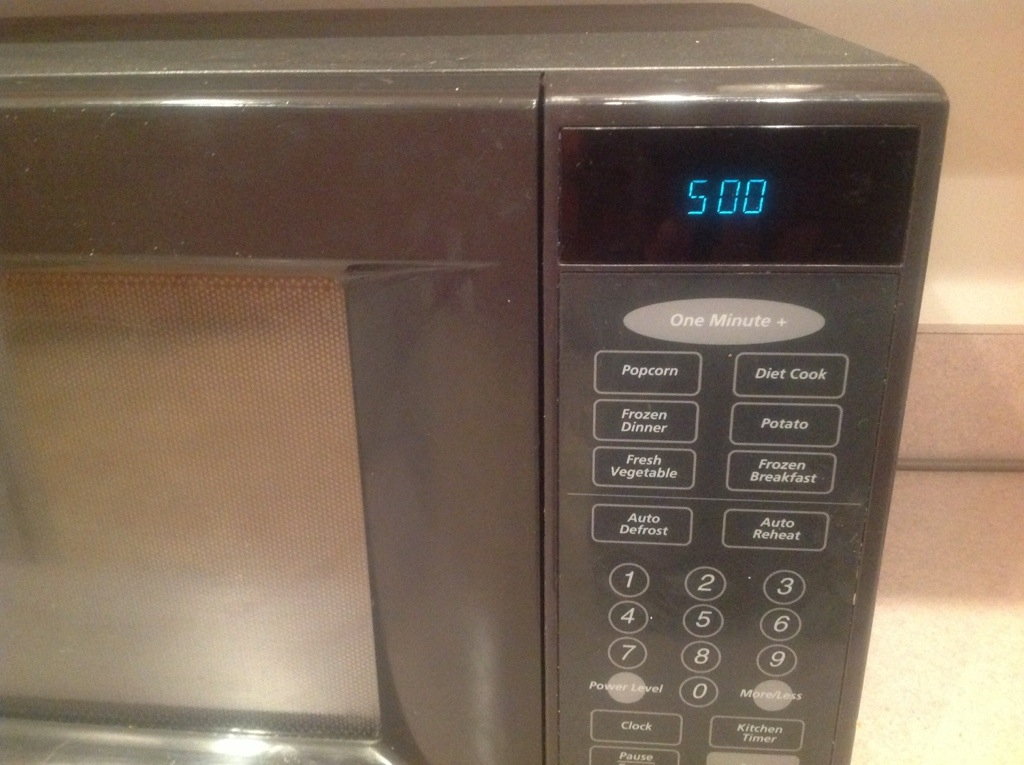
Well, I told him that. . .but nicer. Anyway, he figured if he couldn’t help, he’d make everyone some microwave popcorn. The package said, “Five minutes on high.” So, he set it for five minutes and then walked away. He’s not real familiar with microwave popcorn.
Next time maybe we should find him something to do.
When we finished Saturday evening, we realized a migration tool had an undocumented bug that forced us to do the entire migration a second time. . .without the fire and flood.
This week I wanted to explore some of the stories around consulting. I explained that consulting is like Feasting on Brownies. . .Every Three Weeks. Then, I related how I went about Setting Consulting Rates. I told the story of how I once Billed 25 Hours In a Day and how I fixed it. Finally, I described a time our client paid $500 Dollars An Hour for us to do nothing.
About the Author
Rodney M. Bliss is a blogger, author and IT consultant. He has now made it a goal to exit buildings when they might be on fire. He lives in Pleasant Grove, Utah with his lovely wife and 13 kids. Follow him on Twitter, Facebook, LinkedIn or send him email (rbliss at msn dot com.)
Tell your friends about this!


(Photo credit: smartlemming.com)
Doug, can you send me an updated copy of the directory?
No.
Okay. . .
The security guys haven’t sent it over yet.
Did you tell them that we are dead in the water until we get it?
Yeah. They said the same thing as yesterday. ‘We’re busy and we’ll get to it as soon as possible.’
Doug and I were onsite in Fargo, ND (You Don’t Get To Pick Anymore) migrating MeritCare hospitals from Microsoft Exchange 5.5 to Novell GroupWise. This was the largest Exchange to GroupWise migration that had ever been attempted to this point, about 6,800 accounts.
Doug was a Novell employee, but I was a contractor. This was many years after my first foray into consulting (Setting Consulting Rates.) I’d spent nearly a decade at Microsoft writing training materials for Microsoft Exchange. I’d gained a lot of experience and my rates reflected that. Because I was a world expert on email migrations, I was able to command a rate of $150 / hour. But, like I had in my first consulting gig, I was subcontracting. This time through Novell.
Novell marked up my rates and was charging the customer $250 / hour for my time. They were charging the same amount for Doug’s time. If you know that someone is paying $250 / hour for you to be somewhere, you try to make sure that you don’t waste your time (and their money.)
And that was the problem we faced. Doug was the directory expert. He was supposed to hand me lists of users. But, the project was eight month long. The company continued to add and remove names. We had to constantly get updated lists. The problem was, Doug didn’t have access to MeritCare’s directories. We had to rely on their IT Security department to provide us with the lists, and they weren’t doing it.
It wasn’t like we sprang this request on them. We were currently in a one-week-on-site, one-week-off-site schedule. When we set the schedule months earlier, we called out these directory updates as a MeritCare deliverable. When we’d left 10 days earlier, we’d reminded them that we needed the files at the beginning of the week. When we’d arrived Monday morning we’d asked for the files. It was now Tuesday afternoon and we were still waiting.
I’ve got nothing I can work on until we get those names. You?
Nope.
Clearly it was time to escalate. I really try to avoid escalating issues, if I can. I’d much rather resolve the issue. If you kick it upstairs it does three things; one good and two bad.
1) You typically get whatever it is you need (good)
2) You look less effective (bad)
3) You risk alienating people who’s help you may need later (very bad)
But, we’d already wasted two days and it didn’t look like we were any closer than when we’d arrived. We went to see Clint. He was the one who signed the checks.
Clint, can we talk to you a minute?
What’s up?
We’ve got a problem. You remember that we told you we needed the updated directory lists this week?
Yeah.
Well, we talked to the Security guys a couple of times already and we still don’t have them. We can’t in good conscious sit around at $500 per hour. So, if we can’t get them this afternoon, we’re gonna catch an early flight on Wednesday. There’s really nothing for us to do here until we get those files.
I see. I’ll see what I can do.
Clint was clearly not happy, but he was also clearly not unhappy with us. We got an email at the end of the day.
It does not look like we'll be able to get the directory lists with enough time left in the week to make it worthwhile. I'll personally make sure they are waiting when you get back in two weeks. Sorry for wasting your time.
Clint
When we got back in two weeks there was a different guy working in IT Security and updated files were waiting for us. When you are making $500 / hour, people listen when you say you’ve got nothing to do.
This week I’m writing some of my experiences with consulting. Earlier this week I talked about how consulting is like Feasting on Brownies. . .Every Three Weeks. I also explained Setting Consulting Rates. Yesterday I related the time we Billed 25 Hours In a Day (And Why That’s a Bad Thing.) Tomorrow, I’ll stay with MeritCare and describe the Fire, Flood and Famine, during our migration weekend.
About the Author
Rodney M Bliss is a blogger, author and IT Consultant. He lives in Pleasant Grove, Utah with his lovely wife and 13 children.
Tell your friends about this!


Rodney, I’ve got a question about your hours.
Sure, what’s up?
Well, on March 17 you’ve billed us for 25 hours.
Yeah, we were working on that Network Diagram paper. It took a lot longer than we thought it would.
But, there were only 24 hours on March 17.
I was working as a WordPerfect Office email consultant. Our customer, Rick was the administrator for ASP, a company that was upgrading to the latest version of Office. We were designing the upgrade and writing training material for their 500 employees. We were also planning to teach classes for all of their employees.
The “we” was my wife Annie and me. I had been a member of WordPerfect’s SWAT support team. Annie had been a Senior Operator in the WordPerfect Office team when we both left to move to Redmond where I was planning to take a job with Microsoft. We had recently formed Purple Crayon Club Consulting.
 No one ever noticed my business card didn’t actual have a purple crayon on it.
ASP was our first consulting customer and we almost screwed it up before we even got started.
Well, I put in 13 hours on the 17th and Annie put in 12 hours. It does sorta look weird, but we were both working on it.
Oh. I guess that makes sense. It’s just not what I was expecting.
I could tell that Rick wasn’t satisfied with our explanation. Over lunch Annie and I talked about Rick’s concern and how we should best address it. We met with Rick as soon as we got back into the office.
Rick, it seems like you’re still uncomfortable with the billing for the 17th. We want to make sure that ASP is completely satisfied. Can you help us understand what your concern is?
Well, we’re paying your firm $120 / hour. It doesn’t seem like it should matter how many people you use to meet the needs. I assumed we hired your “firm” at a particular rate.
Okay, we talked about it over lunch and I think we’ve come up with a possible solution. As you know, we bill through the consulting firm. I don’t want to try to explain this to them. How about on our next bill, we include 12 hours that we’ll put on your invoice, but we won’t report to the consulting firm, so you don’t get billed for it. Will that correct this misunderstanding?
That sounds great. I’m sure our corporate controller will go for that.
Rick was clearly relieved and our worries about ASP canceling the contract were also relieved. I’ve often thought about that meeting. In hindsight, I think our original billing was right. At times we were both working on separate pieces of the ASP contract. By compromising we had essentially just agreed that Annie’s time was free. And our share of the billing was $80/hour. So, those 12 hours we gave back was nearly a thousand dollars.
But, the more I learn about business, the more convinced I am that we handled it in the very best possible way. The contract was worth over $50,000. So, the amount we gave back was about 2%. Would it make sense to throw away a sure $50K contract for two percent? I don’t think so.
And yesterday I talked about Setting Consulting Rates. Looked at another way instead of earning $80 / hour, we were now earning $40 / hour. Still much more than either of us had made at WordPerfect.
And by turning ASP from an unhappy to a happy customer, we got a fantastic reference account when we got ready to pitch to the next customer.
Overall, it was definitely money well spent.
This week I’m talking about the Consulting Business. At the beginning of the week I described how consulting is like Feasting On Brownies. . .Every Three Weeks. Yesterday, I explained Setting Consulting Rates. Tomorrow I’ll talk about how if you bill $500 / hour you can get just about anyone to listen.
Rodney M. Bliss is a blogger, author and IT consultant. He is still partnered with his lovely wife Annie, although she’s turned in her laptop to instead focus on raising their 13 kids. They live in Pleasant Grove, Utah.
Tell your friends about this!


Holly will see you in just a minute.
I had recently left WordPerfect and Utah and moved to the Seattle area where I was waiting out a 6 month non-compete period before going to work for Microsoft. (Don’t Want to Know How Much That Cost Me) Since my wife and I had both gotten a severance package plus WordPerfect was paying my salary for the period of the non-compete, I didn’t really need to go to work. But, I was bored. And I’d been raised to work. So, I decided to start consulting on the WordPerfect Office email program. This was just before it was rebranded as Novell GroupWise.
It’s one thing to decide you are a consultant. It’s another to get someone to pay you to consult. I talked to my friends who were in WordPerfect sales about whom I should contact. They directed me to a local consulting company. This is actually my preferred method for consulting. You can be the goto guy while handing off much of the overhead to someone else.
There’s a catch, of course. The consulting company has to get paid. They take a cut. I understood this idea conceptually, but this was the first time I’d been through it.
The biggest question for new consultants is “How much do I charge?” And in the days before the Internet and Google, it was a really hard question to answer. I’d been sweating over it for days. I finally settled on $70/hour. In 1992 this was an INSANE amount. I’d just come from a job where I was making about $35,000/year. That works out to about $17.50/hour.
Yeah, $70. . .But, what if they think it’s too high? What if it totally prices me out of the market? Seventy per hour is the equivalent of $140,000 per year. Can I really ask them for six figures? But, they aren’t paying it, the clients will. . .but, what if the clients think that’s too high? The consulting company has to add on their cut. Maybe I should go lower. . .
And so it went. I was doing a pretty good job of negotiating against myself. But, I really had no idea what was reasonable. Still, I kept coming back to the $70/hour number.
Just be confident. Act like you’re worth it!
I’d read somewhere that when making an initial offer, most people underbid. Take your number and add 10% and make that your opening bid.
Holly will see you now.
Okay, so $77. . .That’s stupid. It should be a round number.
Hello, Rodney. I’m excited to finally meet you. Your resume is certainly impressive and given your WordPerfect Office knowledge, I don’t think we’ll have any trouble placing you. Not too many Office experts here in Microsoft’s backyard.
Seventy-seven? That’s like $150,000. . .no, $150,00 is $75 per hour. Seventy-seven would be. . .let’s see. . .
All we have to do is get your billing rate.
A HUNDRED AND SIXTY THOUSAND A YEAR? That’s crazy. No way will they go for it. This is gonna be the shortest consulting agreement in the history of computers.
Rodney?
Okay, worst case? She laughs and we go back on vacation. I can live with that.
Eighty.
Excuse me?
Ah. . .my billing rate is eighty dollars per hour.
Here it comes.
That’ll work out great. We’re planning to bill your time out at $120/hour.
Even in 2013 it’s still a lot of money!
This week I will be focusing on the Consulting business. Yesterday I explained how consulting is like Feasting On Brownies. . .Every Three Weeks. Tomorrow, I’ll talk about how to bill for more than 24 hours in a day and why it’s a very bad idea.
Rodney M. Bliss is a blogger, author and IT consultant. Even after 20 years he struggles with the billing rate, but he’s better at it than he was. He lives in Pleasant Grove, Utah with is lovely wife and 13 children.
Tell your friends about this!


(Photo credit: Becky Luigart-Stayner; Lydia DeGaris-Pursell myrecipes.com)
Dad, I got a job paying $25 per hour!
It’s not how much you make per hour. It’s how much you make per year that counts.
Never has that been more true than consulting. The most I ever made was $150 per hour. I earned about $100,000 that year. Another time I made about $80 per hour. I earned about $100,000 that year. Because it’s not about the hourly rate. Well, it’s important, of course. But, it’s also about how many hours you work per year.
If you go to work at a 40 hour per week job, you will work 2,080 hours in a year. (52 weeks times 40 hours.) Of course, you get to take sick time and vacation time off of that, but 2,000 hours is a good estimate.
So, if you have an $80,000 per year job, you are making about $40/hour.
If you are a consultant and you charge $80 /hour and you work fulltime you earn $165,600. But, there’s that two week vacation. . .you don’t get paid while on vacation. Take that 80 hours out and you’re at $160,000. That’s good money. No doubt. But, unless you have a corporate gig, you are probably not going to be working 40 hours per week on average. You are going to have to spend part of your time getting the next gig lined up. Let’s say you’re 75% utilized. So, take 25% off the top and you’re down to $120,000. Still an excellent income.
Of course, you also have to pay for your own equipment, travel, office supplies, phone, internet, etc. When you get done, if you’re careful, you make. . .about $100,000 per year. At least I did.
That’s why I describe consulting as being like the hungry man who gets to feast on brownies, but only once every three weeks.
I’ll be talking more about the consulting experience this week.
Rodney M. Bliss is a blogger, author and IT consultant. He lives in Pleasant Grove, Utah with his lovely wife and 13 children. . .all of whom love brownies.
Tell your friends about this!


(Photo credit: 2ndcupoftea.com)
Have you ever heard the phrase, “It’s all Greek to me?”
No. What does it mean?
This conversation wouldn’t necessarily be noteworthy if it weren’t for my location. Earlier I talked about my penchant for trying to get by with a phrase book. (Do You Speak English?) I tried it during a trip to Athens, Greece with even worse results than normal.
The taxi driver from the airport to my hotel explained to me in broken English that his goal was to move to America and become a race car driver. After a week in Athens, I discovered this was the secret dream of all taxi drivers in Athens. At least according to their driving.
Unlike my trips to Latin America where I could draw on my B- grasp of High School French to at least pronounce words correctly, in Athens, I was completely at the mercy of the phonetic spellings.
Even though many people in Athens spoke English, and the training course I was there to teach was in English, I still made a valiant attempt to speak the local dialect. The word “alphabet” is of Greek origin, (the first two characters in the Greek alphabet are ‘alpha’ and ‘beta’.) However, the Greeks of course, have their own alphabet, as any college fraternity or sorority can attest to. While wandering through the city I discovered my pronunciation was so bad that I was reduced to pointing to the phrase I wanted to use and hoping the merchant could read.
I asked the owner of a pawn shop what the inscription on this emblem meant.

It means, “Be ready.”
Close enough. It’s the symbol of the Boy Scouts, whose motto in English is “Be Prepared.” That sold it.
During my class, while waiting for people to come back from breaks I would pick a line from my phrase book and try it out on my class to hilarious results.
Rodney, that didn’t sound like any language we’ve ever heard. what were you trying to say?
On the second day I asked them about the phrase “It’s all Greek to me.”
We have never heard that phrase before. What does it mean?
It’s a bit of old fashioned English phrase that means “I do not understand anything of what you just told me.”
Ah, we have such a phrase in Greek.
Really?
Yes, we say, “It sounds Turkish to me.”
I wonder what they say in Ankara?
Rodney Bliss is a blogger, author and IT consultant. He blames his lack of fluency in Greek to attending Brigham Young University, since it does not allow fraternities or sororities. He lives in Pleasant Grove, Utah with is lovely wife and 13 children.
Tell your friends about this!

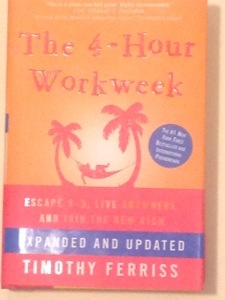
I hated this book.
Rarely does an author actually make me angry, but Timothy Ferriss managed it. I really wanted to like this book. It came highly recommended and it’s been on the best seller lists for ages. Ferriss gives you exactly what the book describes. He really does describe how to arrange your life so that you can have a four hour workweek. I guess it wasn’t the book I didn’t like, it was the author himself that I couldn’t stand.
What I liked
Ferriss is clearly an expert at the topics he addresses. He basically covers how to create an automated online business that requires very little work to maintain. It has to, he wants the rest of the time to sail, or travel, or do any number of exciting and fun sounding hobbies.
The resources he provides are astounding. Many of the computer programs I was already aware of, but he offers personal experience with things like hiring a valet in India to handle much of his day-to-day tasks.
His descriptions of how to pack for a two week trip is amazing. For someone who’s taken three changes of clothing for a 2 day trip, it’s great advice.
And when he gets into the mechanics of how to set up an online business, he breaks the entire process down into simple to understand and simple to implement steps. I’ve taken advantage of his “being an expert only requires you know more than your audience and they think of you as an expert” advice in the past.
I will return to this book at some point in the future to look at setting up an online business. How far in the future? It depends on how long it takes me to stop hating everything about him.
What I didn’t
I meant it when I said Ferriss made me angry. Which, I guess is a complement to his writing, that I felt as if he were talking directly to me. My biggest problem was that I think Timothy Ferriss is the most dishonest author I have ever read.
After two dozen times, I eventually quit marking the pages where he tells his readers to lie. There are small lies, “Take two sick days to practice your work at home plan,” to what is actually unethical. “Decrease your productivity during your in the office days, to make your work at home days look more productive.”
When he’s giving an example of how to test an online business idea, he recommends you set up an eBay auction for your product. Then, cancel it 5 minutes before it closes. You have to, since you’ve just taken bids for a product you didn’t have and had no intention of shipping. Pretty sure eBay has rules against that. In the same chapter he says to create ads for your idea and when people get to your order page, show them a page saying
“Links to PayPal are currently unavailable. Please try back later.”
Of course, he’s happy to keep those people’s contact information (not their credit card info since that would be illegal. Apparently he does have some lines he won’t cross at least in print.)
Ironically, he tells the story of offering 110% money back guarantee for one of his products. He calls it the lose-win guarantee.
“The lose-win guarantee might seem like a big risk, especially when someone can abuse it for profit. . .but it isn’t. Most people are honest.”
Fortunately, he wasn’t selling to people like himself.
There were other issues. Like his belief that he owes his coworkers no help, or consideration. They are distractions to be eliminated, or marginalized as soon as possible. (No, he doesn’t advocate killing any of them.) He talks about getting fired. I would have fired him too. He’s the small forward who believes the best way to play basketball is get the ball, shoot the ball. After all, the others on the team are probably just out for themselves as well.
I found myself so disgusted by Ferriss’ slippery morals, that I had trouble finishing the book. And certainly trouble focusing on the truly valuable information and resources he provides.
What it means to you
If you want to start an online business. This is a great book to start with. The list of reference tools and contacts alone is worth the cost of the book. In addition, Ferriss maps out a blueprint that anyone can follow for how to start an online business while still going to a 9-5 job every day.
He’s also a very engaging writer. If your goal is to get to the point where you can work 4 hours per week, he can certainly show you how to get there. Personally, it sounds like a very lonely way to run your life. And requires way too many compromises for me to seriously consider it.
Rating
This was a tough one to rate. The content is worth four or five stars. However, a book is more than just the information it contains. Based on the author and my likelihood to recommend this to a close friend, I’d rate it one or two stars.
I’ll compromise and give it 2.5 stars.
Rodney Bliss is an author, blogger, IT consultant and occasional book reviewer. He works more than 4 hours per week and lives in Pleasant Grove, Utah with his lovely wife and 13 children.
Tell your friends about this!


Did you hear about Nancy?
Is she still in Brazil?
Well, Argentina actually. There’re not sure if she’ll make the class in Bogata next week.
Why? What happened?
Food issues. She’s holed up in her hotel room barfing her guts out.
Nancy was one of our best trainers. She was on a three week trip through South America teaching Microsoft Exchange classes. Nancy was from the small town of Hickory, North Carolina and this was her first international trip.
We had warned her to be careful of the food in South America. Unfortunately it looked like she still ran into trouble. She managed to finish the courses in Buenos Aires and Colombia, and came home feeling totally wiped out.
She normally worked out of the Charlotte, NC office. The next time she was in Redmond she came and found me.
You gave me bad advice for that South America trip.
What? How?
You told me that I had to be careful of the food.
Yeah, I did. And you still got sick!
That was YOUR fault?
How do you figure that?
Well, I knew that I had to be careful of what I ate, so I decided to be super healthy and only eat fresh fruits and vegetables!

I laughed. I couldn’t help it.
For any readers who have not traveled in third world countries, you really do have to be careful of what food you eat. And the thing you need to avoid the most is . . .fresh fruits and vegetables! They are often washed in unsanitary water. Stick to the fried food. The hotter it’s cooked the better.
And the next time you warn someone about the food, be sure you are very clear. . . do NOT eat the fresh fruits and vegetables!
Rodney Bliss is an author, blogger and IT consultant. He has managed to avoid getting sick during any of his international travel. But, with 13 kids, he’s had plenty of chances to build up resistance. He lives in Pleasant Grove, UT with his kids and his lovely wife.
