I didn’t donate a kidney today.
That probably doesn’t sound like news. Chances are you didn’t donate one either. Even though we both know there are plenty of people who need them. One of those people is my friend, Tom.
Tom and I have been friends for several years, he’s about my age or slightly younger. He’s got kids at home, a wonderful wife, Sara, and like me, he’s currently in a job search. Unlike me, Tom’s kidneys don’t work. They’ve been failing for years and finally got to the point where they completely shut down and he had to go on dialysis. He’s known the day was coming.
“When you get to that point, I’ll donate a kidney.”
“Rodney, that’s a big commitment. You don’t have to do that.”
“I know, but let me know when you get to that point.”
“Ha, ha. Okay.”
Apparently, offering to donate a kidney is surprisingly common. Less common is actually following through and giving the kidney. As I found out, the emotions involved in offering are much different than the emotions involved in going through with it.
A few weeks ago, Tom came to me.
“They tell me I’m now to the point where I’m ready to be put on the transplant list. I know you said. But, don’t feel obligated. Really, it’s not something I feel I can ask anyone to do.”
“What do I need to do?”
“You’re sure of this?”
“I told you I was. Nothing’s changed.”
“Here’s the name and number of the transplant center. They’ll give you all the details.”
The truth is A LOT had changed. The most important change being that I was now looking for another job. I still had health insurance. I still had money to pay my bills, but I was working on finding another job. Could I still donate a kidney and pursue another job?
I called the number. Again, I was assured that at any point I could withdraw and there would be no problem. Many people get into the process and then decide it’s not for them. THERE WAS NO OBLIGATION.
They sent me the packet of information and told me that I could take as long as I wanted to get the tests done. They also included information about what to expect. That’s where more doubts started to come in.
One story talked about a woman who gave a kidney to her husband. He was up and around after just a few days, while she was wiped out for weeks. Could I afford to be wiped out for weeks? How would that affect my ability to interview and network?
I also saw this story about a man who donated a kidney to a girl and it pretty much ruined his health. Those cases are not common, but they do happen. What if I couldn’t work again? Was I willing to risk that? Was it fair to my kids and my family? Why was I donating this kidney? Was it for Tom, or was it because I wanted to feel good about what a great guy I was?
I should also say that I hate hospitals, along with doctors, needles, blood and even people in white coats. (Okay, only white LAB coats.) Oh, I know how important they are. And I’m grateful for those willing to work in that profession, but I’d rather be sick for a week than have someone stick a needle in my arm.
Believe it or not, you have to get a needle stuck in your arm to be tested for a transplant.
I went to the hospital where the lab work was done. And they drew my blood. And they they drew some more. And then they drew some more. And still more. Finally, they made me pee in a cup and I was done.
Now the waiting started. . .and the doubts.
You can withdraw at any time.
No obligation.
You don’t have to do this.
You could hurt your job chances.
About ten days later the phone rang. Caller ID said it was the hospital.
“Mr. Bliss?”
“Yes.”
“We’ve got your test results.”
My heart rate jumped to about 120.
“Your GFR flow rate is lower than we’d like it for a transplant. Anything above 60 is fine, and you’re at 65. We’d really like to see it at least 80 to consider you for a transplant. So, we’d like you to come in and test again. And come well hydrated.”
I had to wait another week for them to send me the additional paperwork.
You can withdraw at any time.
There’s no obligation.
You don’t have to do this.
Well hydrated. I started drinking water and soda the day before. I was so well hydrated that I felt like I needed to stop at every gas station between Pleasant Grove and Murray, UT.
Back to the hospital for more blood work. I try to distract myself from the fact that someone is going to put a needle the size of a garden hose into my arm.
“So, how long have you been a phlebotomist?”
“Oh, I don’t normally do this. I’m actually a chiropractic student. I’ve only been doing this for a couple weeks on an intern exchange.”
Oh goody.
Now, more waiting. . .and waiting.
After a couple weeks, of not hearing from them, I finally call them back.
“Well, we still need some blood pressure readings from you.”
I passed!
“Last time you told me that my GFR rating was too low?”
“Oh. . .wait. That’s right. Just a second. . .”
Another lifetime, really two lifetimes of waiting.
“Your GFR rating is only 68. I’m sorry.”
I failed.
The emotions that I went through were not what I expected. It’s one thing to be able to provide service and choose not to. It’s something else entirely to be told that you can’t serve.
I really have no control over it at this point. And that’s what’s maddening.
I didn’t donate a kidney today. . .but I really wish I could have.
Tell your friends about this!

I’m a huge fan of stand up comedy. I watched a performance one time by a comedian as he juggled an axe and two machetes.
“This is the original axe that George Washington used to chop down the cherry tree.
I had to replace the handle. . .
. . .and the head.”
What makes us who we are? If he’d only replaced the handle, or only replaced the head, would the axe have been valuable as more than a stage prop?


This is the “Provo Tabernacle“. It was built by Mormon pioneers in 1898. It is one of the city treasures of Provo, Utah.
Last year it was heavily damaged by fire. Rather than raze such an iconic structure, the Mormon church opted to renovate it and use it as a Mormon temple. The interior has been completely gutted. Not only that, the inside of the exterior walls have been reinforced with concrete and rebar.
They even dug down and replaced the entire foundation. All while leaving the exterior walls standing. It made me think about that comedian and his axe. If we maintain the outer shell, is it still the same building?
How many of us are like this building? Have you ever had to completely change who you were inside while keeping the outer walls? In business we often call this “reinventing ourselves.”
I have a friend named Howard Tayler. We met while working at WordPerfect Corporation. Howard went on to Novell and ran their Novell GroupWise development team. About seven years ago Howard left the IT world to pursue his passion of being a professional cartoonist, despite the fact that in his words he “didn’t know how to draw.”
Howard draws the award winning comic Schlock Mercenary.
We may not go through as major a change as the Provo Tabernacle, or give up our day job to draw a comic and give it away for free on the Internet. But we each can make internal changes that affect the essence of who we are in the workplace.
Several years ago I was at a company and was moving between teams in the same department. The change was not a smooth one and my annual performance evaluation that year was the worst of my career. I went to my mentor for advice.
“Yeah, that’s a pretty scathing review. So, what do you plan to do about it?”
“I was wondering if I should just start over in a new group, or even a new company. You know, kind of put it behind me.”
He looked at me with a trace of disappointment.
“Rodney, this is a problem. If you don’t fix this, you’ll be running from your problems the rest of your career. If you want my advice, I’d suggest you do what Dieter F. Uchtdorf suggested, and ‘Lift where you stand.‘ It will take longer, but I know you can get through this.”
So, that’s what I did. I focused on my current role and did everything I could to make it not only a success, but an essential success to our department.
His faith in me was vindicated about a year later. I went in talk to my manager about applying for a different position in his organization.
“Well, you can apply if you want to, and I certainly won’t stop you, but I REALLY appreciate the work you’ve done in your current role. The work in your current role has impressed senior management. I think there’s a lot more room for future promotions and visibility where you’re at.”
My review that year was one of the best in my career.
“We all have a face that we hide away forever. . .”
We all have times where we need to change that inner face. Sometimes it’s forced on us like the Provo Tabernacle restoration. Sometimes we need courage to follow our dreams, like Howard Tayler. Other times we need courage to face our weaknesses. That’s where growth comes from.
Tell your friends about this!
Today I put down an emotional rock that I’ve been carrying for 15 years.
I was working for Microsoft and in the spirit of Jim Collins’ “Good to Great,” I was in the wrong seat on the bus. I knew it, and my manager knew it. I wanted to change seats just as much as he wanted me to go sit somewhere ANYWHERE else.
It was close to Christmas time and Kevin, the manager went out and bought each team member a CD. We had varying eclectic tastes. Rather than buy the current Flavor-of-the-month, or some generic Christmas album, Kevin really looked for a CD that would fit each person’s tastes.
I don’t remember what he got for other people, but in my case, he was spot on. In fact, he was TOO accurate. He bought me a copy of “20 of Hank Williams Greatest Hits.” You might think that twangy, worbily crooning is worse than nails on a chalkboard. I know some people do. But, it’s the music I grew up on. (It was old even when I was young.)
The reason this was a problem is that I already owned “20 of Hank Williams Greatest Hits.” Kevin had managed to find an obscure CD that I had purchased for myself.
Of course, the polite thing to do. . .the mature thing to do would be to thank him for his thoughtfulness and not mention the one I already owned. I was neither polite nor mature. I sneered some rude comment about “I’ve already got this.” I left his team shortly afterward and haven’t spoken to him since.
That all happened 15 years ago. My actions have continued to bother me even though in all probability he doesn’t even remember it. I tried to look him up a couple of times over the years to apologize, I never could seem to track him down. I got to thinking about that story recently and realized that when I was searching for him before, there was no Facebook, or LinkedIn. So, today I went looking again. I discovered he’s now an artist and teaches drawing.
Today I emailed him and apologized for my rude behavior all those years ago. He was much more gracious than I deserved.
“Hi Rodney,
I appreciate you taking the time to write. Perhaps one of the (sometimes too few -) good things that comes with getting older is largely forgetting things that have occurred in the past – or at least compartmentalizing them successfully. We also get perspective on things in the far corner of our rear-view mirrors.”
After some other kind comments and accepting my apology, he finished with “Best regards and I still believe, one can never go wrong with some good Hank!”
I hadn’t realized how much that rock weighed. It felt good to finally lay it down.
Tell your friends about this!
“Hello? This is Paul in Accounting. Is this the checkin number?”
“Yeah, Paul. Thanks for getting up to help us. How do your servers look?”
“Everything I can see looks good. . .Do you need anything else from me?”
“Nope. If you don’t have any alerts, that’s all we need.”
It’s 3:00 AM on the third Saturday of November. I’m the Change Manager for data center maintenance for a large non profit. We have just finished 7 hours of maintenance work representing 18 major tasks and over 300 subtasks across multiple data centers. I’ve been planning this work for 6 months. The engineers tell me everything is done. We’ve completed our internal checks. And now we are waiting on our customers to call in and tell us if all of their systems are up and running.
“So, how many does that make?”
“Let me see. . .that’s 23 portfolios checked in so far.”
“How many total?”
“27 portfolios, but some have multiple people. If we get 30 out of our 35 I’ll be happy.”
“Yeah, hello? This is Frank in shipping.”
“Hello, Frank. Thanks for waking up to help out. How do your servers look?”
“Everything looks good except for L4250. I can ping it, but I can’t connect.”
“Hang on, Frank. We’ll get someone to check that and get right back to you. Stay on the line with us. Is Network Operation Center still on the line?”
“Yes, this is Jose.”
“Jose, would you have someone check L4250? And also, we haven’t heard from Daniel Carmichael in video productions. I know they have a broadcast tomorrow and I really want a status from them. Would you call their duty phone and wake them up?”
“Sure, we’ll get right on those.”
The maintenance goes from 8:00 pm to 3:00 am. The verification goes from 3:00 am to 6:00 am. In addition to the 35 customers who have signed up to verify their systems, and the NOC folks, I have a large team tonight of close to 50 engineers, vendors and managers. In addition there are program managers who provided the food and most importantly the billing codes. There is also the occasional senior manager, or HR representative who wants to come down to the data center on a Friday night to be part of our production.
As we moved through each phase of the maintenance over the past weeks; pre-planning, approvals, planning, communication, change control, and the actual work tonight, everyone has looked to me for direction. I sometimes feel like a director in a play. I don’t do any actual work on the system, but I coordinate everything.
The surprising thing is that none of the people involved in this process actually work for me. This group that I’ve affectionately named “Red Shirts,” in honor of Star Trek’s engineering teams, is made up of people from every department across our entire enterprise. Each team has willingly donated people to work on the monthly maintenance because I was able to convince them that by contributing some of their teams budget and resources would not only help the organization, but more importantly would see that their own projects got seamlessly integrated into our maintenance schedule.
All this planning, all these people, and Monday we start the entire process all over again for December.
I counted up the number of people involved on a busy month like November and it came to over 70 people. It is by far the biggest team I never led.
Tell your friends about this!
It’s not what you think.
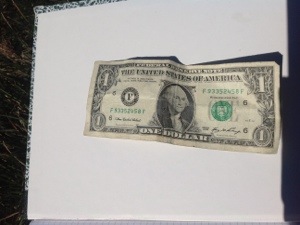
A dollar. $1.00 per hour was by far the largest raise I’ve ever received. Probably doesn’t seem like much. But, looks can be deceiving.
The year was 1983. I worked as a delivery boy for a local furniture store, Arden’s Appliance. We sold washers, dryers, Lay-Z-Boy recliners, and Laser Disc players. I was 18 and fresh out of high school. It was a temporary job since I was planning to leave on a mission for the Mormon church after I turned 19.
I enjoyed the work. I worked with my friend Rick and we both had the same attitude about work. . .get it done as quickly and as well as you can. Arden’s promised free delivery, and more than once people who came in and bought a new washer and dryer found us parked in their driveway by the time they got home.
I made $2.50/hour. I was excited about that since minimum wage was $2.30. I took home a hefty $100 each week before taxes. As the date of my mission drew nearer, I gave the owners notice and we decided on a final day a couple of weeks in the future. I also had a conversation with Arden’s wife, who’s name escapes me after all these years.
“Ah. . .I was wondering if I could talk to you about a raise?”
“But, you’re leaving in 10 days. Why ask about a raise now?
“Well, see when you apply for a job, they ask you what your starting and ending wage was at your previous job. I figure if you could give me a raise on my final paycheck, it will help me when I apply for my next job. They don’t have to know it was only for a week.”
“I see. I’ll talk it over with Arden.”
And that was it.
The next week and a half went by without any more on the subject. My final paycheck was in an envelope. They handed it to me, shook my hand and wished me well.
My heart was beating as I walked to my car. I really wanted to open that envelope, but I also wanted to look mature. (Very important to an 18 year old.) I did manage to wait until I reached the car.
I was expecting 10%. I let myself imagine an extra $10. The number was bigger than that. MUCH bigger. I checked the gross payment line and saw $140. I was hoping for 10% and instead I’d gotten four times that.
Think what that would mean to you and your paycheck. Have you ever gotten a 40% raise? I hope so, but I’ve never got anywhere close to that.
Microsoft was very generous and 10%-15% wasn’t unheard of. Working for a non-profit anything about 1% was considered good.
So, what’s the lesson here?
We need to look at little things. We don’t have to spend a lot of money to impress our employees. In fact, often money is not even the most important compensation.
When I worked for RESMARK we had a policy where we would ask new hires what they liked to drink. (Fortunately none said alcohol, or I would have had to modify my plan.) Surprisingly most wanted water. And not even bottled water. They wanted a water cooler.
We had one employee though who was addicted to diet Coke. He drank A LOT.
One day, Russell, my office manager came to me.
“I don’t get it.”
“What do you mean?”
“You said that you have a reason for every decision you make in the office, right?”
“Right.”
“Then, I don’t understand why money is tight and yet you buy as much soda as people want to drink. Dave drinks A LOT of diet Coke.”

“Look, I don’t provide soda and drinks because I’m a nice guy. It’s purely business.”
I could see that Russell wasn’t convinced.
“Let’s suppose that Dave drinks $100 worth of diet Coke every month.”
“Well, that would be 15 – 20 cans per day.”
“Yeah, but let’s just suppose he did. Dave makes $80,000 per year. And he’s on salary. That means that he makes the equivalent of $40 / hour. If I can keep him working an extra 15 minutes per day because he doesn’t have to walk down to the Maverick on the corner, that’s an extra 4 hours per month that he’s working. That’s about $160 dollars worth of additional work I get from him per month and all it costs me is $100.”
I could see the light start to go on for Russell.
“Okay, I think I get it.”
“One more point. I could give Dave that $100 and he’d be pretty happy. But, it’s about 2% of his salary. He’d barely notice it. And he has direct deposit, so he’d quickly forget about it. But, with this plan, every time he walks to the refrigerator and gets another diet Coke he’s reminded of how nice it is to work here. . . we give him free diet Coke!”
The lesson is that you don’t have to do extravagant gestures to make an impression. For your company it might not be free diet Coke. But, whatever it is needs to be done with an eye toward the employees. And it doesn’t even matter if you tell them your plan. I shared with Dave the exact reason I was providing free diet Coke. He understood, but since he was getting his free drinks, he didn’t see it as manipulative. He remembers it to this day. And even 35 years later, I remember the biggest raise I ever received.
Tell your friends about this!
Peter Mills is a late night security guard with American Fork hospital. Recently there was this story about how he gives cars to children brought into the ER late at night. It’s a great story and you should go read it. I’ll wait.
Welcome back.
My connection with Peter Mills goes back several years. It was late one night in 2009. We were at home and my son was recovering from surgery and was having a particular bad night. He was in terrible pain complaining especially that his legs were hurting. We were monitoring his temperature throughout the night. At 3:00am it spiked to 108.9. We rushed him to American Fork hospital as he went into shock.
It’s a horrifying feeling to watch your 9 year old son go from screaming in pain to completely catatonic. I honestly thought he had died in my arms. The doctors immediately went to work on him and after about 10 minutes he screamed. Nothing ever sounded so good to me.
Have you ever held your breath for 10 minutes? You can do it if the world is ending.
I started to breath again. And then I started to cry. I cried like I’d never cried before. . .or since.
Peter was working that night.
It was just him and me in the waiting area of the Emergency Room. Thirty minutes and an eternity later I’d pretty much cried myself out. Peter approached and looking for a common topic he noticed my masonic ring, and mentioned that he was also a Mason. I don’t really remember what we talked about that night. It wasn’t anything profound or noteworthy. But, it was important to me.
I’m not surprised that Peter Mills is being recognized for the great work he’s doing for children. He’s touched many lives, including mine.
Tell your friends about this!
I’m on a conference call on my way to a meeting and I’m passing THAT intersection. The intersection where my transmission goes out.
A transmission, as you car guys know is really expensive. I mean, “Maybe we should just abandon the car on the side of the road and walk away” expensive. Just before Christmas I was driving my Chevy Suburban along Geneva Road in Orem, UT. I was on a conference call on my way to a meeting. The meeting was in Provo, but I was taking Geneva instead of the freeway because I’d been having some car issues. If you’ve read my other posts, you know that transmission issues are not one of the three things I know about cars.
“Yeah, I’m about 20 minutes away. Just turning onto Geneva up in Orem.”
Geneva road’s speed limit is 50 mph. At about 30 mph my car made a grrrrskmmmm noise. Slow down, noise goes away. Speed back up, and grrrrskmmmm again. Okay, I can drive at 30 mph. That lasted about a quarter mile.
grrrrskmmmm
“Ah. . .yeah, I’m gonna have to call you back. I’ve got some car issues here.”
The third thing I know about cars after how to use jumper cables and change the windshield wipers was my mechanic’s phone number on speed dial.
Transmissions are expensive. In my case it was “Sorry kids, Christmas is all about Daddy this year” expensive.
The thing is, I have that same meeting every month. I have to start it on a conference call while driving to the meeting. And every month, as I approach the intersection of Geneva and 1600 N in Orem. My transmission goes out.
Well, at least in my stomach it does. I get tense. My palms sweat. I start listening extra carefully to the engine. (Yeah, the transmission isn’t part of the engine, but that’s beyond my limited automotive experience.) I go through all of the same emotions that I experienced those months ago.
Some might call this Post Traumatic Stress Disorder (PTSD.) I call it a $2600 stress test.
So, what does this have to do with business?
We each have that intersection that we dread. Maybe it’s your monthly status update that you once accidentally emailed to the Senior VP, and even though you KNOW that his name isn’t on the TO: line, you double check it again. . .and again. Maybe it’s your boss saying, “Can I see you in my office a minute?” because it takes you back to a time long ago at a different company where that phrase preceded a 45 minute tongue lashing.
I can’t tell you how to overcome this fear. I can tell you what I do. I acknowledge it. I embrace it. I KNOW that I’m going to react emotionally to certain triggers. Forewarned is forearmed. When it happens, my brain argues with my stomach that there is no reason to worry. Sometimes it works better than others.
Oh, and I’ve decided to start taking the freeway instead of Geneva. . .just in case.
Tell your friends about this!
BEEEP, BEEP-BEEP, BEEEP
What a weird sound to hear in this field of daisies.
BEEEP, BEEP-BEEP, BEEEP
No, not daisies. What a weird dream to have during that sound.
BEEEP, BEEP-BEEP, BEEEP
Hang on, that’s not in my dream. . .dream. . .bed. . .Where was I again?
BEEEP, BEEP-BEEP, BEEEP
Okay. I’m awake now.
BEEEP, BEEP-BEEP, BEEEP
Funny, that sounds just like the fire alarm. . . and now I’m up, robe on and headed out down the hall, my wife following close behind.
Our house has one of those “integrated” systems where every fire alarm in the house is wired into the same circuit. So, running into the living room simply meant a new alarm RIGHT NEXT TO MY. . .
BEEEP, BEEP-BEEP, BEEEP
Okay, think. (Not any easy process at 3:00am.)
Smoke. Do I smell any smoke?
sniff, sniff. (Stupid cold!) Sniff?
No smoke. Good
BEEEP, BEEP-BEEP, BEEEP
Ah. . .next. . .FURNACE! As I’m fighting my way down the stairs to the furnace room, I pass three very sleepy children headed up.
“Daddy, why is the fire alarm going off?”
“Mommy’s checking the kitchen. Upstairs, right now!”
BEEEP, BEEP-BEEP, BEEEP
Okay, that’s getting REALLY annoying. Stop at the alarm at the bottom of the stairs. Push frantically at the buttons on the front.
Maybe that got it. . .
Ah. . . .
BEEEP, BEEP-BEEP, BEEEP
Argg! The red one, push the red light. That did it.

Furnace looks fine. No smell of gas or smoke. Back upstairs to see how the kitchen checked out.
“Anything?”
“No, the kitchen is fine. Nothing.”
“Well, it takes a while to learn the quirks of a new house, I guess.”
“If there’s no fire, I’m going back to bed. Come on kids. False alarm.”
I’m too keyed up to join her. I recheck the furnace, gas stove, the garage. I even open the door and poke my head outside to see if maybe there’s a fire nearby. After about 20 minutes I’m finally calm enough to lay down. As I drift off to sleep a thought hits me. . .We have EIGHT children at home. What happened to the other 5?
———————
My other five were fine. But, it was a reminder that maybe we needed a few more family fire drills. ..but not at three o’clock in the morning.
At the time of crisis is the wrong time to develop your crisis plan.
———————-
A new email popped up in my Outlook client:
SUBJECT: Meet exciting Singles in your area.
Uh oh. Those messages were supposed to be blocked by our spam filter. Maybe it was just a single. Before I could open it, another email arrived.
SUBJECT: Meet exciting Singles in your area.
This is bad. Clicking open, I could see that the email contained nothing except a link.
“JAMES!!”
“I’m on it! Just about done!”
I was up to 10 requests for meeting excited singles.
“DONE!”
By now, we had network security guys swarming our area.
I’m in charge of the Microsoft Exchange email system for my company. It was brand new and we were coming up with processes and procedures. One of the first ones our team came up with was the idea to create a “AA Canary” email address. It was the first entry in the address book and it’s only purpose was to forward any email it received to my messaging team and to network security. Many spam attacks “walk” their way through your address book. The first message I received was the first one to hit the network.
Spammers will combine with virus writers to get inside your network and then send hundreds of messages. We had 30,000 entries in our address book. That’s thirty thousand people who did not need to spend part of their day dealing with an email virus.
“What’s the damage, James?”
“Looks like it hit about 800 people. We’re currently killing all messages in transit with the subject of “Meet exciting Singles in your area.” Nothing is getting past the transfer agents. We’ve also locked it out at the perimeter spam filters. It must be a zero day virus or ProofPoint would have caught it. We’re also blocking the web address of the link. I think it’s contained.”
“Okay, nice work. Let’s get a process started to scrub the 800 mailboxes that got infected. Oh and someone monitor Twitter and Reddit. I’d like to know how many other companies got hit.”
One of the second processes we set up was a a system rule that allowed us to kill all email with a particular subject line. We just had to drop in the subject line and click execute and those messages were stopped. It was most useful for combatting “Reply-All” storms, where a large number of people all reply to a message at the same time. Normally, they are saying, “Stop using Reply-All, it’s clogging the network.” But the rule works well for virus and spam attacks as well.
I was really glad that unlike my fire alarm experience the team and I had anticipated what problems we might face and had not only developed plans, but practiced them as well.
Preparation for a fire drill is just as important in business as it is at home.
Tell your friends about this!
I live in a winter state. This winter has had lots of snow, ice, days of sub freezing temperatures. But around the first of February I start getting excited about the Four Most Exciting Words in Sports.
If you’ve followed my twitter or facebook updates, you’ve seen me tease at what these words are. Some of the responses ranged from the amusing:
Mariners out of Playoffs
to the serious,
Gentleman, start your engines.
But, to me, the four most exciting words in sports are: Pitchers and Catchers Report! It marks the start of the baseball season, and although there’s still snow on the ground, it brings to mind images of sun-kissed days spend watching 18 men chase a small white ball around a really big green lawn.
And I love it.
The regular players won’t show up for another week or so. And actual Spring Training games will be an additional couple of weeks after that. Gone are the days when baseball players would take the off season, well. . .off. Most of these guys have been playing winter ball or at the very least working out since the season ended last October.
But, no matter how much work the players have done on their own, or with a team in the Dominican Republic or Venezuela, when they come into Spring Training, they are not nearly as sharp as they were at the end of last season, or as they will be on Opening Day. A big reason for that is that the players have to learn to work together as a team.
Now some teams are blessed (or cursed) with a fairly stable roster year to year. Derek Jeter has been the Yankees shortstop since he came up with the Yankees in 1995. That’s some pretty good consistency.
Still Jeter has to learn the rest of the team. He’s thrown to 17 first basemen in the past 17 years.
Teams are similar. Just because you put a group of people together under a common manager, or around a common project, doesn’t make them a team. If any MLB team decided to skip Spring Training, even non-baseball fans would know about it, because once the season started they would likely lose every game until they worked through how to be a team.
Now, you might be asking, “How does this related to businesses? We don’t have the luxury of sending everyone on a our project team to Arizona for a month at the end of Winter to let them learn how to be a team. And we don’t really have a season. Our season is never ending.”
All of that is true. But, you don’t have to send you project teams to Florida or Arizona for the Spring. But, you can still draw some lessons from Spring Training and apply them to the business world.
A baseball team, as everyone knows has 9 positions on it. When we were kids, we’d pretty much take any of the 7 interchangeable positions without regard to “who is the best 2nd baseman,” or “who has the best range at shortstop.” Of course, the two non-interchangable positions were pitcher, he had to be the guy who could actually throw it over the plate, and right field, which was reserved for the most uncoordinated kid on the team.
But a modern baseball team needs people with specific skills at each position. The corners, 1st and 3rd base, left and right field, are you power guys. I’ve seen first basemen who could barely walk, but they could hit it a mile! Your middle infielders, shortstop and 2nd base, had to be guys who had great range and could make an accurate throw to first. Center field? Often the best player on the team. He needed great range, he needed a great arm, and he needed to be able to direct the other two fielders.
The catcher is the guy who calls the game and is often the smartest guy on the team. (Yes, I know that Yogi Berra was a catcher, and he didn’t say half the things he said.) And that leave the pitcher. But even there, you have right and left handed starters. You have the long relief guy, the short relief guy, the setup man and the closer. There a reason that on a 25 man roster, typically 11 or 12 are pitchers.
So, back to business. Your team has specific positions you need to fill. On my last team, we had a Program Manager. He owned the budget and the money. A Project Manager, he was responsible for the schedule and identifying the needs. We had engineers. Like pitchers, they were specialists. The network guy, or the database guy, or the storage guy. And the team lead. He’s like the manager. Often doesn’t do any of the work, but makes sure that all the rest of the team members have everything they need and know how to work together.
Spring training is a time for everyone to learn their own role and figure out how to work with people in the other positions.
When you create a team, or when you team gets a new project, it’s important that you go through the same process. It probably doesn’t take a month, unless you have a completely new team working on a completely new project. Sometimes it can be as short as an hour. But, just like the team that skips Spring Training is going to struggle once the season starts, if you have team members who are unsure of their roles, or don’t understand how best to communicate with their coworkers, you are going to struggle.
The great thing about Spring Training is that at the end of it, we here the TWO most exciting words in sports: PLAY BALL!
Tell your friends about this!
“Paul would like to see you.”
“When?”
“Right now.”
“Can you tell me what it’s about?”
“I think I should let Paul tell you that.”
Six days earlier, Paul’s boss Brian had announced via a department wide meeting that changes were coming, and they would include layoffs. Still, I held out hope that perhaps they were merely going to reassign me. My current position was very high profile and I knew that Paul was pleased with the improvements I’d implemented. I was hoping that Paul would expand my role to include all of his organization.
The first person I saw when I came into the room was Paul, our Division Director and my boss’s boss’s boss. “This might not be too bad.” As the door swung further I saw Melissa, our HR rep. “Uh oh.”
Most people who’ve been in business for years has been involved with a lay off or a firing from one side of the table or the other. It’s no fun from EITHER side, but considerably less fun from the employee side.
It reminded me of another meeting I’d had five years earlier. That earlier meeting was at a small rafting company in Wisconsin, rather than an IT shop in Utah. In Wisconsin, I’d taken a huge risk to take a job that was based on a handshake and a promise. The handshake was firmer than the promise. After 23 days, I was unceremoniously sacked. No real explanation, no job, hugely in debt and now stuck in a part of the country where an IT Manager, trainer, public speaker, really didn’t have any job prospects. That fateful day was the beginning of a long and agonizing journey. We lost the house. But, to be honest, it’s not lost. It’s right where we left it, there’s just someone else living there.
Anyway, the biggest lesson I learned in Wisconsin was that nothing is for sure, and you really have to depend on yourself, and put yourself into a position where you can easily move on to a new position.
Fast forward 6 years. During that fast forward, we put our plan in action. We paid off all our debts. Paid off both cars. Put some money away. Found another house. (I wonder if someone lost it?)
So, now as Melissa and Paul went over the generous severance package I realized that I wasn’t afraid. Sure, I was disappointed. I loved my job. I’d done some fantastic work. (It was clear that the layoffs were done by function, not by performance. Me, my peer, my manager, his peer and their manager all got let go.) But, there was no fear. I almost heard a voice in my head saying, “It’s going to be okay. You’ve been preparing for this possibility.”
My friends, however were devastated on my behalf.
“That’s terrible! Are you okay?”
“Yeah. I really am. We’re going to be okay. It is an inconvenience, of course.”
So, I set out to find my next exciting opportunity. The contrast in my reaction to the two events couldn’t have been more stark although the circumstances were nearly identical.
I realized it is true, “If you are prepared ye shall not fear.” (But, it still kind of sucks to lose your job.)