If you go to climb a mountain
Sit down when you begin.
Count up all the things
That you must sacrifice to winThe mountain peak it’s for the brave
And those who really try.
When they suffer failure
They don’t sit down and cry,But put themselves back on their feet
And start off once again.
They just keep on tryin’
‘Cause they know that they must win.“Mountains and Towers“
We’ve all been warned to avoid making a mountain out of a molehill. But, what about when you really DO have to climb a mountain? What then?
It could be a literal mountain, but given that this column is about business topics, we all have mountains in our work. Maybe it’s creating a two week training course. . .by March 1st! Or, it’s preparing for the presentation to the CEO. . .for the first time.
Maybe it’s just getting through a mountain of emails, two planning meetings, 3 customer calls, all by 5:00 so you can get out and start your vacation.
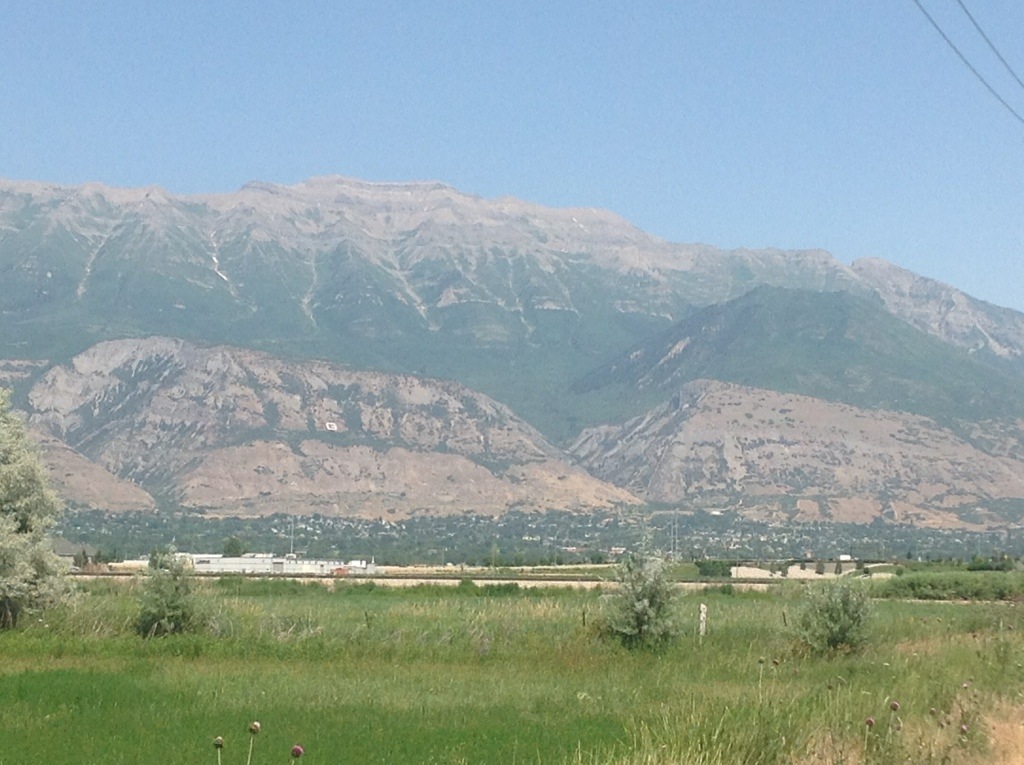
Whatever the mountain, it’s important to keep perspective. The picture at the top of this column is the mountain that I live under. Okay, I’m not a troll, I live in a house, just below the “G,” which stands for Pleasant Grove. To the right of the G you can see a canyon. This is Battle Creek canyon. The scene of one of the first battles between settlers and Native Americans.
This picture is the view from the Battle Creek Canyon trailhead.

Battle Creek Canyon trailhead
Do you notice something about the pictures? When standing at the trailhead you can’t see the peak. You are too close to the mountain.
We, of course do the same thing in our projects. It’s called losing perspective. I’ve seen a department order hardware not because they needed it, but because it would be too much work to cancel the order when the project needs changed.
Here’s that view from a mile down the road.
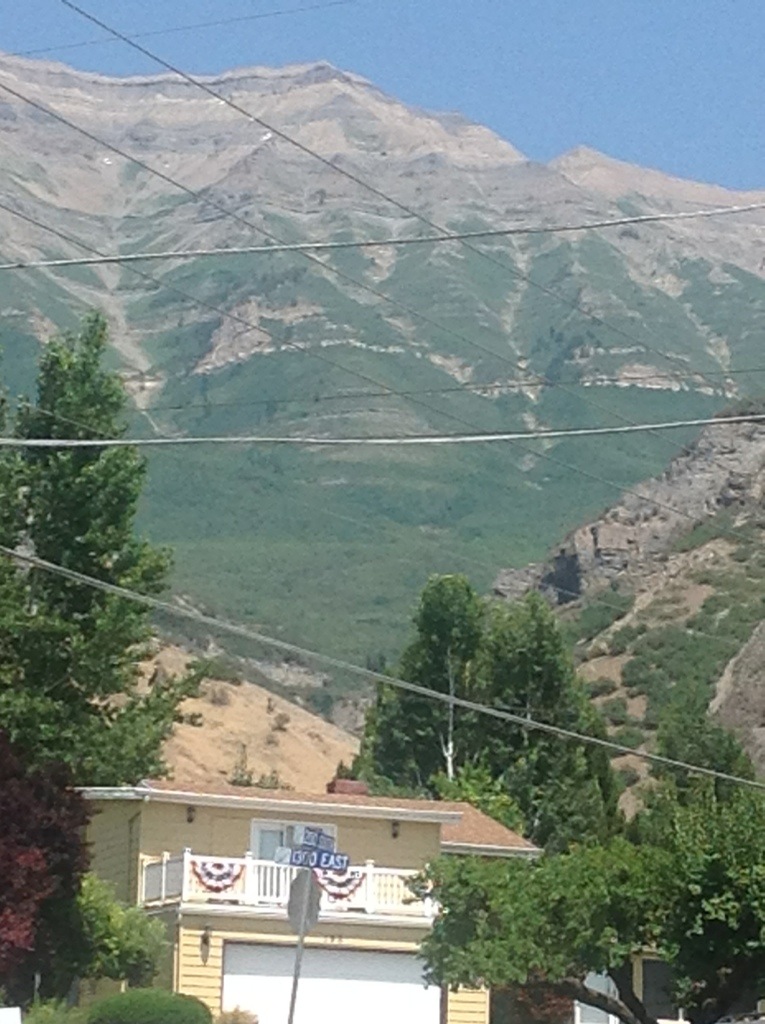
1 Mile
I can now get a better view of the ultimate goal. Sometimes you need to take that step back (in this case a mile worth of steps) so that you can actually see what it is you are trying to accomplish.
This is the view from two miles away.
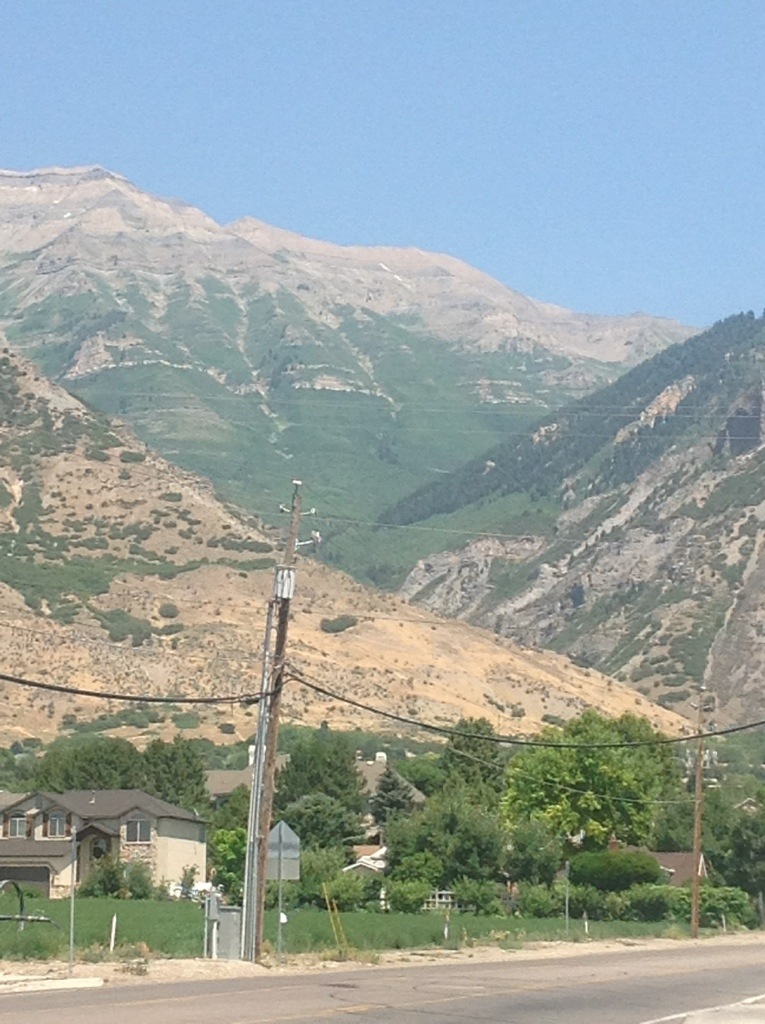
2 Miles
It’s easy to now see not only the mountain peak, but the surrounding issues and projects. . .I mean canyons. You can take the “step back and get perspective” exercise too far.
Here’s the view from 5 miles.
5 Miles
Sure, I can get a better view, but I’ve now started to lose some of the detail of the surrounding initiatives. . . I mean canyons. I’ve worked with people who were so interested in getting the remote perspective that they never got around to getting to the details. Like last week when I talked about David who was responsible for getting internet access to 16,000 locations around the world. (But He Held Great Meetings) David spent so much time at the 5 mile range that he never actually charted a path through the canyons. . .I mean issues.
I love Utah.
I’m a transplant from Washington State, but I’ve come to appreciate the beauty of the high mountain desert and the Rocky Mountains. My mother still lives in Olympia, Washington. She came to visit me last year. We were planning to visit my daughters who lived around the valley. I found myself saying,
Well, first we’re going to Payson. It’s at the base of that mountain over there.

Looking South toward Payson, UT
Then, we’re going to Eagle Mountain. It’s that mountain over there.
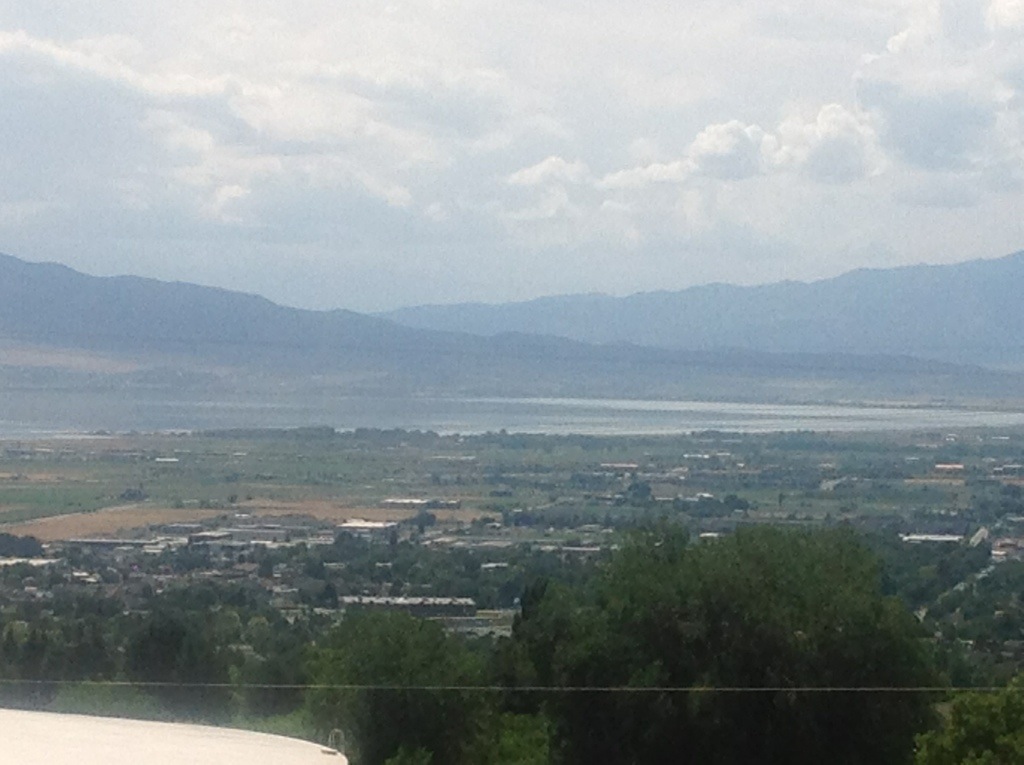
Looking West toward Eagle Mountain
You’re hotel is at the Point of the Mountain, over there.

Looking North toward Point of the Mountain
And of course, our house is in Pleasant Grove at the base of that mountain, there.
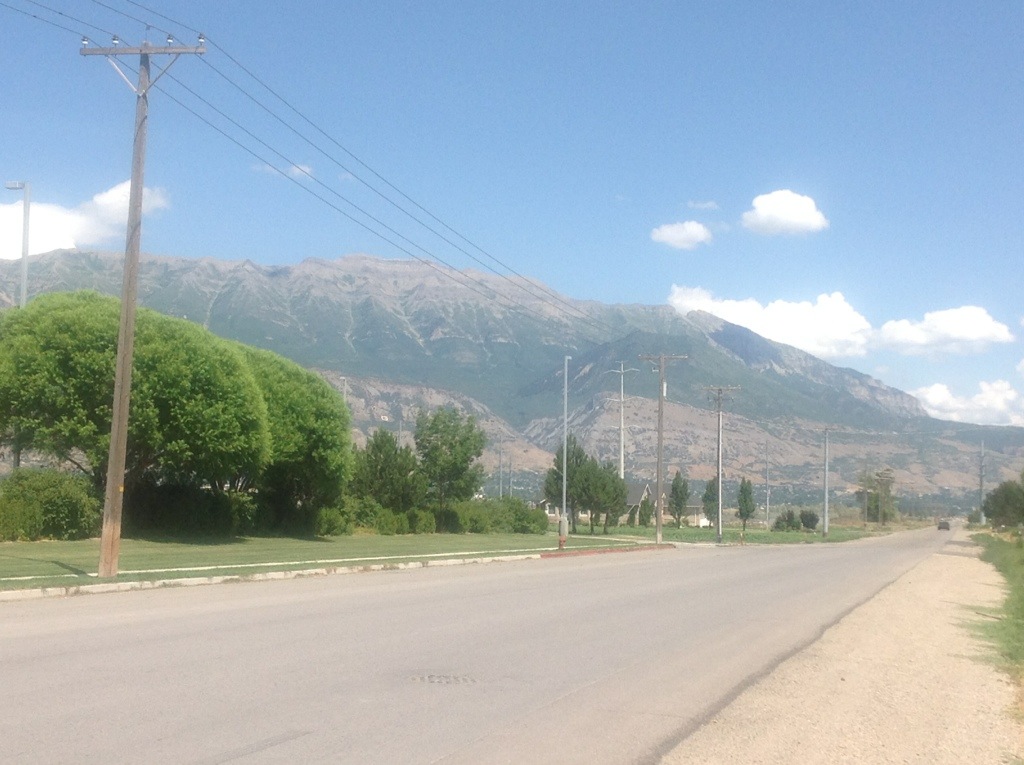
Looking East toward Mount Timpanogas
The mountains have become my guideposts. But, you have to get enough distance away at times to be able to see them clearly.
And, this, this is the view from my front porch, just under the “G” on the west slope of Mahogany Mountain, just below Mount Timpanogas.

A summer sunset looking West from my front porch
Like I said, I love Utah. It’s pretty here.
Rodney M Bliss is an author, blogger and IT Consultant. He lives under a mountain in Pleasant Grove, UT with his lovely wife and 13 children.
Follow him on
Twitter (@rodneymbliss)
Facebook (www.facebook.com/rbliss)
LinkedIn (www.LinkedIn.com/in/rbliss)
or contact him at (rbliss at msn dot com)
Tell your friends about this!

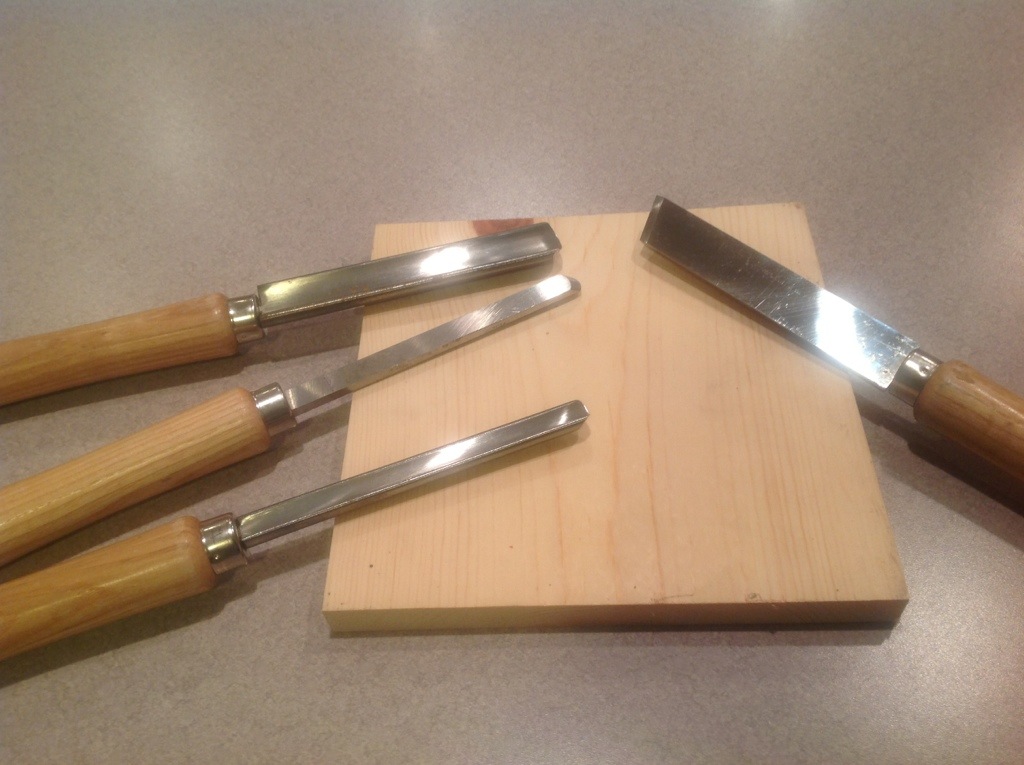
It was three minutes. Four at the most. I jumped out of my car, raced back into the store. . .and it was gone. . .
“It” was a 64 GB iPad 3. I had left it sitting in the basket of my empty grocery cart. It was 10:24pm last Wednesday night. I know the exact time because I had to find it for the police. I didn’t call them right away. First I checked with the customer service desk.
Nope. They generally get turned in, but we haven’t seen anything tonight.
Next, I wandered through the store trying to not look like some creepy stalker as I spied at the contents of everyone’s basket. I returned to the “scene of the crime” multiple times.
There was the cart return just inside the doors. Oh. . .there goes someone with a. . .Nope.
Back to the service desk. . .Still nothing.
Back out to my car. Maybe I accidentally put it in one of the bags? Nope.
Back to wandering the store.
Finally, it started to sink it.
It was gone.
And it was my own stupidity.
Now what?
. . .
Well, I called the police and described it along with the circumstances of losing. . .no, that’s not right. The circumstances of it being stolen. The officer was helpful, but not particularly encouraging.
What are the odds I’ll see it again?
Probably about 25%.
At this point some of you are yelling at the screen:
Check “Find My iPhone!”
I enabled Find My iPad when I first got it. My iPad was WiFi only. No cellular function. Funny thing about that Find My iPad application. It will send you an email as soon as the iPad connects to the internet. The problem with that is that I put a screen lock on. So, whoever stole it had no way of getting to the WiFi settings to agree to connect to a network. If they wandered past my house, the iPad would autoconnect to my home network, even if locked. The other possibility was that all the LDS Church buildings in our town have the same SSID and password. So, if the thief took it to church, it would check in.
I didn’t have high hopes.
And a funny thing happened. I discovered an important lesson about tools. While I was upset that someone stole my iPad, I had to admit that it was gone through my carelessness. And the things that I used it for were now much more difficult.
The blog entries I posted Thursday and Friday last week (But He Held Great Meetings, and The Danger Of Inviting In The Tiger) were not up to my normal standards. The formatting was clumsy, the pictures were not done as well as I would have liked. I had to try to publish the blog with a different set of tools. I had promised a take on “Mountains of Perspective.” That blog entry was based on pictures that only existed on my iPad.

It’s hard to do the job with a missing tool
I really noticed the missing pieces.
I’ve spent most of my life using a PC. After all, I worked for Microsoft for nearly 10 years.
When I got the iPad, I committed to making it my primary work device. It took a lot of getting used to. And there are still pieces that drive me crazy. But, as I loaded WordPress on my wife’s Windows 8 machine Wednesday night, I realized that I was not nearly as inconvenienced by the iPad as I thought I was. I spent parts of two days wrestling with the tools on Windows 8 and the content suffered.
On Friday I had occasion to return to the same store, this time to fill a prescription. As I was waiting for the pharmacist, I checked in at the Customer Service counter. I was simply killing time. I didn’t expect anything.
Can you describe it?
Well, it’s an iPad. The case is grey and has a simple cover.
Chris disappeared to check “the office” again for another fruitless search. He came out carrying an iPad that looked just like mine.
It WAS mine!
Are you kidding me?
Well, someone turned it in last Wednesday night. They realized that it was locked so they handed it to us.
I asked about it several times. How come you could find it?
Well, I’m the one the customer gave it to on Wednesday.
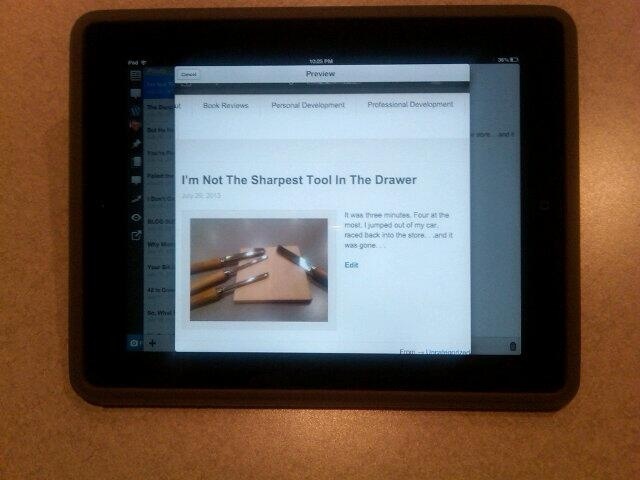
Lost and Found
The amazing thing is that I no longer mind the iPad “quirks” that so bothered me last week.
Most people are good people and given the chance will do the right thing. I appreciate the anonymous stranger who turned it in. And I’m actually grateful that I had to be without it for a couple of days. I would have never given it up willingly, but the lessons learned were certainly worth it.
I do still apologize for those two columns last week.
Rodney M Bliss is an author, blogger and IT Consultant. He no longer uses his iPad to write grocery lists. He lives in Pleasant Grove, UT with his lovely wife and 13 children.
Follow him on
Twitter (@rodneymbliss)
Facebook (www.facebook.com/rbliss)
LinkedIn (www.LinkedIn.com/in/rbliss)
or contact him at (rbliss at msn dot com)
Tell your friends about this!


Artist: I.J.
Long ago there was a farmer who had a terrible problem with rabbits eating his vegetables.
He told his friend, “I shall invite a tiger to come to my farm and he will quickly rid me of the rabbits.”
Yes, but when the rabbits are gone who will help you with the hungry tiger?
Two days ago, Laura Hudson wrote a thought provoking piece for Wired Magazine called “Why You Should Think Twice Before Shaming Anyone on Social Media.” She recounts the story of consultant Adria Richards who, while attending PyCon overheard some attendees making indelicate comments. She took their picture, tweeted it to her 9,000 followers with the words “Not Cool.”
The result was not what she or anyone expected. Her tweet was retweeted over 100 times. By the time the dust settled, PyCon apologized, one of the offenders lost his job and Richards lost her job.
The moral, of course is that once the accusations and recriminations start it’s hard to know where it will end. That’s the tiger. You might only want him to eat the rabbits, but when the rabbits are gone, the tiger is left with nothing to eat, and the tiger is going to eat.
Each of us has a level of online influence that we can use. Hudson’s article is an excellent reminder that while we might only be posting something for the benefit our our friends, and followers, that online content takes on a life of its own.
Tell your friends about this!

David was put in charge of the project. I was involved because of my background in messaging. But, I was sort of an invited guest. I wasn’t actually part of David’s team.
This gave me the opportunity to observe how David ran this massive project. And it became clear to me that he was never going to be able to deliver on our needs.
The problem was that our meetings would devote hours to the filtering question. We would meet once a week to discuss (again and again) how filtering was going to work. We’d draw convoluted diagrams of possible scenarios. We talked about potential cultural differences in what was acceptable filters in various countries.
With the amount of time we spent on filtering, I assumed David was having other meetings where he spent an equal amount of time on the 1001 details of such a massive project.
He wasn’t.
His philosophy was “How do you eat an elephant?” You’ve heard this one, right? You eat it one bite at a time and eventually you’ve eaten the elephant.
In some cases, that philosophy is a terrible idea. If you were the chef preparing the elephant and you spent 4 hours cooking just the rump, the rest of the elephant would spoil before you had a chance to eat it.
That’s what happened to David’s project. He was making no progress on shipping. (We had 16,000 locations to get to.) He was making no project on training. (Being a non-profit, our local tech help were volunteers who didn’t know a lot about computers.) There were countless other details that simply were not getting done.
David was eventually replaced by a more senior manager. He didn’t spend hours debating the filtering policy. We had a single meeting and then we moved on. The new manager understood that he was going to have to settle for “good enough” in some cases. In other cases he was going to have to acknowledge that we’d run into mistakes. He figured we could fix those as they arose rather than obsess about what MIGHT happen.
In short, the new manager got stuff done. Even if it wasn’t perfect, he wasn’t willing to sacrifice the good for the perfect.
At some point, you need to just start moving and figure you’ll discover some parts of your plan as you go.
Tell your friends about this!

(Photo credit: Smashingmagazine.com)
Daryl can I talk to you in my office?
You’re contract is up next month and we aren’t going to renew it.
You mean I’m fired?
Well, as a contractor it’s not . . .
WHAT AM I SUPPOSED TO DO?!?
Well. . .you’re gonna update your resume. You’re gonna. . .
IT TOOK ME 2 YEARS TO GET THIS JOB!!! NOW, WHAT THE @#$% AM I SUPPOSED TO DO?!?
My office got very small, very fast. Daryl wasn’t a big guy, shorter than I was in fact. But, he jumped up and started pacing. Then he started raging. In the phases of grief he skipped Denial and went straight to Anger. The walls were thin and I knew that the developers in the bullpen were hearing every word. Well, every word that Daryl was saying. I was doing my best to keep my voice calm and defuse the situation.
As I tried to decide if Daryl might become physical and require I call the police, I reflected on the 3 months he’d been working for us. I was President of RESMARK and while our staff was full of highly technical individuals, it didn’t make sense to have them maintain our servers. They were programmers, and I needed them focused on writing code. We were constantly fighting to make our schedule and getting pressure from our investors.
In talking to Dave, my Dev Lead, we decided we needed someone to maintain our network, and especially backup our server and our programming files. Dave already had someone in mind.
I know a guy. Actually, I’ve only met him online, but he’s a smart guy. He lives back East, but he’s single, so I don’t think it would take much to get him to move to Utah.
Okay, you interview him and if you think we should bring him on, I’ll talk to him. I want to do a four month contract. If it works out, we can always extend it.
So, Daryl moved to Utah and joined our little company. In addition to normal maintenance like upgrades and patches, I had one very critical task for Daryl.
Daryl, we’ve been writing this code for almost two years. It’s all on that one server in the backroom. If this building burns down tonight, we are toast. I need you to back up the server and especially our development files.
Okay. I haven’t done LINUX based backups before, but I’ll work on figuring it out.
That became a constant refrain from Daryl. “I’m still working on figuring it out.”
Weeks went by. My anxiety level continued to rise the longer we went. It turned out that Daryl was very very good at the things he knew. But, he really struggled to learn new things. Finally, it was obvious that Daryl was never going to get the backup done. We decided to bring in TJ as a possible replacement for Daryl. Dave and I were the only ones who actually knew why we were interviewing TJ. We had the team do the interview. That included Daryl, of course. At one point, as TJ was explaining his experience Daryl commented:
It sounds like you could my job better than I do my job.
Daryl didn’t notice the awkward silence in the room.
After TJ accepted our offer I had my conversation with Daryl. I don’t know how long it lasted, but it felt like it went on for 30 minutes or more. I liked Daryl. We all did. I knew it would be hard for him to find a new position. But, he was a young guy and certainly had some marketable skills.
WHAT AM I GOING TO DO?
OKAY. You wanna know what you’re going to do? You’re going to be a grownup about this. Talk to Dave. He can help you polish your resume and coach you for interviews. You’re going to get through this. I need to know if you want to finish out your contract, or if you’d like to make today your last day?
Well, OF COURSE, I want to finish the contract. I don’t have any money otherwise! I’ve got nothing! I don’t know what to do. I’m not good at finding jobs. I don’t have any idea. . .
I’m guessing mostly at what he was saying at the end. He had literally collapsed onto the floor in my office. He rolled over on his side into the corner, pulled up his knees and was sobbing.
Somedays I HATED my job.
Eventually, Daryl pulled himself together and left my office to face his coworkers.
TJ came to me at the end of the day and handed me a thumb drive.
What’s this?
It’s a straight file copy of the development files on the server. If the building burns down tonight we can copy them back from that thumbdrive. I’ll download and install a backup system tomorrow and setup a backup schedule and arrange offsite storage by this weekend.
My anxiety was gone, but I still felt terrible for Daryl.
This week, I’m going to talk about “action” and “knowledge.”
Monday – GSD (Getting Stuff Done) vs certifications
Tuesday – Do you hire for potential or for knowledge? (How I failed the interview but got the job)
Wednesday – Worst experience firing someone
Thursday – How paralysis by analysis cost the Project Manager his job
Friday – Mountains of perspective
Rodney M Bliss is an author, blogger and IT Consultant. He prefers the fireworks that go off in the sky. He lives in Pleasant Grove, UT with his lovely wife and 13 children.
Follow him on
Twitter (@rodneymbliss)
Facebook (www.facebook.com/rbliss)
LinkedIn (www.LinkedIn.com/in/rbliss)
or contact him at (rbliss at msn dot com)
Tell your friends about this!

The interview wasn’t going well.
What’s a UCS system?
I don’t know.
What are the critical pieces of a change management system?
I’m not sure.
What does TCP/IP stand for?
Ah. . .transport control protocol, internet protocol. It’s the addressing. . .
What’s a Cisco 7000?
I don’t know.
And so it went. For twenty minutes it was the A+ Certification exam, and I hadn’t studied.
And I was really confused. This was not the interview that I was expecting.
I’ve written hundreds of pages of training materials. I helped write the Microsoft Certification exams for several years. To properly write an exam, you have to understand something called Bloom’s Taxonomy.
Evaluation
Synthesis
Analysis
Application
Comprehension
Knowledge
The idea was the higher up the taxonomy the better the question will gauge a person’s grasp of a concept. I could ask, “When did the US Revolutionary War start?” That’s a knowledge question. (July 4th, 1776.) A better question at the comprehension level might be, “What were some of the central issues that led to the war?” An answer might be something like “Taxation without representation.”
An even better question at the Application level might be “What were the economic drivers that lead to the American colonies feeling empowered to rebel?” Okay, that might be at the Analysis level. Basically, the US didn’t need to trade with England.
The point is that if all you are asking is knowledge questions, you have no idea if someone understands the information or they are simply good at memorization. I’m generally pretty good at memorization, but I didn’t realize that I was going to have to recall computer terms.
What are the essential elements of a data center change strategy?
I have no idea.
And so it went. I was interviewing for a position with a large non-profit. I was to lead their messaging team. They were migrating from GroupWise to Microsoft Exchange. I was familiar with both systems. But, I wasn’t going to be an engineer. I was interviewing for a manager role. Although, I wouldn’t have expected this type of an interview for an engineering position either.
The interview finally wound down and I estimated I’d offered an answer on maybe 40% of questions that Derek had asked me. Clearly, whatever he thought was important was different than the skill set that I was bringing with me as I walked through the door.
Well Rodney, do you have any questions for me?
I figured, I had nothing to lose. I’d failed the interview up to this point. Anything I could do to salvage it couldn’t possibly make it worse.
Just a couple. Would you say that you typically hire for knowledge or for potential? You know, given the choice?
Well, knowledge changes so quick, we are interested in people who can adapt and learn new techniques and new information.
Yeah, I realized that when I had to write a training course to analyze network traces. I actually knew nothing about network traces when I started. Fortunately, I had access to some great resources and it turned out to be the most popular course we ever delivered.
I really wanted Derek to see me as a person who had the ability to quickly learn what he didn’t know. I knew I was capable of doing the job that I was interviewing for. The other interviews had gone fairly normally. One with a future peer, and then a lunch meeting with my future manager, Mark. Mark’s most pressing question was “If you get the job, what are you planning to do the first day? And the first week?” He wanted to know if I had a plan or roadmap for where I was planning to take the team. I think I comported myself pretty well in these interviews.
Derek was what at Microsoft we called the AA, or As Appropriate interview. He was my future boss’s boss. And I was sure I’d bombed this interview. Even with my attempted save at the end, I didn’t have high hopes.
I was working as consultant at Microsoft at the time, so I flew back to Washington and jumped back into being a Program Manager for Microsoft Dynamics.
Several weeks later, my phone rang and it was a Utah number.
Rodney? This is Mark. We’d like to extend you an offer to come to work for us.
Leaving Microsoft was hard. I’d just started a new contract and felt like I was just starting to get my feet under me. And the compensation for a consultant is substantially higher than a fulltime employee. However, it was an exciting position and one that I felt would be a great fit for me and my family.
Much later, I talked to Mark about my interview experience with Derek.
I’m surprised after that interview that you actually offered me the job.
He interviews everyone that way. It’s really annoying. But, that interview didn’t figure into it. You got the job at lunch.
Oh?
Yeah, you were the only candidate who actually had a plan for what you wanted to accomplish.
You never know what is going to be the key element.
This week, I’m going to be talking about “action” and “knowledge.”
Monday – GSD (Getting Stuff Done) vs certifications
Tuesday – Do you hire for potential or for knowledge? (How I failed the interview but got the job)
Wednesday – Worst experience firing someone
Thursday – How paralysis by analysis cost the Project Manager his job
Friday – Mountains of perspective
Rodney M Bliss is an author, blogger and IT Consultant. He eventually learned all those terms. He lives in Pleasant Grove, UT with his lovely wife and 13 children.
Follow him on
Twitter (@rodneymbliss)
Facebook (www.facebook.com/rbliss)
LinkedIn (www.LinkedIn.com/in/rbliss)
Tell your friends about this!
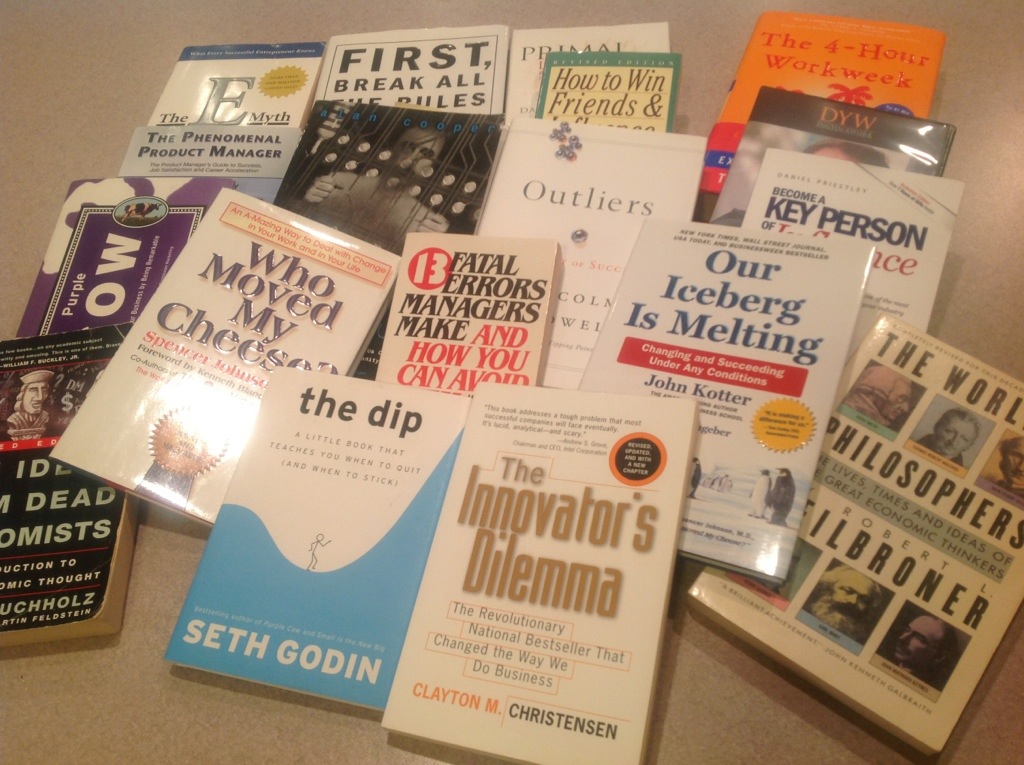
Kerry was one of the most qualified people I’d ever met. . .at least on paper. If there was a certification, he had it. ITIL, Six Sigma, PMP, and more that I’d never even heard of. Just about anything you could spend a few thousand dollars of corporate training dollars on and a couple weeks at a convention center in Miami, or San Diego, he had it.
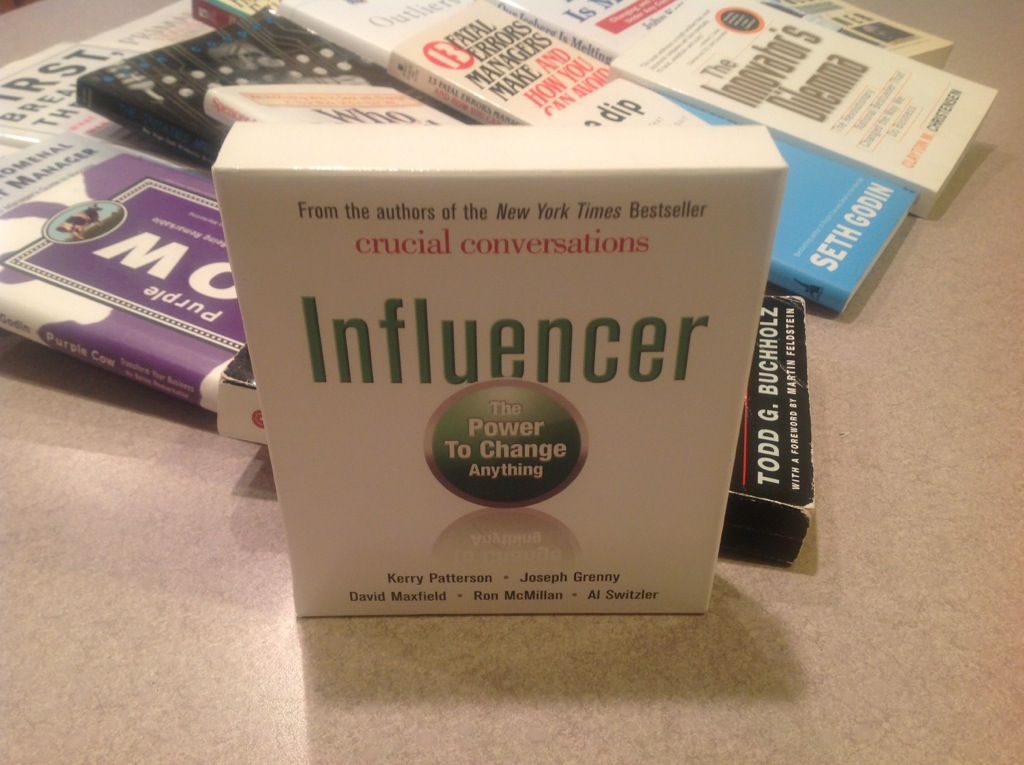
And it wasn’t just the paper certs, he had also read countless business books, and could talk about them at length. He could debate the finer points of Agile methodology versus the Waterfall technique. He introduced me to one of my favorite books, “Influencer.”
He was forever finding ways to better organize his knowlege.
Kerry, what are you doing?
I’m creating a Mind Map of different concepts introduced in several different business books so that I can plot their commonalities and their unique concepts. That way, I can pick a topic, go to my Mind Map and quickly reference all the different books that touch on that topic.
How long is that going to take?
I’ve been working on it for the past month or so. I’ll have it done before annual reviews happen in February.
I liked Kerry and he was interesting to talk to but we didn’t work on any projects together. Later I found out that was because Kerry didn’t really work on any projects at all. He was basically putting in his time working on his studies and trying to get transferred to another department.
You see, Kerry didn’t get anything done.
I was new to the organization and after I figured out that the reason Kerry always had time to spend talking to me was that he never got anything done, I quit hanging around him as much.
The ironic thing was that Kerry got pretty good review scores every time annual reviews came around. Oh, he wasn’t in the top 10% or anything, but he wasn’t at the bottom either. He set goals and he accomplished them.
I contrasted Kerry with Edward. Ed didn’t hold a single certification that I was aware of. He had not even graduated from college. From a credentials standpoint, Ed was pretty weak.
Ed was brilliant. Ed wrote several book on messaging. At one point we lost all our SharePoint engineers. The market for good SharePoint engineers was so high that we simply couldn’t pay them enough to stay.
Ed, what do you know about SharePoint?
Not much. I’ve used it like everyone, of course, but I have no idea how to configure it.
Well, you’re our new SharePoint expert. We’ve got training budget, but we need you to come up to speed as quickly as possible.
Two months later Ed was designing the next version of our SharePoint farm. He was certainly a quick study, but what set him apart from Kerry were two things:
First, Ed cared more about the knowledge than the certification. He eventually took the SharePoint test to become certified, but not until he was already building SharePoint installations for us. And that lead to the second difference between Kerry and Ed.
Ed Got Stuff Done. After reassigning him from messaging to SharePoint, Ed came to us and explained that we needed to make certain changes to our configuration. He tuned our servers. He improved the search features on our internal SharePoint sites. We never had to tell Ed what to do. In fact, I didn’t KNOW what he should do, except that he should make SharePoint work, and that’s exactly what he did.
Whenever I’ve interviewed people, I’ve tried to make sure that I’m not overlooking an Edward to hire a Kerry. It’s harder to interview for competence rather than certifications. The best way I’ve found is to ask action rather than knowledge questions.
Not, “Do you know how to do this?” Instead, “Tell me of a time you did this?”
Ed was an engineer, but the same concept applies if you are hiring consultants, or Program Managers, or Project Managers. Having the certification means very little if you can’t tell me how you used the knowledge from that certification.
This week, I’m going to be talking about “action” and “knowledge.”
Monday – GSD (Getting Stuff Done) vs certifications
Tuesday – Do you hire for potential or for knowledge? (How I failed the interview but got the job)
Wednesday – Worst experience firing someone
Thursday – How paralysis by analysis cost the Project Manager his job
Friday – Mountains of perspective
Rodney M Bliss is an author, blogger and IT Consultant known for getting stuff done. . .although he calls it “Driving a Tank.” He lives in Pleasant Grove, UT with his lovely wife and 13 children.
Follow him on
Twitter (@rodneymbliss)
Facebook (www.facebook.com/rbliss)
LinkedIn (www.LinkedIn.com/in/rbliss)
Tell your friends about this!

Rita, what are you doing?
I’m the Recycle Monitor.
The what? What does a Recycle Monitor do?
I. . .just a second. . .Bill, the coffee lids aren’t compostable. They go in the non-recycle trash, the plates, cups and utensils go into the compostable. Left over food? Ah. . .yeah, I think that’s compostable. What was your question, Rodney?
Never mind.
Microsoft is a very image conscious company. Being based in Washington, “the Evergreen State,” they take “green” issues very seriously. In 2008 they decided it was time to take additional steps to reduce their carbon footprint, although no one was calling it that yet.
They replaced all of the styrofoam cups and plates with something called “compostable” alternatives. They were made from corn starch extracts or something. Unlike the Dixie cups you buy at the store, these new cups had no wax coating.
They also replaced the plastic utensils with compostable alternatives. I know it sounds crazy, but the forks, knives and spoons were made from cardboard, well cornboard. For the most part the new stuff worked great with two exceptions. Shortly after the cups and things were introduced they had to send a company-wide email.
We hope you enjoy the new compostable cups, plates and utensil. Some of you have expressed concern with the cups. If you leave liquid in the cups for an extended period of time, they will weaken and sag. However, the manufacture assures us that they will not leak.
However, you should not leave the spoons immersed in liquid, especially hot liqued like coffee. They will eventually dissolve.
We didn’t complain too much. After all, Microsoft provides free pop, tea, coffee, juice and milk to it’s employees and contractors. You do still have to pay for your own meals, it’s not Google!
The introduction of new plates and cups introduced a recycling problem. Anyone who’s ever attempted to get rid of a day old pizza box knows you don’t put food into the recycle, it will contaminate it. Well, when the cups are compostable you put them, together with the plates and utensils and food scraps into a “compostable” container. But, you CANNOT put plastic into the compostable bins. That would contaminate them.
It got very confusing. So confusing in fact, that Microsoft assigned people to stand in the cafeterias and instruct some of the most brilliant programmers in the world on how to sort their garbage. Personally, I started eating off-campus more.
In the kitchens and breakrooms, they couldn’t assign monitors so they put up these signs.
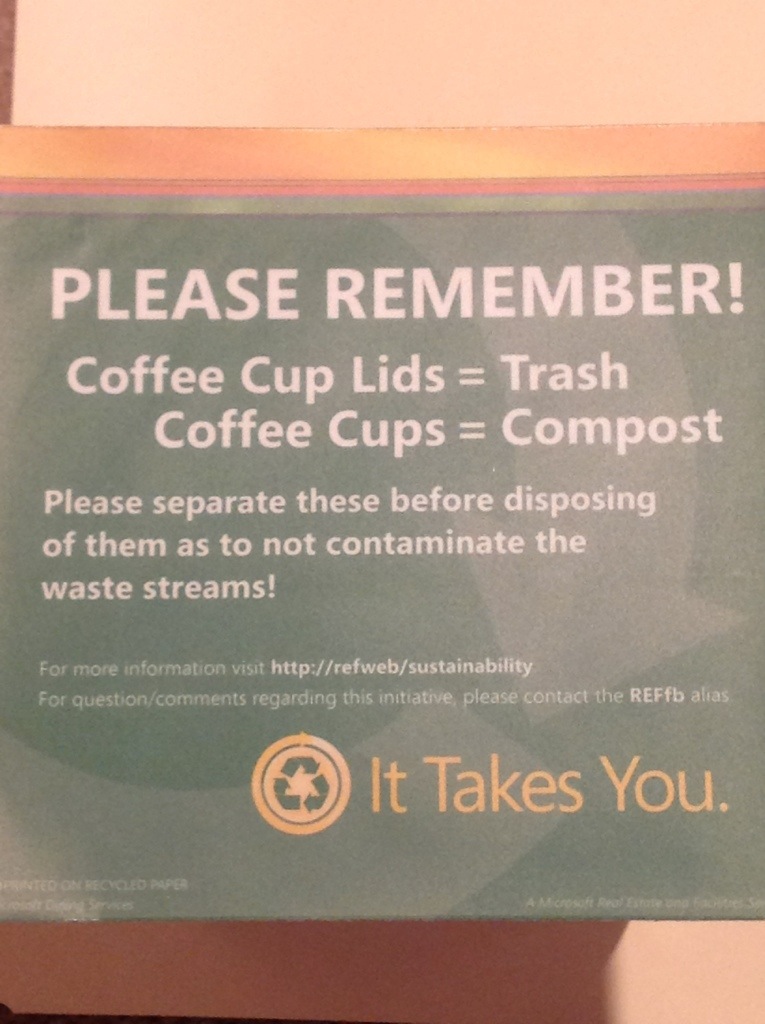
Yes, it actually warns against “contaminating the waste streams.” And you thought it was just garbage!
Speaking of the cafeterias, Microsoft placed the following on each table in the cafeteria.
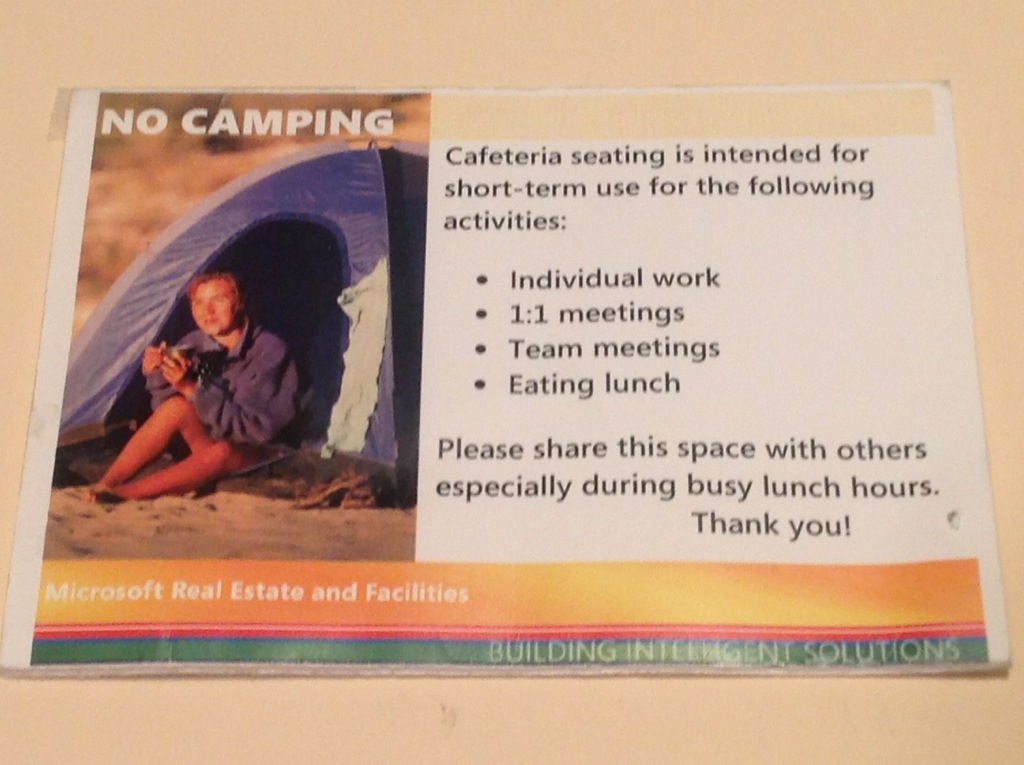
The issue was contractors and office space. There were too many of the first and not enough of the second. As a contractor, I was expected to provide my own phone and my own laptop. That’s fairly standard. But office space was at such a premium that every fulltime Microsoft employee in our group was already sharing an office. There were no spare offices for contractors. We would set up shop wherever we could find an electrical outlet and a chair.
Naturally the cafeteria was a popular location. It had power, wifi and snacks! But, in addition to the garbage monitors, Microsoft had people whose job was to shoo the contractors out of the cafeteria and the conference rooms, and even the casual areas.
We were often the highest paid people in the building and we would have to setup in hallways with our laptop perched on our knees at times. The best solution was if someone was on vacation, you’d camp in their office. It was considered good manners to ask them first, but if not, make sure you put everything back exactly as you found it!
In Microsoft’s defense they were building as quickly as they could and having more people than offices is a much better problem than the opposite.
This is the last post for the week devoted to consulting and a few funny Microsoft stories.
Monday: Un-Book Review. . .Purple Crayon Club
Tuesday: On Being a World Expert
Wednesday: 42 is gone but not forgotten. . Jackie Robinson and Mariano Rivera
Thursday: Overplaying a Recommendation (This one still makes me cringe to think about it.)
Friday: No Camping . . .But the place I saw the sign will surprise you
…and Don’t Pollute The Waste Streams. . .Not all garbage is created equal
About the author
Rodney M. Bliss is an author, blogger and IT consultant. He lives in Pleasant Grove, Utah with his lovely wife and 13 kids, all of whom have been instructed to never contaminate the waste streams.
Follow him on
Twitter (@rodneymbliss)
Facebook (www.facebook.com/rbliss)
LinkedIn (www.LinkedIn.com/in/rbliss)
Tell your friends about this!
Whoa, this seems pretty steep. A thousand dollars for two days work?
I didn’t bother to correct Bill that it was actually $1,020 less a 10% discount. I was working as a small business consultant in the Tacoma, WA area. As a small business consultant I was essentially the IT department for my clients. Bill was a new client and the way our conversation was headed, was soon to be an ex-client.
Bill owned a Farmer’s Insurance office. He’d been referred to me by Steve, another Farmer’s agent. But, something got lost in the referral process. . .my rates. And it illustrated the problem with referrals. Don’t get me wrong, referrals are the lifeblood of any business. And I was really hoping that I could fix things with Bill. Because there are two types of referrals. Good ones are your lifeblood. Bad ones are poison.
I’d met Steve, when we’d moved to Spanaway, WA. We needed renters insurance and Steve was the first one to pick up the phone. As he came over to our house, he did an excellent job of figuring out our needs and designed both a renters policy and a million dollar indemnity policy for my business. Naturally, I asked him about his computer needs and just like that I had a new client.
I worked for Bill for several months doing things like installing anti-virus software, adding and deleting users, updating Microsoft Office. I always explained up front what I thought a job would entail and how much he could expect to pay for software and my time. My rates were $85 / hour. Steve was a great client.
Hey Rodney, I’ve got a friend who needs some computer help. Give him a call and tell him that you’ve been working in my office for a couple months.
Excellent. That’s the way it’s supposed to work. Your current happy customers refer you to their friends who hopefully also become happy customers.
My initial meeting with Bill was great.
I think we have some malware on a bunch of our computers. Steve said you helped him with that. And we’ve got a flaky printer.
Great. Should take a couple of days, but I’ll be installing anti-virus software on multiple computers at once. The printer thing might take a little longer, but I’ll know more when I look at it.
Did you notice anything missing from that conversation? Sure, in hindsight so do I. I never actually explained my rates. Since he’d talked to Steve I assumed that Steve had shared that with him.
Two days later, all the PC’s were malware and virus free, the printer was working. The USB cable had been run under one of those clear plastic carpet protectors and one of the spikes penetrated the wire.
I handed him my invoice:
12 hours

$85 / hour

Sub Total: $1,020

Less 10% for multiple days: $102

Total: $918
I tried to figure out where the miscommunication had come from.
Well, I didn’t ask about your rates since you’ve done work for Steve, I assumed they would be fine.
I had a decision to make. I could press him for the entire amount. But, the risk was potentially he wouldn’t pay it, and for sure he’d be really upset.
Instead I set out to salvage the account. Bill probably wouldn’t have me back, but I didn’t want him ruining my relationship with Steve or any other Farmer’s agents.
I apologize. I should have done a better job of letting you know what to expect up front, and made sure we were in agreement on how much the work would cost. Given the work that I’ve done, what do you think is a fair amount?
Well, my agents only make a couple hundred per day. I don’t really think I can justify more than $500 total.
That will be fine. And again, I apologize for not being more clear before I got started.
And that was that. Could I have gotten more than $500? Probably. I could have countered with $750 and eventually settled on $600. But, that extra $100 would have come at a high price. There was no way I was getting $918.
Instead, I accepted his number and counted it as a $418 dollar lesson in the danger of overplaying a recommendation.
I’ll stay with the consulting theme this week and mix in some Microsoft stories at the end of the week. Here’s the schedule.
Monday: Un-Book Review. . .Purple Crayon Club
Tuesday: On Being a World Expert
Wednesday: 42 is gone but not forgotten. . Jackie Robinson and Mariano Rivera
Thursday: Overplaying a Recommendation (This one still makes me cringe to think about it.)
Friday: No Camping . . .But the place I saw the sign will surprise you
…and Don’t Pollute The Waste Streams. . .Not all garbage is created equal
About the author
Rodney M. Bliss is an author, blogger and IT consultant. He lives in Pleasant Grove, Utah with his lovely wife and 13 kids.
Follow him on
Twitter (@rodneymbliss)
Facebook (www.facebook.com/rbliss)
LinkedIn (www.LinkedIn.com/in/rbliss)
Tell your friends about this!
The one constant through all the years, Ray, has been baseball. America has rolled by like an army of steamrollers. It’s been erased like a blackboard, rebuilt, and erased again. But baseball has marked the time. This field, this game, is part of our past, Ray. It reminds us of all that once was good, and that could be again. Oh, people will come, Ray. People will most definitely come.
-Field of Dreams
I know I said I was going to talk about Overplaying a Recommendation. And I’ll tackle that tomorrow. But today, I want to talk about one of my three passions. It’s probably not a huge exaggeration to say that I love three things:
1. My Family
2. God
3. Baseball
(Let’s just say in that order since my family reads this blog.)
Yesterday was the Major League Baseball All Star game, played at the Mets’ ballpark in New York. Something magical happened. (And not just because the American League won for the first time in four years.) Yankee’s closer, Mariano Rivera, played in his final All Star game.
For any readers who aren’t baseball fans and weren’t scared off by the topic so you’re still reading, the Closer is the pitcher who comes in at the very end of the game to get the final three outs. Mariano Rivera is the best there’s ever been at that role. He’s recorded 638 saves. The most of any player in history.
He announced his retirement earlier this year, so people know this is the last time they are going to see him in an All Star game. As he took the field, the entire stadium, and both teams gave him a standing ovation.
However, there’s one other aspect of Rivera’s All Star game performance I want to talk about: his number.
Every baseball player has a number assigned. Rivera’s happens to be #42. You might recognize that number. A movie came out this year whose title was “42.” And that’s what makes Rivera’s appearance last night so special.
Jackie Robinson played his first game in the Major Leagues on April 15, 1947, becoming the first black man to play Major League Baseball.
Fifty years later, baseball did something they had never done before and likely never will again. They retired his number across the league. Generally a team will decide to retire the number for a particularly good player. In fact, Robinson’s number 42 was retired by the Dodgers, in 1972. The idea is to honor the player by ensuring that no one will ever wear his number again. In 1997, the league said, no one in baseball will ever again wear number 42. It’s reserved for Jackie Robinson.
But, they had to consider the players on other teams who were already wearing the number 42. Those players had the option of switching numbers or finishing out their career with 42. Rivera opted to continue wearing 42. He is the last active player using number 42. So, when he walked off the field last night, it was the last time we will ever see number 42 show up in the box score of the All Star game. Fittingly Rivera was chosen as the Most Valuable Player of the game.
Rivera has had a Hall of Fame career and he deserves to stand alone as a great player, as the greatest Closer in the history of the game. However, he’s also tied forever with another ball player from a distant era who laid the foundation for the league we enjoy today.
Congratulations #42. We will miss you. Both of you.
About the author
Rodney M. Bliss has been a baseball fan since his dad took him to his first Seattle Mariners game when he was 12 years old. He lives in Pleasant Grove, UT with his lovely wife and 13 children who indulge his love of America’s passtime.