Rodney, we need access to an employee’s email to do an investigation.
Okay, have your investigators get with Ammon and we’ll get you access to the suspect’s mailbox.
Well, that’s the problem. We can’t let your team know who the suspect is. That’s not a problem is it?
It was my least favorite responsibility as manager of the email team for a large non-profit corporation. Our team held the keys to the email system. So, when someone needed to do an investigation either initiated by law enforcement or by our own internal auditors, they had to come to my team to get access to users’ mailboxes. Investigations might be for corporate espionage, pornography, theft, or any number of things.
Two important things you should know about corporate IT, and email especially:
1. Your corporate email is NEVER private.
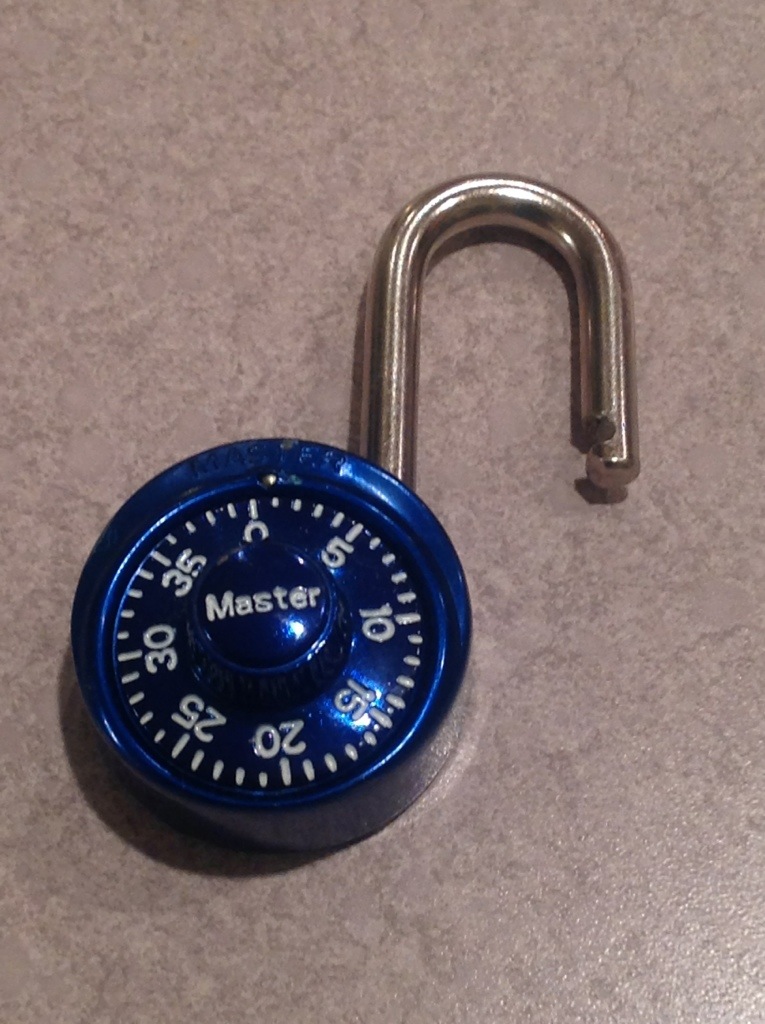
2. It is impossible to lock out your IT staff.
Nothing is Private
The non-profit I worked for was pretty conservative. They had a one-strike pornography policy. So, I was constantly amazed when we would find people who were either surfing porn, or had it in their mailbox.
Sometimes, people think they can get around the filters. Or, they think, if they store their email locally (called a .PST file in Outlook) that some how it’s not findable. Trust me, they can find it.
And don’t think that deleting it quickly helps. If you are being investigated, your corporate IT guys will implement a feature that makes a copy of everything you send and receive. The copy of incoming email gets made before it ever arrives in your mailbox. If the email is coming from inside your company the copy gets made by the email router, called a Message Transfer Agent, or MTA. The copy is recorded before you even log in. And if the feature is configured for it, the copy sends up a red flag and the message never arrives in your box, but instead goes straight to security or your boss or HR or whomever.
If the email comes from outside the company there are multiple places to “split the stream.” The first is at the perimeter. Your company has a filter program that looks at every message to determine if it’s spam or not. Those programs can also make a copy, or quarantine a message, or notify security or HR. I know your company has one of these programs because your mailbox isn’t 90% spam. Without the filter program, your system would be inundated with spam and viruses.
Once it gets past the spam filter it gets routed by the MTA.
Spam filters and MTA’s can make copies based on almost any administrator-defined criteria. They might check to see if an email is from a competitor, to track for corporate espionage. They might check for key words, like the name of your next big product. They might check for attachments. And don’t think encrypting them will save you. If the filter can’t open the file, the default action for most is to quarantine the file and notify someone.
Filters can even search for credit card numbers or Social Security numbers. Your email is NEVER private.
And that doesn’t even address the fact that administrators can log into your mailbox without your knowledge. They could be in your mailbox right now, and there is no way for you as a user to know.
You Have to Trust Someone
For most companies it’s best to hire trustworthy people to work in your IT department because you really cannot lock them out of the system.
The problem is that the people you are asking to lock your system know how to unlock it. There are some things that you can put in place to help. For example, for some of our sensitive systems, we granted access using an electronic security group. Anyone who was a member of that security group could get access to the system. The group was normally empty. Whenever a user got added to the group, we all got notified.
So, if someone needed to access that system, they’d add themselves to the group and we’d all get alerted. When they were done, they’d remove their name from the group. There are ways around this. For example, as an administrator you can turn off notifications from that group. So, to protect against someone disabling notifications for your security group you could put a tripwire on the Notifications tab so that when the notifications got removed, a group would be notified. But, then someone could go further upstream to disable that notification and so on. Really, you have to trust your IT group.
And that brings us back to my meeting with our security folks.
My engineers were the only ones who had permission to give someone access to a mailbox.
Why can’t my engineer know?
Well. . .we’re not even sure there’s a violation. Someone was walking past the office of a senior executive and thought they might have seen something inappropriate. We don’t want to risk a false rumor getting started. Not that we think your engineer would. .
No, I get it. Let me get with my team and we’ll see what we can come up with.
Eventually our solution involved a lot of trust. Ammon, my engineer, met with the investigator. Using Ammon’s login, Ammon showed the investigator how to grant himself permission to my mailbox as a test. Then, Ammon left the room and the investigator used Ammon’s login to grant himself access to the suspect’s mailbox. Three days later they got together and reversed the process as Ammon showed him how to remove his permission to view my mailbox. After Ammon left the room, the investigator looked up the suspect and removed himself.
We never heard if it was a valid complaint or not. . .and we preferred it that way.
Like I said, it was the least favorite part of my job.
Rodney M Bliss is an author, blogger and IT Consultant. He lives in Pleasant Grove, UT with his lovely wife and thirteen children.
Follow him on
Twitter (@rodneymbliss)
Facebook (www.facebook.com/rbliss)
LinkedIn (www.LinkedIn.com/in/rbliss)
or contact him at (rbliss at msn dot com)
Tell your friends about this!

Rodney, this is stupid. We’ve got nothing to do for like the next two hours! Nothing is going to go wrong. Why can’t we update the routers now?
We’ve been over this. You’re probably right. The B-Side will probably take over just fine when we update the A-Side. But, if it doesn’t, we take the entire network down. I told the customers that we wouldn’t be doing the router upgrades until 2:00AM.
But, that’s not gonna happen. We’ve done this dozens of times!
And how many times has the B-Side failed?
Maybe once, if you don’t count the times when the hardware was ancient.
It’s too risky.
And so it went. It was midnight on a “Maintenance Weekend” Friday night. We’d started with 11 tasks. Most of them were proceeding just fine. We were right on schedule to finish by 3:00am when our customers would start calling in to do verification checks.
Jake was a network engineer; one of our best. He’d done some work earlier in the evening and his next task was scheduled for 2:00am, at the end of the task list. He was upgrading the software in our core routers. These routers controlled all our traffic inside and outside our data center.
When I put the schedule together, I had intentionally put the router upgrades at the end. The chances were the update would happen without any interruption. If I had bet money, I’ve have given 99:1 odds that it would work flawlessly.
But, that 1% worried me.
Jake had a point. In his view, whether we went at midnight or 2:00am, his work was exactly the same. His risks were just as likely early as late.
But, there were other tasks currently in progress that would be impacted if we brought the network down. And there was a possibility that our customers were using parts of the network even though it was the middle of my maintenance window. If that 1% longshot came through, we’d impact them as well.
I had shared my schedule and risk assessment and impact statement for each task with my customers over the previous weeks. I had committed to holding off on the highest impact task until the end.
None of that was convincing Jake.
There is absolutely no value in waiting on this!
I knew I was in for a long couple of hours. As an engineer, Jake saw things with a very binary view. Dealing with customer expectations was my responsibilities. He just wanted to finish his work.
Finally, Brian, the portfolio director, who watched the entire exchange with some amusement chimed in.
We’ll do it Rodney’s way. We told the customers we’d wait until 2:00 we need to honor that commitment.
Jake looked like he was ready to plead his case to Brian, but thought better of it. Instead he headed off to surf the internet for a couple hours.
We finished up right on time. In fact, it was a few minutes before 2:00am when I gave Jake the go-ahead for his change.
It took 5 minutes and didn’t cause a single interruption.
Rodney M Bliss is an author, blogger and IT Consultant. He lives in Pleasant Grove, UT with his lovely wife and thirteen children.
Follow him on
Twitter (@rodneymbliss)
Facebook (www.facebook.com/rbliss)
LinkedIn (www.LinkedIn.com/in/rbliss)
or contact him at (rbliss at msn dot com)
Tell your friends about this!

(No, there’s no picture to go along with that title. That’s the point!)
Yesterday I talked about home repairs, so it only makes sense that today I veer into quantum physics. (I promise this is not really a quantum physics blog entry)
Heisenberg’s Uncertainty Principal
n
(Physics / General Physics) the. the principle that energy and time or position and momentum of a quantum mechanical system, cannot both be accurately measured simultaneously. The product of their uncertainties is always greater than or of the order of h, where h is the Planck constant Also called Heisenberg uncertainty principle indeterminacy principle
Heisenberg’s principal can be overly simplified to “You cannot know both the position of a particle and its speed.” Or, “trying to observe something changes it.”
I wasn’t thinking of Heisenberg when I didn’t take the greatest picture I’ve ever seen. However, I understood that trying too hard to capture a moment for the future ruins it for the present. It’s why I won’t offer to be the photographer for an event I want to enjoy.
It was around the same time I Found Out I Was A Jerk. It was late spring in Provo, Ut. It was on a Tuesday evening. I know that because we always had “all hands” meetings on Tuesdays. The meeting finished about 8:00pm. As 2,000 of us streamed out of the auditorium the sun had about ten minutes left before dipping behind the Western mountains.
On this particular evening the light perfectly lit up “Y Mountain” to the East. Here’s a picture of the mountainside on a typical day.

Now, imagine it bathed in a blood red light that lit the rock faces on fire and stretched the shadows ,drowning them back in the depths of the canyons. The slopes were lit in a way that I’d never seen before our since. We were mesmerized. We walked slowly up the hill to get a better view. As we emerged from the shadows, the sunlight lit up each of us in a fiery glow. The very air seemed alive with the light. We looked first at the mountainside, then at each other, then at the sun’s red disk gliding behind the hills and then back to the mountainside, only to repeat the cycle.
It was truly a magical moment.
And some people missed it.
See, this was before cell phones and cell phone cameras. We were missionaries, we all had cameras of course, but they were the bulky ones that weren’t good for much besides taking pictures.

(I shot thousands of feet of film with this over the years)
As the meeting let out and we were assaulted by the stark light and colors of the sunset, while some of us walked up the hill to more fully experience the unique sensation, others went down the hill to their dorms for their cameras. So desperate to capture the moment for the future that they lost it in the present. By the time they retrieved the cameras the sun was down and the moment was past.
What’s this have to do with Heisenberg? And more importantly, what does it have to do with business, the stated focus of this column?
Just that at times we need to enjoy the moment. Not often, especially if you are the one in charge, do you get to step back and enjoy your team’s accomplishments for their own sake.
I always try to give my team lots of credit. If I make them look good, it helps me look good. So, if one of my team is getting an award, or a promotion, I try to take the opportunity to step back from the pressures of how hard we worked to get to this point, or how much more we have to do. It’s at those moments, I like to let the focus simply be on the employee.
Those are the moments I remember best. . .even if I don’t have a picture to remind me.
Rodney M Bliss is an author, blogger and IT Consultant. He lives in Pleasant Grove, UT with his lovely wife and thirteen children.
Follow him on
Twitter (@rodneymbliss)
Facebook (www.facebook.com/rbliss)
LinkedIn (www.LinkedIn.com/in/rbliss)
or contact him at (rbliss at msn dot com)
Tell your friends about this!

(I promise, this is NOT a DIY (do-it-yourself) home repair blog entry.)
My wife tried to use vinegar and baking soda to fix our sink.
It didn’t work, of course. Well, it did, but not how you think.
I have eight daughters, three of whom still live at home, plus my lovely wife. “Hair in the sink” is a given. And in the shower, and the vacuum, and a bunch of other places, but mostly the sink.
With that many girls fixing their hair, the main bathroom sink started to have trouble draining.

It wasn’t terrible, and more importantly it didn’t impact me. It didn’t really bother me when I washed my hands, or brushed my teeth, which are pretty much the only two times I use the sink. So it was slow! Not an inconvenience for me.
It was for my daughters and especially my lovely wife. So, after losing the “can I wait it out until he gets annoyed enough to fix it” game, she decided to fix it herself. Her tools of choice were baking soda and vinegar.

Any kid who’s created a volcano for the 7th grade science fair, knows that if you mix vinegar and baking soda, you get a very satisfying foamy eruption. This was my lovely wife’s solution for slow drains. After dumping a few tablespoons of Arm and Hammer down the drain and pouring in a liberal amount of vinegar, she got a lot of bubbles and managed to turn a slow drain into a stopped drain.

Apparently the expanding foam moved the hair around enough that it now completely blocked the drain. Slow drains don’t bother me. A stopped drain is another matter.
With some grumbling, I grabbed some tools and a bucket and crawled under the sink. It’s really not that hard to fix a clogged drain.
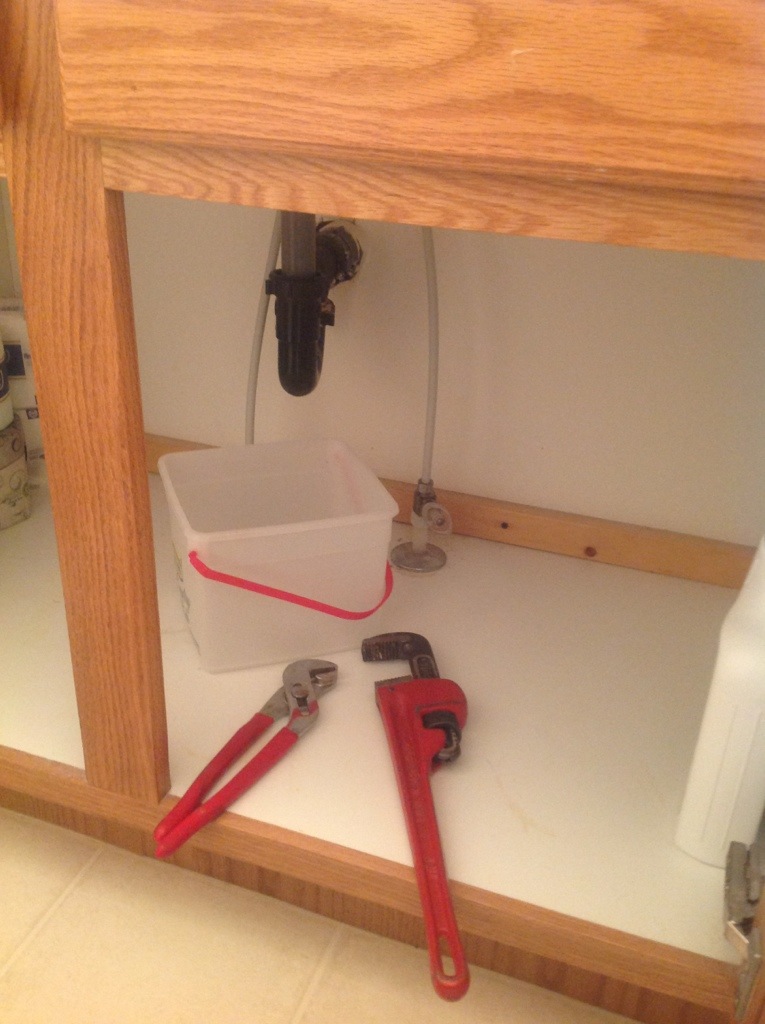
About 15 minutes later, I’d cleared the clog and the drain was running smoothly. Three months of slow drains was cleared up in just a few minutes.
And THAT is how my wife used vinegar and baking soda to fix the sink.
The business application is clear. We often don’t deal with issues until they become a crisis. My lovely wife would have loved for me to fix the sink weeks earlier, but until it was a crisis that impacted me directly, I didn’t. (Yes, I know that says potentially unpleasant things about my role as a husband and Honey-Do lists. Let’s stay focused.)
In our roles as managers, we should be very aware of the state of the projects our teams are working on. Better to step in and help out with a slow drain, I mean risk factor, rather than have to deal with the missed deadline, or lost account.
Oh, and if you don’t have someone with a wrench handy, I wouldn’t recommend trying to fix your sink with vinegar and baking soda.
Rodney M Bliss is an author, blogger and IT Consultant. He lives in Pleasant Grove, UT with his lovely wife and five sons and eight daughters, all of whom have beautiful hair.
Follow him on
Twitter (@rodneymbliss)
Facebook (www.facebook.com/rbliss)
LinkedIn (www.LinkedIn.com/in/rbliss)
or contact him at (rbliss at msn dot com)
Tell your friends about this!

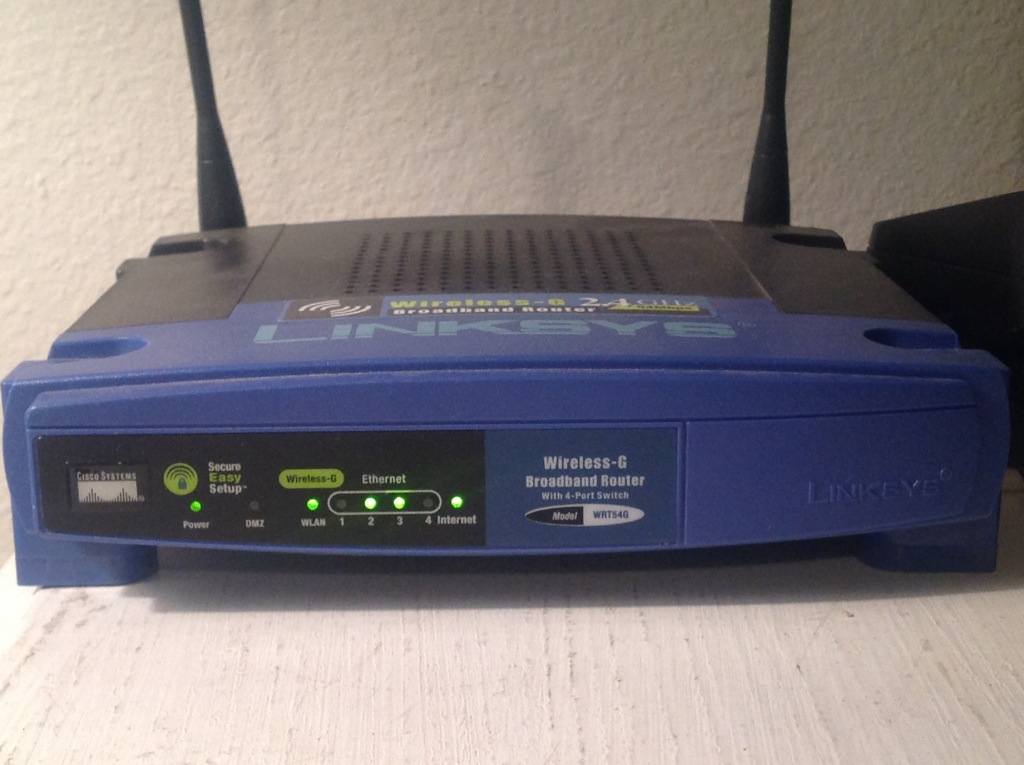
Rodney, what security do you use on your home Wifi router?
None. I just hide the name.
The network guys on my team burst out laughing. They were ready to criticize me for using WEP (Wired Equivalent Privacy), instead of the more secure WPA (WiFi Protected Access) protocol. Even though I was a manager and therefore “non technical” they expected more. They started to gang up on me.
Do you realize how easy it is to find a WiFi network that doesn’t broadcast it’s SSID?
Yeah, I could find it in about 30 seconds!
And they were correct. I was working for a large non-profit in Utah and our network guys were some of the very best I’d ever worked with. The managed multiple tiers of a network that spanned the globe and was used by 30,000 users. They were that good.
Let me ask you guys something. How long do you think it would take a professional car thief to steal your car?
Ah. . .I donna know. A minute?
Probably 7 seconds to break into your locked car and less than a minute to start your car and drive it away.
So, I was close!
So, tell me. If a professional thief can break in and steal your car in less than a minute, why do you lock your doors?
Well. . .
Because you aren’t protecting your car from a professional thief. You are protecting it from a teenage kid walking through the parking lot checking for unlocked cars.
The point is that if my home network gets targeted by a professional network hacker, there’s very little I can do about it. Just like if my car gets targeted by a professional thief. But, the odds that a professional hacker is going to target me is about the same as a professional thief going after my 2001 Chevy Suburban with 250,000 miles on it.

(Photo credit: cargurus.com)
Our data center was protected by the most sophisticated cyber defense that we could create. We used multiple layers of security and detection starting at the firewall and going all the way to the desktop. Our company was a natural target.
Just like if I had a 2013 Lamborghini, I wouldn’t just lock the doors. I’d install a tracking system, an alarm, probably use the club and otherwise make it as hard a target as possible.
But, on my little cul-d-sac where everyone knows everyone, I’m not worried about a professional hacker trying to hijack my network. I’m just not significant enough.
Rodney M Bliss is an author, blogger and IT Consultant. He lives on a small cul-d-sac in Pleasant Grove, UT with his lovely wife and 13 children. The Chevy Suburban is his family’s small car.
Follow him on
Twitter (@rodneymbliss)
Facebook (www.facebook.com/rbliss)
LinkedIn (www.LinkedIn.com/in/rbliss)
or contact him at (rbliss at msn dot com)
Tell your friends about this!


No, no, I mean it. I mean it. Somebody must have goofed. If I gotta stay here another day, I’m gonna go nuts! Look, look, I don’t belong in Heaven, see. I want to go to the other place.
Heaven? Whatever gave you the idea you were in Heaven, Mr. Valentine? This IS the other place!
– Twilight Zone, “A Nice Place To Visit. -”
“A Nice Place To Visit,” is one of my all time favorite Twilight Zone episodes. It describes the story of Rocky Valentine, a small time thug who dies and in the afterlife he gets everything he ever wanted.
I thought about this episode the other day as I watched my kids play XBox. My boys are 13 years old and we’re pretty careful about what they play. So, they tend to pick a game and play it over and over. One of their recent favorites is Lego Star Wars.

All three of my boys play it using the same profile so that they can take advantage of each other’s in-game accomplishments.
One of the recent accomplishments they unlocked was the ability to multiply every in-game coin by 24x. So, where they used to get scores in the 200,000 range, they now easily get millions or even billions.
I noticed one of my sons playing the other day and he had turned off the multiplier effect.
Why aren’t you using the multiplier?
It’s not as fun if you get the points too easily.
It made me think of Rocky Valentine. He wound up in a place where he could turn the multiplier up as high as he wanted, and like my son, he figured out that it’s the challenge that makes the game fun.
I don’t play a lot of games, but I really enjoy Spider Solitaire on my iPad.

The version I installed advertises that it has “Unlimited Undos.” And for a while it was great to be able to attempt a strategy and if it failed, simply hit the undo button multiple times and try something else.
But, a funny thing happened. The game lost it’s appeal. I didn’t win every time, but I was able to win enough that the results were rarely in doubt. I made one small decision and suddenly the game was challenging again.
I quit using the undo button.
I’ll use it occasionally if I slip and hit a card twice, sending it somewhere I didn’t plan to, but I no longer use the undo button to get a competitive advantage. Sometimes my playing strategy works and I win. Other times, I guess wrong and lose. But, somehow the wins feel more honest and satisfying, knowing that I chose to live with my decisions rather than constantly going back to fix mistakes.
In “Nice Place To Visit,” Rocky eventually figures out that getting everything you ever wanted means nothing if you didn’t work for it, and if there wasn’t a chance that you might fail.
My 30 year high school reunion was this summer. A friend asked if I’d go back and fix my mistakes if I could. Not a chance. They are way too valuable.
You’re not the only one who’s made mistakes
But they’re the only thing that you can truly call your own
– Billy Joel – You’re Only Human –
Rodney M Bliss is an author, blogger and IT Consultant. He’s failed a lot, and learned something every time. He lives in Pleasant Grove, UT with his lovely wife and 13 children.
Follow him on
Twitter (@rodneymbliss)
Facebook (www.facebook.com/rbliss)
LinkedIn (www.LinkedIn.com/in/rbliss)
or contact him at (rbliss at msn dot com)
Tell your friends about this!
Rodney! Dude, you let him him lay it on pretty thick!
What do you mean?
Frank. He was giving you the greasy used-car pitch and you were just taking it.
Yeah, but at this point, why not? I need this job, and I’m not going to do myself any favors by calling him on his BS. If I’m getting what I need, I don’t really care.
Three months later I cared and so did Frank. . .a lot.
I had just moved to the Tacoma, WA area and I was going to work for a small company that specialized in installing high speed internet connections via satellite dishes. In some ways it was a great job.
The people who needed our services typically had no other options. They were too far out for cable modems. The telephone companies hadn’t run wiring that would support high speed data out that far. Often they were in places where even cell service was spotty. These people lived out in the sticks. But, I mentioned I was living in Tacoma, WA. It’s about 30 miles south of Seattle, in Western Washington. The scenery is GORGEOUS.

(Washington State Ferry Photo credit: travelerhubs.hubpages.com)
I would often end riding a ferry to one of the San Juan islands, or driving through the forests of the Olympic peninsula. Truly beautiful locations. And the drive there was often relaxing and equally beautiful.
The worst part of the job was that I was driving my Chevy Suburban, which gets 13 MPG and most jobs were at least 100 miles round trip. And they paid a flat rate for the job. I was pretty much working for gas money. At the time it was all I could find, and I was happy to get it.
The boss, Frank was . . .well, he was more interested in the bottom line than the employees. He classified all of us as contractors (1099 employees rather than W2, for you accounting types.) Not because we actually were. We didn’t really fit the description of contractors, but it saved him on taxes. On Fridays it was a race to see which employees could get to Frank’s bank first. The odds that everyone’s paycheck would clear were small. You wanted to get there first so you had your money for the weekend.
After a couple of months I was offered a position with a real consulting company working back at Microsoft as a Program Manager. Frank decided he needed to hold onto my last check. (Yeah, I know it’s illegal and so did he.) He always had an excuse for not having it available.
Weeks went by like this. In fact, nearly three months. I think Frank figured he could wait me out. It was only about $500, but I’d worked hard for that money and I was determined to get it back.
And then I got another job offer. Eight months prior, I had applied to work for a large non profit in Utah. It was the job I really wanted, and after months and months, they offered it to me.
Well, now I had a problem. If I left town, there was no way Frank was EVER going to give me my $500. And if he even knew I was planning to leave, he’d find a way to delay. So, I needed to force his hand.

(Photo credit: cafepress.com)
My sister-in-law’s brother is a special agent for the FBI in the Seattle area. I called him.
Greg, I need some help with this company I was working for. I think they are violating the tax code by illegally classifying employees as contractors. Is that something the FBI would investigate?
Well, it depends on the size of the business. For a small business like this, we probably wouldn’t, but if we got a serious enough complaint we’d certainly have to look at the possibility.
I’m just trying to get them to give me my last check. Could you come with me when I meet with the owner tomorrow?
Not a good idea. If we do end up investigating, it would compromise the investigation if I did anything before a formal complaint was opened.
My next call was to the owner.
Frank, this is Rodney. Listen, I will be in your office at 10:00am tomorrow morning, at which point I expect you to hand me my final paycheck. I’ve talked to the FBI and they agree that you are probably mischaracterizing your employees as contractors. If they find that’s the case, you’ll be personally liable for all the past unpaid payroll taxes. If I don’t walk out of there with a check, I’m going to formally request they open an investigation, and I’ll be happy to be a witness.
Okay, see you tomorrow.
The shop was a little tense when I walked in. One of the sales guys called out,
Rodney, no FBI with you today?
I ignored him as I made my way to Frank’s office. He tried to talk about why he still held my check. I reminded him that legally, he can’t withhold an employee’s check. And if I were a contractor, he can’t refuse to pay for my services. I was right and I felt no need to argue with him about it. Finally, he reluctantly pulled out his checkbook.
I’ll be honest with you. I can’t give you the entire amount. I can write you a check for $200 and give you a post dated check for the other $300.
If the postdated check is before Friday, then we have a deal.
He wrote the two checks and handed them to me.
Rodney, do you really think we’re breaking the law with how we pay our employees?
Frank. . .we just concluded our business. Do you really want to reopen negotiations?
No, no. But, do you honestly think we’re doing something illegal?
Frank. . .we concluded our deal. I’m going to get up, walk out that door and never talk to you again. Do you REALLY want to reopen our negotiations?
No. . .I guess not.
I’ve often thought about the difference between that first conversation and the last one. I think I understood Frank from the first moment I met him. My coworker accused me of letting Frank walk all over me the first time we met. But, I was getting what I wanted: a job. I didn’t care if Frank thought he was being cleverly, or slick or what.
It’s like the boy who never learned to talk. His parents took him to doctors who said, “He’s fine. He’ll talk when he’s ready.” When the boy was 7, one day at dinner he said, “The peas are cold.” His parents were shocked, “You can talk! Why didn’t you say anything before now?”
“Up until now everything’s been okay.”
That was me and Frank.
At our final meeting, I still had in mind what I wanted: my check. Once I got that, I no longer really cared about Frank. He really wanted to know what I’d told the FBI. But, at that point, I had what I needed and our negotiations were over. I didn’t need to educate him on Washington tax law, or even tell him whether he might expect a visit from the FBI.
Fortunately, I was able to get what I wanted out of both our meetings. What Frank wanted out of them, I neither knew nor cared.
Rodney M Bliss is an author, blogger and IT Consultant. He lives a thousand miles away from the beautiful Puget Sound, in Pleasant Grove, UT with his lovely wife and 13 children.
Follow him on
Twitter (@rodneymbliss)
Facebook (www.facebook.com/rbliss)
LinkedIn (www.LinkedIn.com/in/rbliss)
or contact him at (rbliss at msn dot com)
Tell your friends about this!

It was one of the worst days of my professional career. I was the Executive Vice President of a 10 person startup called Agile Studios that designed web sites and custom software applications. My title was Executive VP, but my real role was resident grown up.
Like many startups, we were chronically short of cash. It was a challenge every month to make ends meet. And then one month they didn’t.
Brett, we’re short.
How bad?
If we don’t pay any of the three managers, and just pay developers we can cover about 75%.
Until when?
Well, I think we can get Taj Remodeling to pay us early for next month. But, best case we’re talking next Wednesday at the earliest.
How’s next month look?
Better.
I sent out an email to the employees.
Agile Staff,
Receipts this month were lower than we expected. Tomorrow is payday and we will not be able to cover it. Our current plan is that Brett, myself and the Dev Lead will be foregoing paychecks this Friday. We will be able to cut you a check for 75% of your regular pay. We hope to be able to pay the reminder next week.
I apologize for the obvious inconvenience this causes. This is the first time we have failed to meet payroll and we are committed to not having to make this painful decision again.
We appreciate the work you all do, and recognize how valuable you are to the company.
Rodney
I intentionally avoided saying “any inconvenience this might cause.” Of COURSE it’s inconvenient.
The staff took it remarkably well. Some offered to defer their own paychecks so the managers could get paid something. But I knew them well enough to know they couldn’t really afford it. I thanked each of them for the offer, hoped I sounded more confident than I felt and assured them we’d be fine.
Taj Remodeling came through the following week and we were back to cash flow positive. I wanted to reward the employees for sticking with us. Our office in south Orem, UT was right around the corner from a Gandolfo’s sandwich shop.
>
If you’ve ever been to Utah and not tried their sandwiches, you really need to try their breakfast selections. I’ve never been to a deli in New York, but if they are anything like Gandolfo’s I’m trying it the next time I’m back east.
I bought $50 worth of gift certificates for each full time employee and $10 worth for each part timer. I then included the gift certificates with a handwritten note of thanks and their check and hand delivered it to each employee.
A couple of interesting things happened.
First, the employees were shocked. At the rates we were paying the full-time developers, $50 was a pretty big bonus. And part timers never got bonuses. The employees were more devoted than ever.
Second, they all got really tired of Gandolfo’s over the next month.
I say they, because I didn’t hand out bonuses to the managers.
Rodney M Bliss is an author, blogger and IT Consultant. His favorite Gandolfo’s sandwich is the 5th Avenue. He lives in Pleasant Grove, UT with his lovely wife and 13 children.
Follow him on
Twitter (@rodneymbliss)
Facebook (www.facebook.com/rbliss)
LinkedIn (www.LinkedIn.com/in/rbliss)
or contact him at (rbliss at msn dot com)
Tell your friends about this!

It was his own fault. He was already talking on borrowed time.
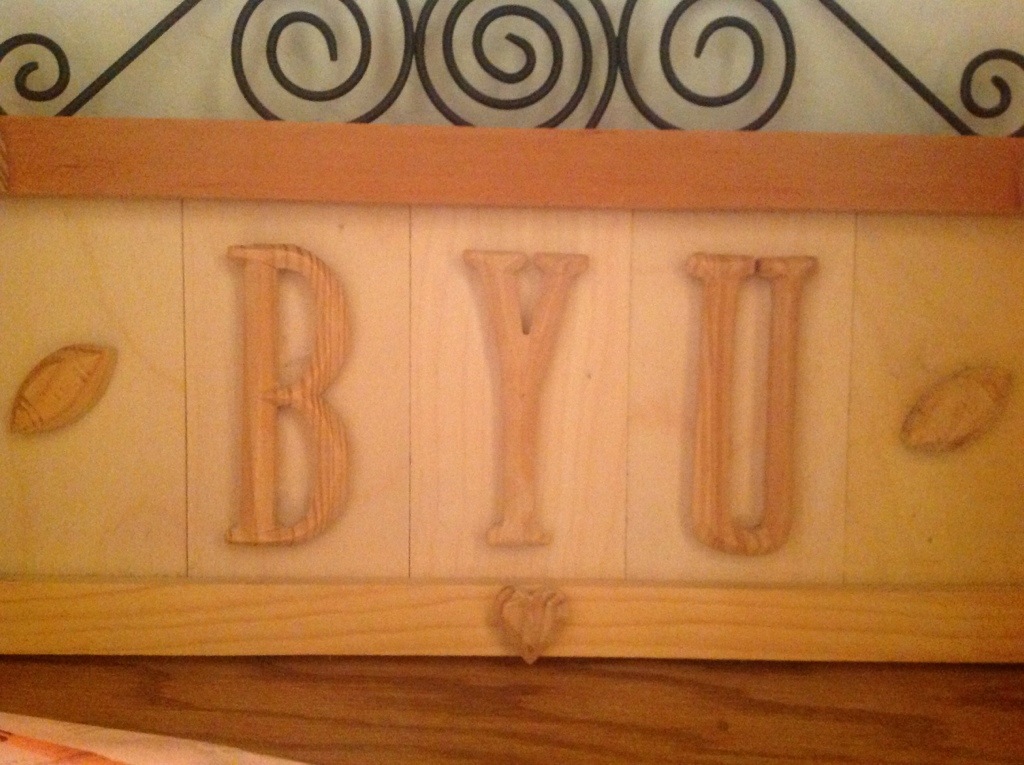
My introduction to computers actually traces its path through telephony. (Back To Where It All Began) But, before I worked for WordPerfect, I worked for BYU’s telephone office. This was before the days of cell phones. Our telephone system was what today we’d call POTS: Plain Old Telephone System. It wasn’t even digital. It was all analog.
During the semester my job was to install the occasional phone for some professor changing offices, or solve a problem when someone kicked a plug out of the wall. But at the end of each semester, we had to go through and disconnect the phones in the student dorms.
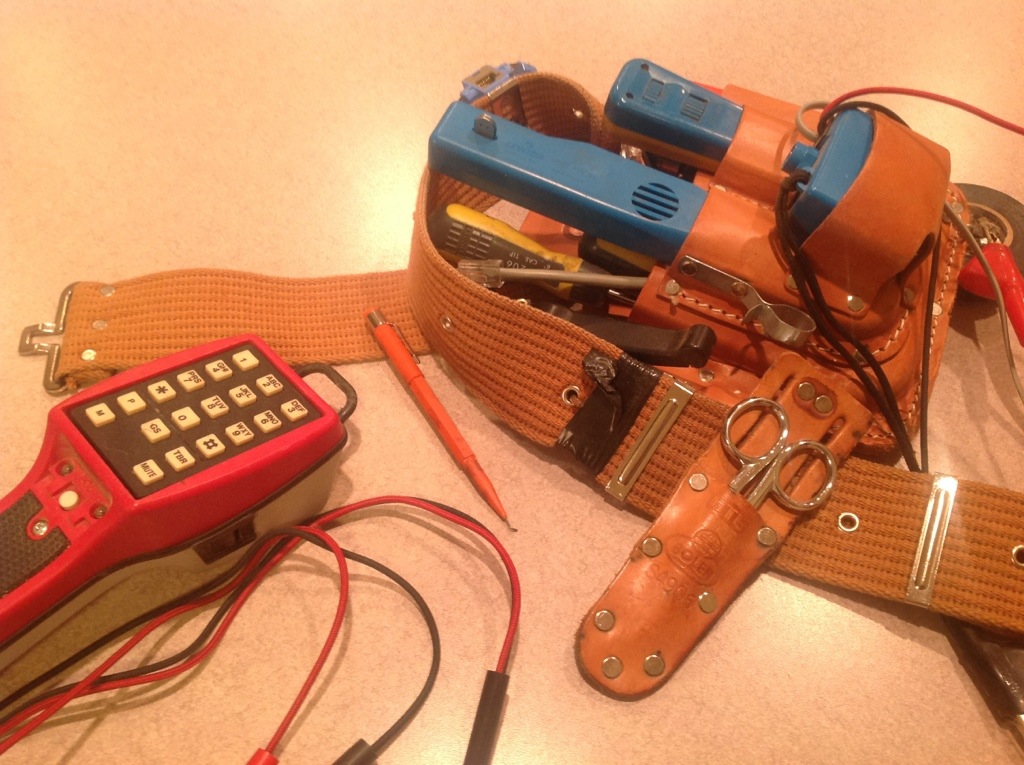
The switch room was a room about 30 feet long, 8 feet high and 4 feet wide. One entire wall was covered with telephone punch blocks. There was a terminating connection for every dorm room on campus. There were also lines that connected up to the PBX, the (very simple computer) that generated the hundreds of phone numbers that would get assigned to a student for the semester and then get recycled over the summer.
On this one day, we had a list of about 100 numbers to disconnect. The end date of the phone contract period had come and gone about a week earlier. So, the phones still worked, but students were no longer paying for them.
We tried to not cut people off in the middle of a call. I mean, we could. The phones were scheduled to be off already, but we tended to get fewer complaints if we disconnected them while no one was using them. So, we’d use a butt-set to check each line before pulling the jumpers.
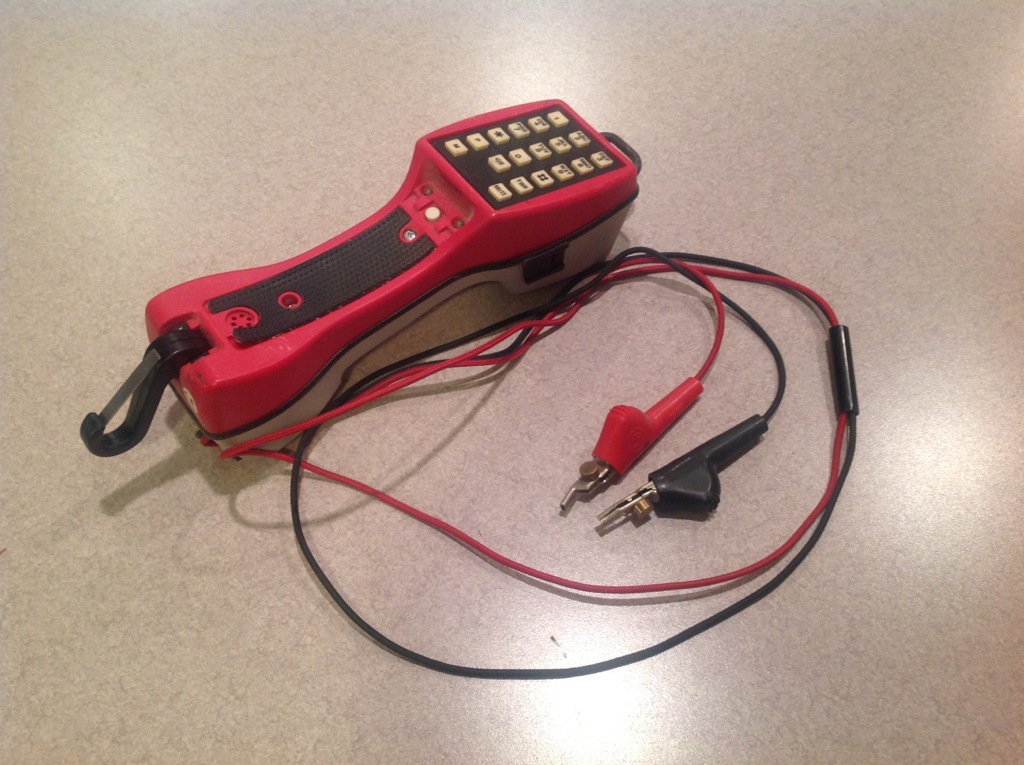
We were making pretty good progress. After disconnecting a couple dozen without a problem, we found a line that was in use. A guy was talking to a girl. I stayed on the line just long enough to figure out there was a conversation and then we marked it and continued on. Every 10 minutes or so, I’d check back. Still same guy and same girl. An hour later we were finally done with all of the other numbers. We just needed to disconnect this last line and we could go. I checked again and I could hear the guy still talking to the same girl.
The ethics of eavesdropping on a private conversation didn’t concern me as much at the time as they do now. Besides the phone was supposed to be turned off already.
Rodney? What’s the hold up?
Bill wanted to be done and head back to the office. The switch room was not the most comfortable place to hang out.
This guy’s still on the phone. Find the jumpers for this line, but don’t pull them yet. I’ll let you know.
The conversation was typical of a college guy who likes a girl, but is too shy to let her know, but is just happy that she’ll talk to him. . . for hours apparently. They had been on the call for 90 minutes that we knew of and probably longer.
I could see that Bill was set to pull the jumpers as soon as I said the word. On the phone I heard,
It’s been great talking to you. What I really called to ask you was. . .
PULL IT NOW!
I’ve often wondered over the years if he ever got to tell her what he really called to ask her. It was BYU after all, it might have been a marriage proposal.
Rodney M Bliss is an author, blogger and IT Consultant. He no longer eavesdrops on phone conversations. He lives in Pleasant Grove, UT with his lovely wife and 13 children.
Follow him on
Twitter (@rodneymbliss)
Facebook (www.facebook.com/rbliss)
LinkedIn (www.LinkedIn.com/in/rbliss)
or contact him at (rbliss at msn dot com)
Tell your friends about this!

The young 2nd Lieutenant looked at the ROTC cadet across the table. While only a few years older, he was the commanding officer and she was just a cadet, not exactly a real soldier. They were finishing up a summer deployment in Bulgaria.
When you are in charge, sometimes you just have to be a jerk.
Several possible responses came to mind. She had the good sense not to speak any of them. But, foremost among them were
None of those times occurred on this trip.
or, more pointedly
No, you’re just a jerk.
The group of nine ROTC cadets decided they hated the 2LT. And he had done nothing to change their feelings about him. Sadly he probably honestly thought that he was simply being a “tough” leader.
I avoided management for the first half of my career. Early in my career I met My Boss From Hell. He along with subsequent bad bosses convinced me that if management meant that “Sometimes you have to be a jerk,” I wanted no part of it.
While working for a startup called Agile Studios, I found myself as the “grown up” among a group of recent college graduates. The president at 24 or 25 was about 15 years younger than I was. I was asked to become the Executive Vice President and just like that I was management.
I kept watching for the time where I was going to have to be a jerk. I really dreaded it. Many years later, I’m still waiting for that time to show up. I’ve had to fire people, (You’re fired, Fireworks in 3…2..1, He Also Deserved To Be Fired.) I’ve had to reprimand people (He Deserved To Be Fired.) I had to deal with upset customers (Your Bill is HOW much?) In each case, I tried to approach it with a dignity for the person I was dealing with. When employees screwed up, I had to decide if their problem required firing them. If it did, I made sure that they understood the reasons, and that I didn’t confuse poor performance with a poor individual.
I realized eventually, that no, you don’t sometimes have to be a jerk. There are just some people who are jerks. Looking back on the bad managers I’ve had over the years, I now understand that their bad attitude was not a result of the situation. Instead it was a result of a personal decision that they made to be a jerk.
Most often, I think it was to cover their own feelings of failure. I know when I’ve hired someone that doesn’t work out, I feel like much of the fault is mine. Did I train them well enough? Did I give them too much leeway? Did I not give them enough? Those type of introspective questions scare many people. So, they decide to take it out on their employees by having a terrible attitude.
You don’t have to be a jerk, and it’s actually a lot easier to be a manager if you aren’t. If you end up working for someone who feels, or worse, tells you that they have to be a jerk at times to be a good manager, run don’t walk for the exit.
Life’s too short to work for a jerk.
Rodney M Bliss is an author, blogger and IT Consultant. He lives in Pleasant Grove, UT with his lovely wife and 13 children.
Follow him on
Twitter (@rodneymbliss)
Facebook (www.facebook.com/rbliss)
LinkedIn (www.LinkedIn.com/in/rbliss)
or contact him at (rbliss at msn dot com)