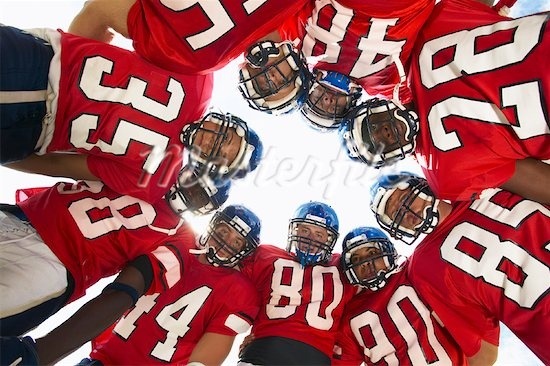
(Photo credit: ontracmanagementservices.com)
Mark, I need a favor.
Okay. . .
I need you to set aside a terabyte of storage space for me.
You know that the policy is to not allocate space until we’ve had a formal request that’s been approved by the portfolio director.
Yeah, I know. I don’t have time for that. I need the space right now. I can get you the approval next week.
What would you do? The odds are that your answer would depend on who was asking. The safe course would be to say no. No one is going to get you in trouble for following company policy. And that policy is there for a reason. Organizations, despite what Dilbert thinks, do not enjoy creating red tape. You might have the occasional Pointy Haired Boss who thinks that “winning” means making things hard for people, but most companies really would like their processes to run smoothly and efficiently.
But, there are probably people that you would make an exception for. Not because either one of you wants to break rules, but you treat team members differently than non-team members.
You “team” are those people who help you get your job done. In this case, I’m ignoring the team that your organization defined for you. In fact, there may be times where the people your organization assigned you are actually hurting your productivity.
Every successful person I’ve ever met has built a personal team who is committed to their success. To avoid confusion, let’s call this “Team Rodney.” Wow, Rodney, kind of arrogant to think it’s always going to be all about you!
Excellent point! It’s not all about me. Just because I build a Team Rodney, doesn’t mean that there’s not a Team Howard or a Team Dave or a Team Sandra. I’m on many of those teams. I’ll get to that in a minute.
So, who should be on my Team Rodney? That really depends on what I want to accomplish. In my last position, I worked for a large non-profit. We had 30,000 employees. We were a classic “big corporation.” Here are some of the people I recruited for Team Rodney.
– Mark, an engineer in the Storage Team
– Jeff, a graphic artist
– Sara, the Administrative Assistant for our division
– Carl, a Program Manager, who managed my projects
– Roger, a director over another portfolio who helped fly high cover
– A bunch of engineers who were already on my data center team.
There were others, but this group of people were the ones I worked with most often. What does it mean to be part of Team Rodney? Remember I said that people on my team were committed to my success. So, everyone on this list was willing to go out of their way to help me be successful. For some of them it was easy. Because my projects lined up with their projects. But, some of them were not very closely connected to my projects at all or I’m “one of many” that they deal with.
Carl, the program manager is an excellent example. Carl was concerned with the success of my maintenance projects. I was one of several project owners that he managed. But, in addition he would buy the food for our data center maintenance. He didn’t have to, but he believed in what we were trying to accomplish and most important, he trusted me and he realized that he could do the food better than I could. For one thing, I didn’t have to give him receipts.
You may be wondering why anyone would be on Team Rodney if they didn’t have to? Another excellent question. (It’s almost like I’m thinking them up myself.) They were on my team because they knew that I was on their team. In other words, Carl knew he could come to me with a issue and I’d do what I could to help him even if it wasn’t exactly my team’s responsibility or policy.
Being on someone’s personal team is more than simply helping them when asked. If you are on someone’s personal team, you care about their career. You look out for them and you also help them.
But, what if you don’t work in an office. Suppose you’re in a small business, or you’re self employed? Do you still need a team? I think you need one even more. In my current consulting role, here are some of the people on Team Rodney.
– Dave Brady (he of Heart, Mind, Code)
– Howard Tayler (he of Schlock Mercenary)
– John, a CPA who happens to be my brother and is willing to help me with more than taxes
– Richard Bliss (he of Game Whisperer) He’s a brilliant marketer
There are more people on Team Rodney, but like my example above in a large corporation, the principle is exactly the same. These people are all willing to help me if I need it. But, they also look out for me.
Yesterday, I talked about Why I Love Conventions, and mentioned that I’m helping out in the Schlock Mercenary booth at Salt Lake City Comic Con. I’m doing this, because I have the time to help right now, but also because I’m on Team Howard. (Actually, it’s Team Sandra Tayler.)
But, the point is that they need the help and I can provide it. There have been times where I’ve written code for Howard, or provided dress and grooming advice for Dave Brady. Not because I had to, but because I’m also on Team Dave. They have also at times been huge supporters of Team Rodney.
What this means to you is that you cannot be a loner. You need the help of others to be successful. Whether you are in a large corporation or you are a small business owner, you need peers who are committed to your success. You need a Team You.
Okay, I don’t have to reconcile my space requests until the end of next week. I need the approval by then, or I’m going to be in trouble. I’ll have your space allocated by this afternoon.
Thanks, Mark. I’ll get the approval process started. We just got hit with a last minute vendor requirement for more space that put the entire project in jeopardy. This should get us back on track.
Rodney M Bliss is an author, blogger and IT Consultant. He lives in Pleasant Grove, UT with his lovely wife and thirteen children.
Follow him on
Twitter (@rodneymbliss)
Facebook (www.facebook.com/rbliss)
LinkedIn (www.LinkedIn.com/in/rbliss)
or contact him at (rbliss at msn dot com)
And this week, find him at the Schlock Mercenary booth at Comic Con Salt Lake City
Tell your friends about this!


I get to do one of my favorite things today. I get to go hang out with 35,000 other people inside the Salt Palace in Salt Lake City, eat overpriced junk food, stand on my feet for eight hours and possibly see Captain Kirk. And then I get to do it again tomorrow and Saturday.
In short, I get to attend Comic Con Salt Lake City. This is my first time at a Comic Convention. I’m here helping my friend Howard Tayler. I’m what’s called in convention-speak, a “booth worker.” Well, that’s what we call them at computer conventions. When I was approached about helping out with the Schlock Mercenary booth the title I was offered was “minion.” But, after doing setup and hearing that I may the be the manning the booth by myself for long periods of time, I was promoted to “Head Minion.” (I’m thinking about having cards made up.)
So, why do I like conventions?
It doesn’t matter if they are computer conventions, outdoor recreation conventions, or comic conventions, I enjoy them for a three reason. And these relate to business, so I’m not just writing this column because Comic Con makes a nice topic.
Networking, Learning and purely personal.
Networking
For me the main reason to attend a conventions in your field is to see and be seen. I try to attend Novell BrainShare every year. I haven’t had to support Novell products in years. But, even though BrainShare is a much smaller convention than it used to be, I know many of the people and the vendors. I’ve been offered jobs while attending BrainShare. At times, BrainShare is the only time I see certain vendors. The IT world is a fairly small community. I know it seems HUGE. Every company has computers. Every company, no matter how small, buys and runs software. How can I possibly describe it as a small world?
Because the software you run is from only a handful of vendors. I worked for Microsoft, and I’ve done work for Novell. If you are running corporate email you are probably running either Novell GroupWise or Microsoft Exchange.
Some of you are now saying, “No. We run Outlook.” And without going too far off the rails, (because I really would like to get to the convention) Outlook is a desktop product, like Microsoft Word or Excel. Your copy of Outlook connects to an email server on the backend. Probably Exchange.
The point is that with all the millions of mailboxes in use in the world, there are only a few email vendors. Those vendors hang out at Conventions. The same is true for any IT products. The group of vendors is actually not that big.
Even more than simply attending a convention, if you have the opportunity to speak or present a panel, or a class, it does wonders for your reputation. Years ago I was at a Microsoft Exchange convention, where I was teaching a class on migration. My second book, “Microsoft Exchange Connectivity Guide” was offered in the convention bookstore.

During the introduction for the class I talked about writing the book and that it was available. By the third class presentation the book store had sold out of my book. That was also the first time someone came up and asked for an autograph.
Yes, speaking at conventions can do wonders for your name recognition, and it doesn’t hurt your ego either.
Learning
Part of the reason to hold a convention is so that someone can tell someone else something important. (I know that’s vague, but I’m trying to spread a really wide net here that covers comics, rafting and computers.) Preferably the person doing the telling can tell a lot of people all at once. In that case, you get a breakout session, or an author’s panel, or a vendor demo. If the person doing the telling needs to tell a lot of people, then you put them in as a keynote. William Shatner is one of the keynotes at Comic Con. Although, I’m honestly not sure if they call it a keynote at comic conventions.
There is also the convention “floor.” This is where the vendors set up booths. At a computer convention the computer companies give away a ton of stuff. When I was traveling a lot, Christmas stocking stuffers were mostly acquired at conventions, or trade shows. You can also easily compare vendors products. Or at least you can compare the prepackaged demo that their booth worker practiced a thousand times.
Brainshare was fun in this regard. Since it was a Novell show and the Novell offices are just 40 miles down the road in Provo, Novell typically set up dozens of stations where you could not only see demos, but also do hands on labs.
The rafting show I went to didn’t have nearly as many give aways. Mostly it was hard candy. Our booth was particularly popular since we gave away chocolate candy. And we also handed out computer mice and every day we gave away a radio controlled car. But, we were the exception.
In looking at the vendors setting up for Comic Con, I think it’s going to be a lot of selling and even less freebees than the rafting shows. I know the Schlock booth is pretty much a store front. We’ll be selling all 9 Schlock books, cups, hats, more books, pins, patches, dice, still more books, and challenge coins, including the numbered Tagon Tough’s series.
Purely Personal
And that’s part of the third reason I enjoy conventions. I’m a people person. I enjoy talking to people. I really like the energy that you get at a trade show. Comic Con will be fun because many of the attendees will be dressed in costumes. One of my adult daughters is going as a steampunk pirate. I’m not entirely sure what a steampunk pirate is, but she promised to come by the booth and show me. As I mentioned, William Shatner is one of the guests of honor. Adam West, the original TV Batman is another. Stan Lee, the creator of Spiderman, Iron Man, Incredible Hulk and an amazing group of characters will also be there.
I won’t get to see their keynotes, unfortunately. I’ll be working the booth, but who knows, maybe they will wander past.
Conventions can also be exhausting and emotionally draining. I know some people who detest even the thought of spending three days crammed in a room with 35,000 people. But, for a people person like me, it’s a great way to meet people, a lot of people, all at one time.
I’ll post a Convention Report next week.
Rodney M Bliss is an author, blogger and IT Consultant. He lives in Pleasant Grove, UT with his lovely wife and thirteen children.
Follow him on
Twitter (@rodneymbliss)
Facebook (www.facebook.com/rbliss)
LinkedIn (www.LinkedIn.com/in/rbliss)
or contact him at (rbliss at msn dot com)
And this week, find him at the Schlock Mercenary booth at Comic Con Salt Lake City
Tell your friends about this!


(Clipartfort.com)
My friend Dave Brady doesn’t.
Rodney, I hated “And Sometimes You Just Get Lucky.”
Really? . . .Okay. . .I guess.
And by hate, I mean I loved it up until the end where you claim luck helped you solve the problem. I literally yelled at my screen, “How do I learn from THAT?”
Dave hated it so much he wrote an entire blog post telling me I was wrong. (Luck Is Not A Factor) You should go read it. I’ll wait.
Yeah, it was a little long for a blog post, and I have NO idea why he threw in all that stuff about me and tiger fighting. I did write a column a few weeks ago on “The Danger of Inviting In the Tiger.” I’m pretty sure that’s not what he had in mind. We’ve worked together over the years, and we’re also friends.
His contention seems to be
Lucky people relax more, and tend to be more open to noticing things even while they are focusing on accomplishing a task.
He had science and stuff to back up his belief. But, the problem with this idea is that in the example I cited, I was at a customer site and I was specifically not relaxed. I was very uptight. I wanted to leave. I was mostly just going through the motions of working on the problem so that I could . . .Okay, maybe this part is not exactly true.
I enjoy technology. I like the challenge of figuring out why computers do what they do. Because, unlike people (or even tigers) computers do things for a reason. Sometimes you can’t actually find the reason and you simply reboot your Windows computer because it’s a Windows PC. But, especially if you have access to the source code, as I did, you can often figure out the why.
But, was it luck? or was it that, as Dave suggested, years of training had turned me into a ninja warrior and my zen like mindset resulted in a certain inevitability of events? (Actually, I don’t think he said that, but I like the image.)
Even the blind squirrel occasionally finds a nut.
However, even with vast amounts of training and preparation I still think that luck plays a role. When I was managing the email team for a large non profit. We worried about protecting our users from spam and viruses. We implemented a technique I called “AA. Canary.” It was a mailbox that sat as the first entry in our 30,000 name address book. The purpose of AA. Canary was to catch any spam messages that might hit our network. The thought was that if a spam engine ever got to our servers, it would start at the top of the address book when it started spamming. AA.Canary forwarded mail to our security team and our engineering team.
Eventually the day came that we got attacked. A spam bot started hitting our address book. Because security knew about it within minutes of the start of the attack, we were able to limit the damage to just a few hundred users.
So, what does this have to do with luck?
It was lucky that the spam bot writer chose to start at the top of the address book. He (or she, but seriously how many women do you see in computer science? Not many, so the odds that some are hackers is pretty low). . .he could have started at the B’s or really any place in the alphabet. From a programming standpoint, it’s easier to write a simple
GetFirst(AddressBook)

While not EndOfFile

  GetNext(AddressBook)
But, was it expected that the writer would do it this way? Maybe. Maybe not.
Were we lucky that he did? Absolutely!
In case anyone is thinking of implementing the AA. Canary idea, I should add one caveat. AA. Canary wasn’t actually the first name in our address book. Oh it was at first, but we eventually added AA. Blackhole. See, certain of our users had the habit of sending copies of their email to the first name in our address book. The first few times it happened, we rang the alarm bell and braced for a spam attack. What we got was
Martha, I just wanted to let you know that we arrived safely in South Africa. We'll be settling in over the next few weeks and I'll let you know when we have a permanent address.
Huh?
And only a single copy. No massive spam attack. Eventually we figured out that users were opening the address book and then “closing” it by pressing ENTER. That, of course included the first name in the address book. So, we created AA. Blackhole and told it to delete everything it got.
Sometimes you have to work around the users.
But on the luck thing? As the ancient Roman Seneca said, “Luck happens when preparation meets opportunity.” Seneca may have believed that those were the only two ingredients. I choose to believe that when those two tangibles come together is where you’ll find the third intangible: luck. Because after all the preparation, when you’ve put yourself in a great position to succeed, and you’ve done everything you can to put the odds in your favor, sometimes the only thing left is to hope you get lucky.
Rodney M Bliss is an author, blogger and IT Consultant. He lives in Pleasant Grove, UT with his lovely wife and thirteen children.
Follow him on
Twitter (@rodneymbliss)
Facebook (www.facebook.com/rbliss)
LinkedIn (www.LinkedIn.com/in/rbliss)
or contact him at (rbliss at msn dot com)
Tell your friends about this!

Rodney, can I talk to you a minute?
Sure, Ed. What’s up?
I need your advice. I’ve been approached by The Mail Advocates to come interview for a position. What do you think?
My heart sank. Ed wasn’t just a good employee, he was one of those people you build a team around. His skills were good enough to be a Prima Donna, but he had a fantastic attitude. He wrote the book on Novell GroupWise. Literally, he’d written at least two books that I knew of. He’d made the switch to Microsoft technologies amazingly fast and dragged the rest of the team with him.
I’d been working for a large non profit in Utah for about a year. On my first day, before I met the team, my boss showed me my desk. As often happens, the previous occupant had forgotten to clean out the center drawer. I’m not sure why that one gets missed, but it does. As I looked through the paper clips and dried out highlighters I spotted an old ID badge. Turning it over I read Ed Richardson. I was a little worried.
Being in the email space, I knew Ed by reputation. As I mentioned, he’d written books on email. If they had Ed on the team, he either didn’t want the manager job, or he applied and they didn’t offer it to him. The first possibility would be fine, if it was the second, I was in deep trouble before I even started. Would I have to convince Ed that I deserved the job instead of him?
Fortunately, Ed knew me by reputation as well. During our first 1:1 I brought it up.
Ed, why aren’t you the manager of this team? You’ve been with the company for years. You’ve got the industry experience.
I was. It didn’t go well. See, I’m an engineer. I realized that all that management stuff. . .going to meetings, doing reports. I stunk at that stuff. It kept me from focusing on the technology. Fortunately they didn’t fire me. They let me go back to being an engineer. . .and hired you.
I’ve always tried to run my teams in a way that would both get the job done, and make the employees enjoy it. I didn’t necessarily try to be everyone’s friend. That’s typically what happened, but it wasn’t the goal. I figured that the manager has a role to play, just as each engineer does. My job was to shield the team from all that management stuff that Ed didn’t like.
It was this open and supportive attitude that let Ed feel like he could approach me with the offer to go elsewhere.
Obviously I don’t want to lose you. But, I think you need to do what’s best for you and your family. At the end of the day, you’re answerable to your wife and kids. We would survive. So, I guess I’m saying it certainly can’t hurt to see what they have to say.
Great. Would you be a reference for me?
Wow. That’s sort of pushing it. I really REALLY wanted to keep Ed. Could I be an impartial reference? I think so. I hope so.
Sure.
I wasn’t sure how the organization would view Ed’s exploring other options. It didn’t bother me, but I’ve worked for companies where even the hint that you are looking elsewhere will get you a black mark. I didn’t want that for Ed, so we kept quiet the fact that he was going.
A few days after he got back from his interview I got a phone call.
Mr. Bliss, this is Heather from The Mail Advocates. Could I ask you a few questions about Ed Richardson?
Sure.
We talked about the technical brilliance that Ed had. I described what a joy he was as an employee. I even told her I completely understood why they would be interested in him.
Actually, we are considering him for a management role. Has he had any experience managing other employees?
Informally, he is certainly the technical leader of our engineering team. As for formal management roles, he at one point had my job. He stepped back into an engineer role because he found that’s where he passion was.
We talked for a few more minutes and the phone call ended. I told Ed what had been discussed. It was a couple weeks later that he approached me and let me know that he wasn’t leaving. I didn’t ask if it was his choice or theirs. I was simply happy to not have to replace a senior messaging engineer. And I was happy that I’d given an honest recommendation and for whatever reason Ed decided that working on my team was preferable to jumping ship.
Ironically, I think part of the reason he decided to stay (as far as I know he never applied anywhere else) was that I was willing to let him leave, and help him with the recommendation. It was leadership by inspiration as opposed to intimidation or compulsion. I’m just glad it worked.
em>Rodney M Bliss is an author, blogger and IT Consultant. He lives in Pleasant Grove, UT with his lovely wife and thirteen children.
Follow him on
Twitter (@rodneymbliss)
Facebook (www.facebook.com/rbliss)
LinkedIn (www.LinkedIn.com/in/rbliss)
or contact him at (rbliss at msn dot com)
Tell your friends about this!

A REVOLUTION THAT WILL TRANSFORM HOW WE LIVE, WORK, AND THINK
By Viktor Mayer-Schonberger and Kenneth Cukier
No, it’s not a business book per se, but it’s an important book for two reasons. First, while written before the Edward Snowden NSA revelations, it still shares important insights into the power of big data, or “What can you discover when you have access to all the data, not just a portion?” Second, my mother sent it to me and told me to read it.
Let’s deal with the mommy issues first. If you do not have the kind of mother who sends you sometimes dense books on obscure topics, I’m really sorry for you. My mother spent 30 years as a CPA, small business owner, writer, Licensed Financial Planner, and was called on to be an expert witness in complex financial court cases. She’s a fascinating women that is the life of nearly any party she attends. If she tells me that a book is worth reading. . .well, I naturally take her word for it. She’s now retired and spends her time on cruise ships with my step-father.
So, mom got me to read it, but I was already interested in the topic. In Staying Out Of The Clouds, I talked about the potential dangers that I saw with privacy and cloud based computing. “Big Data” provides much of the background that will help both an IT professional and novice alike understand the power of the data that is around us every day. Information that we give up freely often without thinking through the implications of that information and how long it may presist.
The authors spend a lot of time on mobile phones. They point out,
Even the most banal information may have special value. Look again at mobile phone operators: they have records of where and when the phones connect to abase stations, including at what signal strength.
This is information that you are providing to phone carriers simply by walking around with a phone that is turned on. The authors go on to explain how this information is valuable to business, but we now know that it’s deemed valuable to the government as well.
They cite examples of big data, such as Goggle predicting Flu outbreaks based on people’s search terms. Google was able to do this days before the Center for Disease Control could.
What I liked
The authors do a great job of taking some rather complex statistical and Information Technology concepts and presenting them in a straightforward and easy to understand manner. The book is at its best when they are taking the reader through a big data example. They spend a lot of time on Google. The authors have to create a new vocabulary to explain their topic. Datafication, Data Exhaust, Algorithmists, each is introduced and explained and it’s obvious what the role is. If you are new to big data, this is a great book to help you understand the concept and some of the major players. If you are a data steward, it’s useful to know how other companies are approaching the task of collecting and processing large amounts of data.
What I Didn’t
I think the authors are woefully naive about governments and big corporations. The last two chapters in the book are devoted to looking forward. The authors point out the dangers of all this information and then give their opinions that somehow society will figure it out with proper safeguards.
As some of the worlds’ biggest data holders, governments ought to release their own data publicly. Encouragingly, some are already doing this.
I don’t have a lot of faith in the government, at least the US government, doing what it “ought” to do. My experience is that governments will only do what they are “compelled” to do. We have the advantage on the authors in that we know the US government has collected details on billions of phone calls. We know that they have secret data sharing agreements with some of the largest holders of data such as Yahoo, Google and Microsoft. If those relationships hadn’t been exposed by a whistleblower, I have no doubt the government would have continued secretly collecting that data for years.
What it Means for You
As an IT guy who is interested in statistics and cloud computing, this book was valuable both as a reminder of what is possible and what dangers exist. If you have data that you collect, or that you process, “Big Data” is worth a read to understand the value of what you are holding and the implications for how that data could be used.
Three stars out of five
Edit: Earlier versions of this column misidentified the NSA leaker. His first name is Edward not Richard.
Rodney M Bliss is an author, blogger and IT Consultant. He lives in Pleasant Grove, UT with his lovely wife and thirteen children.
Follow him on
Twitter (@rodneymbliss)
Facebook (www.facebook.com/rbliss)
LinkedIn (www.LinkedIn.com/in/rbliss)
or contact him at (rbliss at msn dot com)
Tell your friends about this!


(Picture Credit: ridermagazine.com)
I admit it, I was going too fast. Even though it was just a 125cc Kawasaki, I was pushing it too hard.
I was coming out of the one of the box canyons that are so common along the Wasatch Front here in Utah. I came up over a rise and was staring at the cutaway side of the hill just a few dozen yards ahead. The road that I expected to see stretching out in front of me for another half mile or so took a sharp turn to the left.
I slammed on the brakes and the bike started to skid on the wet pavement. I had two choices, neither one was good. I could keep the bike upright and slam into the 10 foot tall wall of dirt, or I could lay it down and take my chances with the pavement.
Yeah, I was going too fast.
Today, I want to talk about giving someone too much responsibility too soon.
I love motorcycles. I owned a bike when my wife and I started dating. I loved that bike. When my wife became pregnant with our first child I sold it. The risk was just too great. I didn’t have the type of insurance that would care for my family if something were to happen to me.
The youngest of my 13 kids is 10 years old. Once he’s out of the house, I’ll look at possibly buying another one. It’s a decision my wife and I made together.
We’d save a lot of money if I bought a motorcycle and commuted on that in the summer.
I think it’s too dangerous. How would I raise the kids if you got into an accident?
Well, I’ve got tons of life insurance. You’d be fine!
What if you didn’t die?
She was smiling when she said it.
I’ve ridden bikes since I was a kid. My half-brother’s dad got us started on minibikes.

(Picture Credit: Tom Browning via jleibovitch.tripod.com)
A few years ago, my brother was telling me about a conversation he had with his dad about kids and motorcycles.
My son had just turned five. I realized he was now the same age I was when my dad bought me my first minibike. I looked at my little boy and then I called my dad and asked, “WERE YOU CRAZY? Were you trying to kill me?”
I can’t imagine putting my kids on a motorized two wheeled bike when they were five. In hindsight, it’s too much responsibility too soon.
But, I’ve worked for companies where that was the approach. In my first full-time position at WordPerfect I was supporting WordPerfect Office. I’d just spent two weeks of training learning the word processor. Now I was being asked to take calls on the email program, a program I’d never seen before. I got about five minutes of instruction and then the team lead pointed me at the phones. It was a little rough those first few weeks.
I love working with new employees. By that I mean engineers or developers who are right out of college, or even interns. I think of some of the lessons I wish someone had taught me early in my career. I try to share those. I try to make sure new employees get started on the right foot and get started correctly in their new jobs.
It’s a fine line. Don’t give them enough challenging tasks and you risk them getting bored and disillusioned. give them too much and you might overwhelm them. It’s best to start them on a discrete task that has a limited scope. You want to find something they can accomplish in the first month or so to help build their confidence. It should be challenging enough that they have to stretch, but limited enough that they can accomplish it with a minimal amount of assistance. And of course, you need to give them the proper tools and training.
Not like my first day with WordPerfect Office. I had to put my customers on hold for every single question, no matter how trivial. At times I felt completely overwhelmed. The customers knew more, much more about the product than I did.
Fortunately, I didn’t have a job where I could run into a tree, or over a cliff, or slam into a hillside.
I decided to lay the bike down and leaned to the left and literally pulled the bike over on top of me. I still had both brakes on as much as I could and was still going way too fast. The bike came down on my left leg and the rest of my body came along for the ride. Like the end of a whip, my head was the last thing to hit the pavement. Many times I’ve thanked God that I always wear a helmet. Still it rang my bell pretty good and I saw stars.
I hit hard enough that I immediately bounced up and ended up going back over the top of the bike. The gravel bit into my leather gloves as I landed and I started to roll. I came to rest not too far from my bike and about 5 feet from the dirt wall. The elbows of my leather jacket were scuffed. A back pocket had been ripped off my Levi’s. My high top basketball shoes weren’t enough to prevent a severe sprain on my right ankle. But, I was in one piece. I picked up the bike and aside from some scuffs on the paint and the pedals, the rear turn signal was the only thing broken. Very, very lucky.
I still love motorcycles, but they are dangerous. Training, proper equipment, and experience help mitigate the risks . . .just like in business.
Rodney M Bliss is an author, blogger and IT Consultant. He lives in Pleasant Grove, UT with his lovely wife and thirteen children.
Follow him on
Twitter (@rodneymbliss)
Facebook (www.facebook.com/rbliss)
LinkedIn (www.LinkedIn.com/in/rbliss)
or contact him at (rbliss at msn dot com)
Tell your friends about this!

(Photo credit: Northstargallery.com)
Rodney, I know you’re here to work on a problem for the IMF, but would you mind stopping by Marriott headquarters first and taking a look at an issue they have?
Ah. . .Okay. . .I guess. But, James, I really don’t have any of the background on Marriott. I’ve been working on the IMF issue for 2 months. I don’t even know where to start with Marriott. What’s their issue?
I’m not totally sure, but the head of their IT department can explain it to you. He’s held his staff late in the hopes you’d be able to stop by. We’re almost to their headquarters now.
I felt my stomach tighten up. Like there wasn’t already enough pressure having one customer with a nasty problem, now I’m being hit with a second one before we’ve barely left the airport. What do you do when you are presented with a problem that you didn’t create and that other people are expecting you to fix?
You pray like mad that you get lucky.
The year was 1993. And I was on site in Washington DC. as a member of WordPerfect’s SWAT team. We were the top of the vaunted WordPerfect support structure. We were the ones that got on a plane in the middle of the night to fly across the country because a company had an issue that needed to be handled in person.
SWAT was formed after my experience in “How I Saved the EPA (Don’t Tell Pete).” You’d think that guys who were considered the very best at what they do wouldn’t suffer from performance anxiety. You’d be wrong. My palms started to sweat every time I got on a plane.
We only got called out on issues that couldn’t be solved over the phone. That meant all the easy stuff had already been tried. Plus, the customer was paying $1500/day plus expenses. For that kind of money they expected results, and fast. And we were nearly ALWAYS under pressure to fix it right away. Often production was shut down until we could resolve the issue. That’s a lot of pressure. And if you already knew how to fix it, you wouldn’t need to go.
It was bad enough when we were headed to a site where we had already worked the issue and were familiar with what had been tried and what hadn’t worked. Now I was being asked to look at an issue cold. Not only that, but the head of IT for a major hotel chain was WAITING for me to show up.
Thanks James. James was the field engineer. He was technical, but mostly he got to work with presales issues. Lots of demos. Once the system went into production it got turned over to us. I had worked with James in the past and he was convinced that there was nothing I couldn’t fix. No pressure.

As I walked into the headquarters for Marriott corporation, fortunately it was just a couple of IT guys waiting for us.
We’ve got WordPerfect Shell program and when we try to open it we get a divide by zero error. Nothing seems to work. Happens on every workstation. Doesn’t matter who’s logged in. No other error.
Ever feel like you’re taking a test that you didn’t study for? Yeah, it was kind of like that. I sat down at the keyboard and stared at the H:\ prompt. This was before the days of Windows and the graphical user interface. You know that command prompt that you can open in Windows by typing CMD? It shows you a black screen and C:\? Well, that’s what these computer looked like. WordPerfect sold a program called Shell that put a simple DOS based menu on the screen. The network was divided up into letters. Typically H:\ was a user’s home directory. M:\ was the mail directory, etc. Directories were kind of like folders.
I typed
H:\ shell.exe
Error: Divide by Zero
H:\
That didn’t help.
I was trying to decide how long I had to sit here before I could reasonably announce I had failed. Clearly I had to be here longer than the 2 minutes I’d put in so far. To stall for time, I decided to look around the network. At least it would look like I was doing something. Honestly, I had no idea even where to start on this problem. The WordPerfect Rep and the IT Director were looking at me with expectant looks on their faces. Boy where THEY in for a surprise.
To see what’s in a folder or directory you type the dir command.
H:\dir
.
. .
0 files found
2445004600 Space Available
The directory was empty, which wasn’t surprising. But the amount of free space looked odd. Back in 1993, a 20MB hard drive was considered big. Counting zeros I realized this was 2.4GB of free space. An ENORMOUS amount. My earlier anxiety started to ease replaced by the hint of an idea.
Ah. . .there’s a lot of free space on the server. Did you guys recently add a bunch of new hard drives?
No, but we’re getting ready to upgrade the servers. We’ve been going through and purging a lot of files on the network. Is that important?
Can I use your phone?
I was now in that mode that engineers and programmers enter when the rest of the world becomes an annoying distraction. The anxious feeling was gone. Presented with a technical problem, I was now intrigued. I knew two important things that the customer didn’t. First, I knew that the Shell.exe program counted up the free space available when it loaded. And, secondly I knew the phone number of the Shell programmer back in Utah.
Hey, Larry, this is Rodney Bliss from the SWAT team. I’m at a customer site and they’re getting a divide by zero error when they load Shell.
I didn’t write that error. That’s typically a stack overflow error.
Yeah, I know. I noticed that they have 2.4GB of free space. Does Shell have a maximum size it can count up to?
Hmm. . .let me check. I’ll be right back.
. . .
You’re right. Looks like we’re using an integer and that means we can hold numbers up to about 2GB.
If they had more free space than that, what would Shell do?
It would throw a divide by zero error.
Can you build a special version of Shell.exe that uses a bigger variable? It would be just for Marriott.
Yeah, that should take about 15 minutes.
Great, I’ll give you an address to FTP it to.
I finished up with Larry to see James, the WP rep and the IT guy staring at me. But this time the expectant looks had turned to amazement.
Okay, we should have a version that will work for you guys in about half an hour.
How did you know how to fix that?
Well. . .sometimes you just get lucky.
It’s been 20 years and I’m still not sure how I knew how to fix this. It’s not exactly luck. It’s that ability to look for anything out of the ordinary and then think about what you already know about the program. But, to an anxious customer it might as well be black magic, or luck.
And never underestimate how much abject terror influences your ability to find solutions.
We walked out of the Marriott offices about 25 minutes after we walked in. I was still riding that euphoric high of success. I didn’t even mind when James asked if we could make one more stop before we headed for the IMF.
Rodney M Bliss is an author, blogger and IT Consultant. He lives in Pleasant Grove, UT with his lovely wife and thirteen children.
Follow him on
Twitter (@rodneymbliss)
Facebook (www.facebook.com/rbliss)
LinkedIn (www.LinkedIn.com/in/rbliss)
or contact him at (rbliss at msn dot com)
Tell your friends about this!


I am happy to join with you today in what will go down in history as the greatest demonstration for freedom in the history of our country.
Fifty years ago today, a young Black preacher from Montgomery, Alabama stepped to a microphone in the shadow of the Lincoln Memorial and gave a speech that resonates as loudly today as it did a half century ago.
A few months ago I gave a speech explaining what Doctor King’s words mean to me and my family. I share it with you again today.
————————————————————————————————————–
From Dream to Reality
(April 16, 2013 – Rodney M Bliss)
I want to take you back to August 28, 1963. It was a brutally hot summer that year. A summer that seethed not just with the heat of high temperatures, but high tensions. A summer wracked not just with conflicted politics, but with conflicted people.
On this day the national mall in Washington DC is crowded to overflowing. A crowd a quarter million strong, predominately Black, have come to Washington today. Come to hear a speech that will define not just a movement, but a generation.
Come with me for a few minutes to revisit that pivotal day and the remarkable speech that forever defines it.
A young Black preacher steps to the microphone,
“I am happy to join with you today in what will go down in history as the greatest demonstration for freedom in the history of our nation. “
He speaks for nearly 20 minutes and my poor efforts pale next to his soaring oratory. He shares both his condemning view of our past and his prophetic hopeful vision for our future.
His voice spans the nation, telling us to
“Let freedom ring from the prodigious hilltops of New Hampshire.”
“Let freedom ring from the mighty mountains of New York.”
“Let freedom ring from the heightening Alleghenies of Pennsylvania.”
“Let freedom ring from the snowcapped Rockies of Colorado”
“Let freedom ring from the curvaceous slopes of California. Not only that, but let freedom ring from Stone Mountain of Georgia and Lookout Mountain of Tennessee.”
He tells us
“the Negro will never be satisfied, as long as our bodies, heavy with the fatigue of travel cannot gain lodging in the motels of the highways and the hotels of the cities. We cannot be satisfied as long as the Negro’s basic mobility is from a smaller ghetto to a larger one. We can never be satisfied as long as a Negro in Mississippi cannot vote and the Negro in New York believe he has nothing for which to vote. No, no, we are not satisfied, and we will not be satisfied until justice rolls down like waters and righteousness like a mighty stream.”
He has no way of knowing about a young Black boy growing up in Honolulu, Hawaii. A little boy who had just celebrated his 2nd birthday. The son of a white mother and a Black father. A boy who would someday not only gain lodging in the motels of the highways and the hotels of the cities, but would gain lodging in a house that while less than a mile from the spot where he stood, must have felt as inaccessible to that preacher as the surface of the moon.
Rather than walk the streets of slums, this boy will tread the halls of power. Rather than question for what to vote, he will be the one for whom they vote.
For over 150 years the Black man had waited for the nation to honor the promissory note that all men are created equal. But less than 50 years later, the first Black president would stand on the shoulders of these giants to reach the heights of achievement. Dream indeed.
You are no doubt familiar with the most famous lines from the speech that day,
“I have a dream that my four little children will one day live in a nation where they will not be judged by the color of their skin, but by the content of their character.
I have a dream today.”
Great as this sentiment is, it’s the next paragraph that makes this speech particularly personal, poignant and inspirational for me.
“I have a dream that one day the state of Alabama, whose governor’s lips are presently dripping with the words of interposition and nullification, will be transformed into a situation where little black boys and black girls will be able to join hands with little white boys and white girls and walk together as sisters and brothers.
I have a dream today.”
Each night as I look at the faces of my children gathered around our dinner table, or kneeling with their heads bowed to pray, I’m grateful that my little Black boys and black girls can join hands with my little white boy and white girls, as well as little Asian boys and Asian girl and walk together as sisters and brothers. Dream indeed.
We still have a long way to go as a nation to recognize and realize Dr. King’s dream. But for me and my family, his dream has become my reality.
Thank you
————————————————————
A video of my speech is available here.
The full text of Dr King’s remarkable speech can be found here.
The video of his entire speech can be found here.
Rodney M Bliss is an author, blogger and IT Consultant. He lives in Pleasant Grove, UT with his lovely wife and thirteen children, three of whom are white, three of whom are Asian and seven of whom are Black.
Follow him on
Twitter (@rodneymbliss)
Facebook (www.facebook.com/rbliss)
LinkedIn (www.LinkedIn.com/in/rbliss)
or contact him at (rbliss at msn dot com)
Tell your friends about this!


(Photo credit: World Economic Forum via flickr)
The CSA would also have responsibility for Microsoft Research. There’d be a dotted line reporting to a VP but the CSA would be the decision maker. So, any questions?
Just one, and maybe you covered this and I missed it, but what’s a CSA?
Ah. . .that’s you, Bill.
One of the benefits to working for Microsoft was the opportunity to hear Bill Gates speak in person. Sure it was typically at a company meeting where it was just Bill and 5,000 of his closest friends, but still when Bill spoke to employees, the stories were much different than the ones that got reported in the press.
Bill was telling us about a time where he was in a meeting with the top Microsoft leadership. Bill had recently turned over the Chief Executive Officer role to Steve Ballmer and had created a Chief Software Architect role for himself. This executive meeting was to discuss the resulting reorganization. While reorganizations were not common at the senior levels, Microsoft had a habit of doing some sort of reorgs every six months or so.
In my 9 years as a full time employee I had 20 direct managers. And I wasn’t unusual. The logic was that by constantly changing the management and team structures, they kept people from becoming complacent in their roles. Not sure if it worked.
Bill explained that at this particular meeting it seemed like everyone else in the room understood what CSA meant and he was the only one who didn’t.
I sat there thinking maybe I could pick it up in context, but after about 15 minutes I realized that wasn’t going to work. I had to either keep quiet and not know, or speak up and risk looking foolish.
Think about that. The richest man in the world. The man who was one of the two or three most influential people in the software industry sat in a meeting and worried about asking a question that would make him look foolish. I don’t know about you, but knowing that, helps me have much less trouble speaking up. If Bill Gates occasionally got lost in meetings, maybe there was hope for me yet.
There is a danger in trying to be the smartest guy in the room. I’ve worked with some brilliant engineers. At my last company, our network engineers truly were brilliant. They knew more about networks than I’ll ever know. And yet, at times they weren’t the smartest guys in the room. I talked about How to Argue With An Engineer. . .Sort of. The network guy knew networks, but didn’t necessarily know how the backup system works, or the virtualization program, or the storage arrays. I often had all those groups and more represented on my projects. I certainly wasn’t the smartest guy in the room. I knew the overall plan, but I didn’t know the details of how the engineers were going to accomplish each piece.
In short, NO ONE was the smartest guy in the room. And so long as we, especially I, remembered that, things went well. Occasionally, we’d get a hotshot engineer who, like an annoying volleyball player ran all over the court trying to tell everyone else how to run their technologies. They typically didn’t last long. Worse is the guy who really doesn’t understand what’s being discussed, but pretends he does. The results can either be hilarious or disastrous.
So, naturally we were curious what was so obscure and perhaps secret that even Bill Gates didn’t know what it was.
What do you mean, it’s me?
Well, CSA stands for your new title: Chief Software Architect
Fortunately Bill was able to laugh at himself.
Don’t be afraid to speak up and ask questions. And if you ever find yourself as the smartest guy in the room and you aren’t alone, you should check your assumptions.
Rodney M Bliss is an author, blogger and IT Consultant. He lives in Pleasant Grove, UT with his lovely wife and thirteen children. That fact alone pretty much guarantees he’s never the smartest person in the room.
Follow him on
Twitter (@rodneymbliss)
Facebook (www.facebook.com/rbliss)
LinkedIn (www.LinkedIn.com/in/rbliss)
or contact him at (rbliss at msn dot com)
Tell your friends about this!

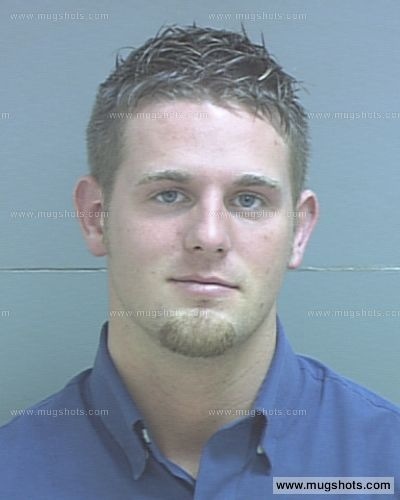
(Photo Credit: mugshots.com)
There’s a right and a wrong way to reinvent yourself.
The Pedophile
Scott Russell did some really bad things. At 22 he had a 15 year old girlfriend and a camera. Plea deals kept him from doing any really hard time, but there were rumors of a child and multiple victims. He left town pretty suddenly. He skipped out on a comedy performance to avoid getting arrested prior to sentencing.
The Comedian
Scott Lee Russell was also a standup comedian who performed under the stage name Scotty Lee. He had dreams of being famous, “I want to be so famous they have to close down the mall when I show up.”
His run-ins with the law gave him a measure of infamy, but not the type he craved. He left the Salt Lake City comic scene in 2011. Most people in his hometown of Ogden, UT thought they’d seen the last of him.
The Englishman
Chaz Blackwood is also a comedian.
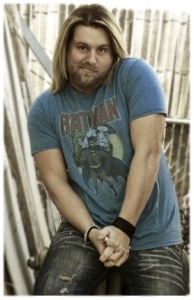
(Photo credit: laughstub.com)
He’s everything Scotty Lee wanted to be. If you read his IMDB page, he’s been on TV and filmed a couple of short films. His webpage describes him as a world famous British comedian who’s performed on the BBC, has two films in production and is “soon to be a household name.” Born in LA, but moved to London at about 2 and raised in cheery old England.
Chaz also is a stage name although you won’t find a reference to his real name on any of his social media sites. You see, Chaz is actually Scotty Lee, who tried to run away from his past and reinvent himself.
I’ve talked before in this column about reinventing yourself (Fire, Comics and Change.) So, what went wrong with Chaz/Scotty’s plan?
After all, Chaz went to a lot of work. He set up twitter accounts, he had a website. As I already mentioned, he has a page on the Internet Movie Database (IMDB). He had Facebook and Google+ pages and a Youtube channel. With the exception of the IMDB page the rest of the pages are gone. Each internet profile for “Chaz Blackwood” was relentlessly targeted by Salt Lake comics telling the story of “Scotty Lee.”
The problem is that Scotty thought that reinventing himself meant leaving the past behind. In the world of Google, Bing and social media that’s impossible. Last week he appeared on a local Salt Lake AM radio station. The SLC comedy community is a very close-knit group. It wasn’t long before someone did a little digging on Chaz Blackwood and recognized Scotty Lee with a bad English accent. There’s even a Youtube video (since removed) of him performing in Las Vegas, where someone in the audience yells “FAKE!” Chaz actually posted the video himself.
What was interesting about the sad tale of Scotty Lee/Chaz Blackwood is the reaction he got from the comics in SLC. Anyone who’s been to live comedy knows that most shows are for those aged 21+. Part of the reason is that many of the shows are in bars, but the comics’ content is typically very adult.
Andrew Dice Clay and George Carlin built careers on pushing limits of what some people considered socially acceptable. Many later comics charged through the door that Clay and Carlin knocked down. Richard Pryor, and Eddie Murphy and a whole host of later “Blue” comics.
So, in a comedy show you are likely to hear jokes that push the envelope. I’ve heard jokes about rape, misogyny, racism, pedophilia, murder, and just about anything else you can imagine. Of course, comics each have their own style, and many work clean, or avoid particular topics. But, as a group, you can hear people telling jokes about anything and everything.
So, why did the SLC comics run Chaz/Scotty off the Internet?
Because in the words of one comic, “We tell jokes about it. He actually DID it.”
In the movie “42,” Alan Tudyk’s character says some vile racist things to the Jackie Robinson character. No one assumes that Tudyk is a racist simply because he plays one in a movie. Comics are very similar. The comic you see on stage is playing a role. And, they are just as offended by pedophiles as everyone is. They are just more likely to make a joke about it.
The second thing that I thought about last week while watching the Chaz Blackwood facade crumble is that there is a right way and a wrong way to reinvent yourself. President Bill Clinton was impeached. He was only the second president to ever be impeached in the history of our country. Many people expected him to resign in disgrace. Clinton instead apologized and went on to have a successful presidency and a very successful post-presidential career.
Reinventing yourself is not so much hiding your past, as acknowledging your mistakes and moving on. Had Scotty Lee tried to get back into comedy in the Salt Lake area under his own name, there would have been some people who would have continued to punish him for his earlier sins. But, if he was willing to weather the storms, it’s very likely that after a few years it would be a non-issue.
I’ll leave you with the story of the “Sheep Thief (The story of two brothers)” by Willanne Ackerman.
Once upon a time in a land far away, lived two young men. The two brothers were likable, but undisciplined, with a wild streak in them. Their mischievous behavior turned serious when they began stealing sheep from the local farmers, a very serious crime in this pastoral place, so long ago and far away.
In time, the thieves were caught. The local farmers decided their fate: The two brothers would be branded on the forehead with the letters ST for “Sheep Thief.” This sign they would carry with them forever.
One brother was so embarrassed by this branding that he ran away; he was never heard from again. The other brother, filled with remorse and reconciled to his fate, chose to stay and try to make amends to the villagers he had wronged. At first the villagers were skeptical and would have nothing to do with him. But this brother was determined to make reparation for his offenses.
Whenever there was a sickness, the sheep thief came to care for the ill with soup and a soft touch. Whenever there was work needing to be done, the sheep thief came to help with a lending hand. It made no difference if the person were rich or poor, the sheep thief was there to help. Never accepting pay for his good deeds, he lived his life for others.Many years later, a traveler came through the village. Sitting at a sidewalk cafe eating lunch, the traveler saw an old man with a strange brand on his forehead seated nearby. The stranger noticed that all the villagers who passed the old man stopped to share a kind word, to pay their respects; children stopped their play to give and receive a warm hug.
Curious, the stranger asked the cafe owner, “What does that strange brand on the old man’s head stand for?”
“I don’t know. It happened so long ago…” the cafe owner replied.
Then, pausing briefly for a moment of reflection, he continued: “…but I think it stands for SAINT”.
I have written a follow-up story to this called “The Bad Penny.”
Rodney M Bliss is an author, blogger and IT Consultant. He lives in Pleasant Grove, UT with his lovely wife and thirteen children.
Follow him on
Twitter (@rodneymbliss)
Facebook (www.facebook.com/rbliss)
LinkedIn (www.LinkedIn.com/in/rbliss)
or contact him at (rbliss at msn dot com)
