During the “Year of our Discontent” we grew much closer as a team.
With two team members out with serious injuries within just a few months of each other, our team had a bit of a reputation. It was generally delivered with a smile, but there was a bit of truth in the jabs I started to hear from the other managers.
The Messaging team should get hazard pay.
If the military gives Purple Hearts, do you hand out silicon chips?
However, things took a more serious turn that year. First was Ed’s family. We had six people on the team, seven counting me. Mark and Jacob had serious falls that required extensive surgery. The rest of us started walking a little more carefully. Ed owned a cabin up one of the canyons that dot the Wasatch Mountains in and around Salt Lake City. In the summer, it’s a nice car drive, but in the winter, the roads quickly become clogged with snow.

The last 10 miles is done by snowmobile. Like many cabin owners, he stored his sleds in a garage at the end of the plowed road. The family would drive to the garage, park and lock the cars and then take the snowmobiles from there. The cabin had power and water. There was a bedroom on the main floor and a loft for the kids.
Ed let us know those weekends when he was headed to his cabin since it meant he would be completely out of communication range. The only way to get a cell signal was to climb a small mountain behind the cabin and get a line of sight to a cell tower miles away.
During a long winter weekend, Ed and his family headed up to the cabin as they often did. As the kids were headed for bed the first night, his young son slipped on the top rung of the ladder and fell to the floor below. It was obvious his arm was broken. This was serious enough at any time, but given their location, it took on an added level of concern. They immobilized the arm and bundled him up and put him on a snowmobile with Ed driving. Every jar of the trail, every rut the skids caught on sent stabbing pains through his arm and he’d cry out.
As Ed related the story to us, we could each imagine how we’d feel trying to hold one of our kids on the snowmobile with one hand, steering with the other and knowing that the pain would continue for an hour or more. We each went home and hugged our kids extra tight after hearing that story.
As terrible as the falls that team members and their family experienced were, they didn’t compare to Ammon’s ordeal. Ammon was the fourth messaging engineer on our team. We had four engineers focused on messaging and two focused on SharePoint. Ammon didn’t have a cabin. He didn’t have a hayloft, and he didn’t climb a ladder to put up Christmas lights.
Dear Team
As you may know our three year old son has Downs Syndrome. Yesterday we took him in for some tests and the doctors informed us that he has leukemia. We think we've caught it early and this type of leukemia has a history of responding well to treatment. Unfortunately the treatments are painful and our son doesn't really understand why he has to have them. Prayers are appreciated.
Wow. At this point, I had run out of management experience to apply. I really didn’t know how to respond. Well, from a management standpoint, I guess I did. I talked to HR and we got the paperwork started in case Ammon had to take advantage of time away under the Family and Medical Leave Act. But, from a personal standpoint, I had no idea how to approach Ammon. Sympathy? Of course, but then what? Act like it will all be okay? How do you comfort someone who’s son might have just been handed a death sentence? Fortunately, Ammon sensed our desire to offer comfort but also respect his space. His family created a web page to track donations and his son’s progress. We are technologists. When in doubt build something on the computer.
The other thing that happened at this point was I started to really look at my management style. Four out of six team members had serious incidents all within a few months. Clearly, I wasn’t questioning my involvement in the actual incidents, but was I striking the right work/life balance for the team? Should I plan some fun event to pull the team together? Or should I plan less so that they could spend more time with their families. We still had a job to do. If it came to that, how much should I let the work suffer to accommodate team members’ personal challenges? Did we need to rework our project schedule?
It was one of the few times, I’ve ever really felt a crisis of confidence in my ability to know what was best for my team.
And then tragedy struck again. This time, it hit Ed’s family again. And it made a broken arm pale in comparison.
This is the third in a five part series about the most snake-bit team I’ve ever managed. Monday I talked about a team members who nearly died putting up Christmas lights. Yesterday, I related the story of another member who fell out of a barn and shattered his ankle. Tomorrow I’ll talk about the protocol for attending a funeral as a team. And Friday, I’ll relate how I wasn’t spared by this hell-year. But, I’ll also explain what we learned as a team and why we will be lifelong friends.
Rodney M Bliss is an author, columnist and IT Consultant. He lives in Pleasant Grove, UT with his lovely wife and thirteen children.
Follow him on
Twitter (@rodneymbliss)
Facebook (www.facebook.com/rbliss)
LinkedIn (www.LinkedIn.com/in/rbliss)
or email him at rbliss at msn dot com
Tell your friends about this!

Jacob worked with me on the messaging team at a large non profit corporation. While he is a computer guru now, he grew up with horses. Not just a pony in the back pasture, but working horses. And it wasn’t until we had been friends for years that I was at his mother’s house and noticed an entire wall full of trophies.
Jacob, what are those?
Ah. . .just some trophies for horsemanship.
Wow. Who won those?
I did.
It was that experience and background around horses that made his accident so unexpected.
Jacob fell out of a hayloft.
That doesn’t sound too bad. Hay is soft, and it was only about eight feet off the ground. You could jump that distance. Jacob didn’t jump and like Mark’s experience putting up Christmas lights, it turned out to be very serious.
Jacob was getting hay for the horses. A task he had performed daily for decades. In fact, the horses were housed at his mother’s house. The same house he grew up in and the same barn he’d been working in since he was a kid. But, today was different. In telling me the story, he said he never did figure out exactly what caused the difference. He was throwing hay bales from the loft down to the floor of the barn.
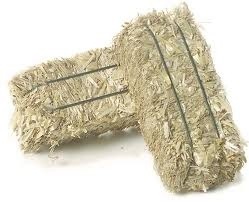
If you’re not familiar with livestock, you might have a misconception about hay and straw. What we, non-rancher types call hay is often really straw. The yellow somewhat prickly strands that we sit on during hay rides or spread around the nativity scene at Christmas is what’s left over after you harvest wheat.

A straw bale – not edible (Photo Credit No Dig Vegetable Garden)
Animals don’t eat it. In fact, it’s most often used to soak up animal waste.
Hay, on the other hand is typically green and has a strong aroma. It’s actually alfalfa. Animals love it.
A Hay bale – Animals eat this (Photo credit: 3forjc.blogspot.com)
You generally have to feed it to them when it’s been dried. Fresh alfalfa will kill a cow or a horse.

Alfalfa needs to be dried before it’s baled (Photo Credit: aneclecticmind.com)
Jacob was throwing hay bales out of the loft. A hay bale can weigh anywhere from 80 to 120 lbs. It’s held together with wire or more often plastic twine. You grab the two strings of twine, pick it up, throw it or what have you. You have to remember to get your fingers out of the twine or risk following the hay bale wherever you are tossing it. Jacob’s fingers got caught for just a half second longer than they should have.
I knew I was going over, so I tried to turn and grab the edge of the floor on my way down. I managed to get hold of it, but that then whipped my body back under the floor and broke my grip. I might have been okay, if I’d just fallen at that point. I would have landed flat on my back. But, I put my foot down to try to brace myself.
His ankle was shattered in multiple places. Worse, he was a long way from the house and he was starting to go into shock.
I kind of moaned with the pain and the horses turned to look at me. I swear they were laughing.
Jacob ended up with an order of bed rest, a couple of surgeries to insert pins and screws, and missing a lot of work. The worst part was that he still had a stable of horses to take care of. I think that’s what bothered him the most. His young teenage daughters were enlisted as stable hands.
As the team manager, I did everything I could think of. I made sure that Jacob didn’t worry about his tasks at work. I made sure that he had whatever help he needed at home. Fortunately, Jacob and Mark didn’t both get injured at the same time. We had a team of six, and now in the span of a just a few months, a third of our team had been put out of commission by what we assumed was simply a couple of freakish accidents.
It wasn’t until the kids started getting hurt that we started to question our “We’re not superstitious” beliefs.
This is the second in a five part series about the most snake bit team I’ve ever worked with. Yesterday we heard about a team member who nearly died putting up Christmas lights. Tomorrow we’ll talk about what happens when it’s the kids who are hurt. Thursday and Friday we’ll discuss team members who lost family members. All of these injuries and accidents took place within a single calendar year.
Rodney M Bliss is an author, columnist and IT Consultant. He lives in Pleasant Grove, UT with his lovely wife and thirteen children.
Follow him on
Twitter (@rodneymbliss)
Facebook (www.facebook.com/rbliss)
LinkedIn (www.LinkedIn.com/in/rbliss)
or email him at rbliss at msn dot com
Tell your friends about this!
He could have died.
We were afraid for awhile that he still might.
And it was all because of Christmas lights.
 </a>
</a>
(This isn’t Mark’s house. He never really got this far. Photo Credit: Maven Restorations)
Mark was one of the messaging engineers on my team. We all worked for a large non-profit. It was right around Thanksgiving time. I don’t remember how we found out that Mark was in the hospital. But, it certainly wasn’t him that called us. He had better things to worry about.
He had been installing Christmas lights like he did every year. Probably like you do every year. Like I do every year. Mark was putting them up above his garage. He had a ladder leaned against the wall. And while he didn’t actually have someone to steady it, he was only a few feet above the ground.
As he reached to attach the lights to the gutters, the base of the ladder slipped away from the wall. You would think that there is something you can do to save yourself in this situation. You’re less than 10 feet above the ground. I’ve jumped ten feet. The problem is that it happens incredibly fast. One second you’re reaching to attach the line to that gutter clip and the next second you’re eating the cement.
And you might think a fall of less than a dozen feet isn’t too serious. It can be. Mark was completely out of commission. He couldn’t move. He couldn’t crawl, he certainly couldn’t walk. Fortunately, his neighbor was out also hanging his lights. He saw the whole thing. He informed Mark’s wife, piled Mark into his car and rushed him to the hospital. Where the doctors informed that he’d broken both wrists and his left leg. These were severe fractures and breaks that required surgery. Had the neighbor not noticed his tumble, it’s likely that he would have expired from his injuries on his driveway.
Naturally, we were greatly concerned. It was a small, but extremely close knit team. Mark went to one of our great local hospitals and the rest of the team stepped in to pick up the slack. I went to see him in the hospital when he was all doped up on drugs. It’s weird because he recognized me, but later didn’t remember the conversation. He was greatly concerned about the team and the projects he was on. I assured him that all he needed to do was get better. We’d take care of everything.
You are probably wondering, why I’ve included this story in a blog about business and leadership.
It’s because Mark was only the first. We had six engineers on the team. Seven members counting me. Over the course of a single year, everyone of us was struck by tragedy of some sort. At first it was funny, and I took some teasing from other managers. But, eventually, it got past the funny stage.
I had to figure out how to keep a team running through injury and tragedy.
I’m not sure how well I succeeded because we didn’t have to try to hire anyone to our team that year. But, the rest of the division started to avoid us. It’s not that anyone was seriously superstitious. But, no one wanted our bad luck to rub off on them.
With Mark, he eventually recovered enough to go home. Weeks later he finally could return to work. He rode one of those “kneeling” scooters.
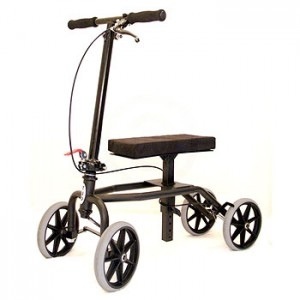
(Photo Credit: Mobility Equipment Training)
It was months before he was really back to normal.
Although we’ve both moved on to other companies, we had lunch the other day. It’s Christmas light season again and I asked him what his plan was.
Same as always, I hire it done.
This is the first in a five part series about the most snake bit team I’ve ever worked with. Tomorrow we’ll hear about another team member who fell from a height. Wednesday, we’ll talk about what happens when it’s the kids who are hurt. Thursday and Friday we’ll discuss team members who lost family members. All of these injuries and accidents took place within a single calendar year.
Rodney M Bliss is an author, columnist and IT Consultant. He lives in Pleasant Grove, UT with his lovely wife and thirteen children.
Follow him on
Twitter (@rodneymbliss)
Facebook (www.facebook.com/rbliss)
LinkedIn (www.LinkedIn.com/in/rbliss)
or email him at rbliss at msn dot com
Tell your friends about this!

The problem with self publishing (which is what Blogging is) is the lack of an editor. Editors do things like double check spelling and often approve or even suggest topics.
The benefit of self publishing (which is what Blogging is) is the ability to occasionally post something completely out of character.
As we head toward the end of the year, I’m very grateful to all of you who have taken a few minutes out of your day each morning to read my digital scribbles. I am amazed and humbled that so many have found value or entertainment in what I write. It’s probably no surprise that the “theme” of my blog has been about business and personal development. I’ve wandered back and forth occasionally, but mostly I think I’ve stuck pretty well to that theme. In blogging, it’s important to have a theme. People crave some consistency. Today’s post has nothing to do with personal development or business. I’m not even going to try to tie this to a business theme. I’m not sure I could if I wanted to.
Nelson Mandela died yesterday.
The world will no doubt provide proper and fitting memorials for him. Today I want to talk about what Nelson Mandela meant to me, a middle aged white guy living in the Mountain West of America, literally half a world away. (9,900 miles)
Nelson Mandela was a prisoner at the time I started to get interested in politics and world events. He was sent to prison before I was born, July of 1964 and I would arrive in December of that year. While I was learning to walk and tie my shoes, he was serving hard time, much of it in isolation. While I learned to drive and discovered dating, he practiced long distance running. When I was getting married in 1987, he was living a long distance marriage. By the time he was released in 1990, I was an adult. I had a wife, a family a career. He walked out of prison 27 years after walking in.
What must that have been like?
He missed my entire life. Not that I mattered to him, but to lose 27 years like that.
When Mandela walked out of prison and saw the crowds, he raised his fist and they roared. Again, what must that have been like? Many men spend their whole lives striving for that kind of power. What would this man who had been wronged for a generation do with it?
We would hope that in that situation a person would forgive and work for reconciliation. We would hope that he would call for calm and peace. That he would strive to use political power rather than mob power to bring about change. Most of all, we would hope that he would not retaliate against the racism that imprisoned him.
The amazing thing was that he did all of that. He managed to work with the South African president, with whom he shared the Nobel Peace prize.
Could you do that? I think I’m a pretty kind person, I don’t know if I could do that.
George Washington had the opportunity to become king of America. In fact, some people pushed him in that direction. He, of course declined and that one decision set America on a course of over 200 years of peaceful transitions of power. Mandela of course, won election as president of South Africa. And yet, he worked to make ALL people equal. That one decision to pursue peace and peacefully transfer power at the end of his five year term has had as significant an impact on South Africa as Washington had on the United States. History will tell if his decision has as lasting an impact as Washington’s. Interestingly, neither man had any children. Their countries became their children.
My neighbors are South African. I have 7 black children, although none from South Africa. While a world away, I’ve had occasion to think on South Africa and the ugly style of racism that was Apartheid. Racism isn’t dead and sadly will probably always be with us. However, it is inspiring that we have people like Nelson Mandela to show us that even the worst racism and abuse does not have to turn us into monsters. Even the most egregious offenses to not have to be met with violence and anger. We can rise above our circumstances and embrace the brotherhood of man.
As a white parent of black children, I strive to make sure my children are comfortable with who they are and are proud of their ethnicity. One way to do that is to find inspiring examples for them, of black people who were great people. Not just great black people, but great people period. Nelson Mandela certainly fits that category.
Rest in peace, Nelson Mandela. The world is truly a better place for you having been in it and we are better for having seen your example.
Rodney M Bliss is an author, columnist and IT Consultant. He lives in Pleasant Grove, UT with his lovely wife and thirteen children.
Follow him on
Twitter (@rodneymbliss)
Facebook (www.facebook.com/rbliss)
LinkedIn (www.LinkedIn.com/in/rbliss)
or email him at rbliss at msn dot com
Tell your friends about this!
I admit it. I did a little too much. Okay, a lot too much. It snowed here in Utah this week. About eight to 12 inches depending on your location. It didn’t seem like that long of a sidewalk. Of course, each shovelful of snow was really heavy, but hey, I used my knees!
Didn’t help. After getting home I sat down with my iPad in the living room.
Honey can you come into the dining room for a minute?
Sure. . .Augh!
My left hamstring stiffened up. At least I think it was the hamstring. All I knew is that it hurt. . .a lot. My right leg was fine. I looked like Quasimodo limping across the living room dragging my left foot behind me, moaning in pain. Fortunately some hot rice packs and it was eventually good as knew. It got me thinking about a topic I’ve wanted to write about for a while.
Pain: both the physical and the professional kind.
Who likes pain? Who gets up in the morning and says, “I want to hurt today?” Anyone? You, in the back is that a hand? No? Just stretching?
We don’t like pain. We spend our lives trying to avoid pain. Many of our labor saving devices are designed to spare us pain. Is this a healthy attitude?
I don’t think it is. Think of a runner. I don’t run now, but there was a time when I ran often. It’s painful. It hurts – during, and after. So, why run? Why sign up for that pain?
I think it’s because we understand the pain is just a symptom of the process of getting stronger. So, may people voluntarily sign up for daily pain. Same goes for anyone who goes to the gym.
But, that’s for physical activities. How well does it translate to business? I think it translates really well. If you are not making mistakes, you are not trying hard enough. Working for a large non-profit, I got shuffled into a position that I would have never applied for. I was the project manager for our monthly datacenter maintenance. It was very painful for many months, as I tried to learn the technologies. And that pain was a sign of growth. We need the pain. We should learn to embrace it. If you can embrace your pain at work like a runner embraces the pain of running 26 miles, you will own the pain, not the other way around.
So the next time something is hard. The next time you think, “I’m not sure I can take anymore of this pain”, remind yourself of the runners or other athletes, and realize that the pain is an indication of a growth opportunity. Learn to embrace the pain and you will find yourself growing in new and exciting ways.
Rodney M Bliss is an author, columnist and IT Consultant. He lives in Pleasant Grove, UT with his lovely wife and thirteen children.
Follow him on
Twitter (@rodneymbliss)
Facebook (www.facebook.com/rbliss)
LinkedIn (www.LinkedIn.com/in/rbliss)
or email him at rbliss at msn dot com
Tell your friends about this!

(Photo credit: factoryoutletinsiders.blogspot.com)
Hey guys?
Yeah
Where’s the duty phone forwarding to?
I think Jacob has it.
Isn’t he at Disneyland with his family?
Yeah.
Try calling it.
I was managing a team that included four Microsoft Exchange engineers for a large non profit organization. Our team owned both the engineering and the operation functions. This is a common configuration and one that is fraught with problems. At first glance it makes perfect sense. The engineers are going to design a solution. Who better to maintain it?
That first impression hides some tendencies that we all have, but engineers and technical people especially struggle with. We make shortcuts in our thinking. If I were describing to you how to start a car I might give you the following list.
1. insert key
What key? Insert it where?
1. Insert ignition key into ignition.
Really? I’m still in the house. How do I reach it?
1. While standing outside your car, open the door and get in.
Okay, now I’m sitting in the back seat. How does this help?
Do you see how if I’m going to write instructions for someone else, I have to be very clear and unambiguous? If I were writing a list for myself, it might say:
1. Insert key
2. Check mirrors
3. Start car
There’s a lot missing from that list. I just sort of fill in the blanks because I know how to start a car. The same thing happens when an engineer designs a system and then needs to maintain it as part of an operations team. They make a very short list and rely on what’s called “tribal knowledge,” or information that is known by the team, but not written down, to keep the system up and running.

The problem with tribal knowledge is what happens if one of the members of your tribe leaves? You’re stuck. By dividing the Engineering and Operations teams into separate teams, you force your engineering team to understand the system well enough to teach it. You also force your operations guys to approach a new rollout like a customer would, seeing it for the first time. On our team, Jacob had kind of gravitated to the operations role. He was really good at it. The problem was getting him to let go of it.
Exchange Duty Phone, this is Jacob.
Yeah, I’ve got a problem I hope you can help me with.
Okay. what is it?
My operations engineer took the duty phone to Disneyland! What were you thinking? Do you realize how bad this makes me look as your manager? They think I MADE your take it. Not that it’s about me. You are on VACATION. You should be on vacation when you are on vacation. I’m having Mark transfer the number to his phone right now. Enjoy your trip and focus on your family.
Okay.
And Jacob?
Yeah.
Relax! Enjoy yourself! You’re on vacation!
I really wasn’t worried about how it would reflect on me, but with a team of four, I needed every team member. I couldn’t afford someone getting burned out. That is the purpose of vacations; to get away from work and decompress.
Microsoft used to evaluate managers on how much vacation time their employees took. If the employees didn’t take enough the manager got a ding on his review. Let your people get out of the office on a regular basis. They will be better employees when they are at work if they have some down time away from work.
Rodney M Bliss is an author, columnist and IT Consultant. He lives in Pleasant Grove, UT with his lovely wife and thirteen children.
Follow him on
Twitter (@rodneymbliss)
Facebook (www.facebook.com/rbliss)
LinkedIn (www.LinkedIn.com/in/rbliss)
or email him at rbliss at msn dot com
Tell your friends about this!
Rodney, I really appreciate the help.
Not at all. It’s the least I could do.
I spent a few hours today in Provo perched on top of a beat up shed, patching the bare spots. Not even sure you could call these bare spots, they were so large. The exposed wood was so weathered that I thought we were going to go crashing through to the shed floor with every step. While I like do-it-yourself projects, I’ve never really roofed a house, or in this case, a shed. The closest I got was a few months ago when a microburst ripped a couple of shingles off my roof and I managed to get them replaced without falling off the roof or putting new holes in it.
But, today, there I was with my hammer and tool belt laying tar paper and covering it with shingles. And I didn’t have time to do it. I’m right at the beginning of a very compressed book schedule. I should be home writing and testing.
The truth is, I couldn’t afford to NOT be on the roof.
My neighbor Jonathan (you may remember he’s the one who fixed my car by Smacking It With A Hammer) was asked to patch the holes in the roof of this shed. And there’s a winter storm arriving tonight. In addition to fixing cars and roofing sheds, Jonathan is also a brilliant network technician. In preparation for writing this book, I needed to set up my home network.
You might think that an IT Consultant/Manager/Writer has a totally wired house. In my case you’d be wrong. Sure, I have high speed internet. But, my XBox isn’t hooked up to the internet. Half of the computers aren’t hooked up to the internet either. And several computers haven’t been turned on in years. Well, they have now, thanks to Jonathan.
My house had a wifi router (But I’m Not Protecting Against A Professional Thief) but that’s about it. The computers can’t talk to each other. The TVs and other electronics aren’t talking to each other. I needed to change all of that to write a book on networks and Windows 2012 Server. So, Jonathan came over and surveyed my setup.
I think we should run CAT5 wire from your garage to your office downstairs. You’ll also need to run a CAT5 wire from where the internet connection comes in, down through the furnace room and to your office. And then if you want to keep your wifi router where it is, we’ll need to run another line back.
We?
Yeah. I’ll help. It shouldn’t take long.
Four days later, we had run over 200 feet of CAT5 cable through my floors, walls and garage. We drilled holes, fished wires, ran REALLY long wire pull rods, removed a ceiling, replaced it, and installed an antenna in my garage that would let our two networks connect to each other. Not only didn’t he charge me for his time (he never does) he even donated most of the equipment.
Oh, I think I’ve got one of those laying around that we can use.

A KVM switch that allows you to use a single monitor, mouse and keyboard to managed multiple computers
Then, we needed a server to install the software on. Windows 2012 Server is a 64 bit operating system. That means that it won’t install on most desktops. Another 3 days of ripping apart hardware, replacing DVD drives, reburning the DVD, finding machines it WOULDN’T install on.
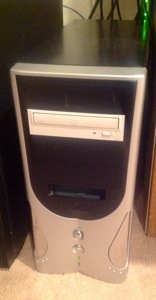
And another loaner server from him and I had a working copy of Windows 2012.
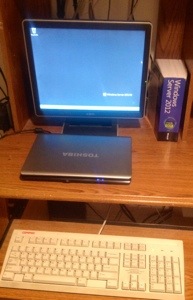
More than a week later, a working copy of Windows 2012 Server
Could I do all that all on my own?
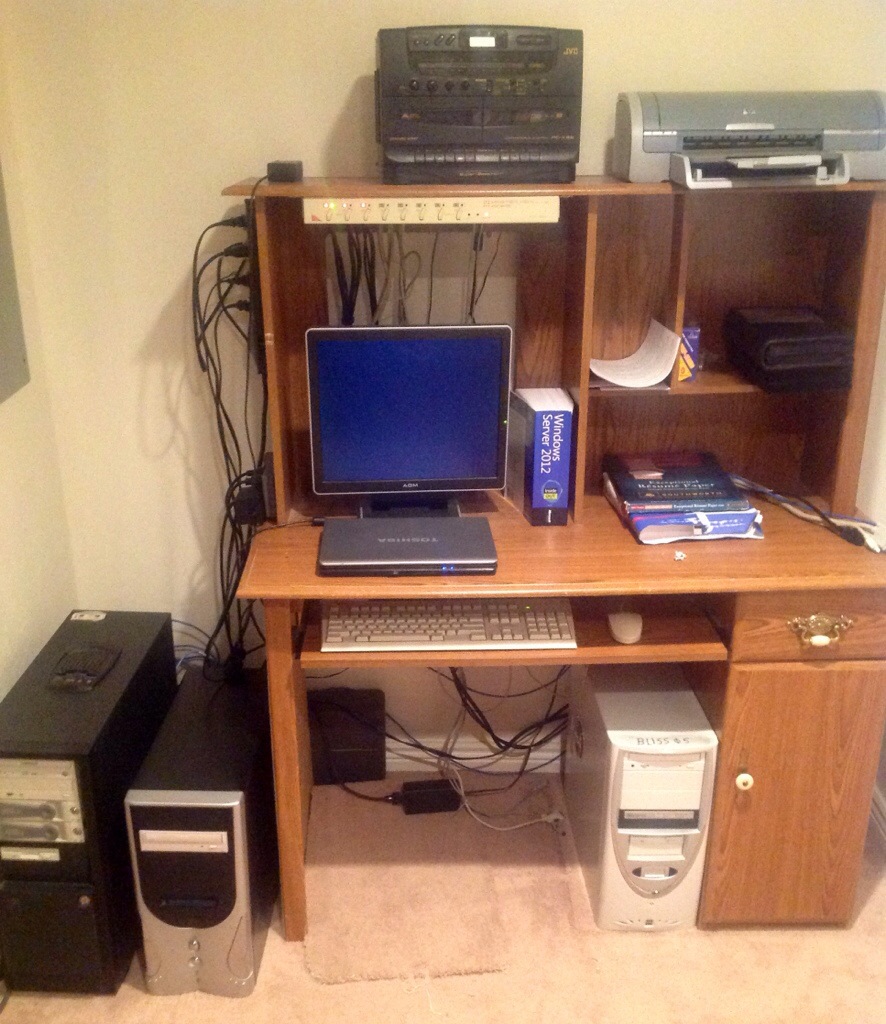
Possibly. But, it went SO much faster with two people.
That brings me back to the roof of the shed in Provo. Could he do it all on his own?
Probably, but it went SO much faster with two people.
So, I’m taking time away from my deadline to pound nails and lay shingles. I’m not roofing the shed because I want more help with my home network. I’m not roofing it as “payback” for all the help he gave me. I’m roofing it because my neighbor had a need and there’s a storm coming in.
I’m doing it because it’s the right thing to do. He’d do the same thing for me.
Rodney M Bliss is an author, columnist and IT Consultant. He lives in Pleasant Grove, UT with his lovely wife and thirteen children. He also owns a hammer.
Follow him on
Twitter (@rodneymbliss)
Facebook (www.facebook.com/rbliss)
LinkedIn (www.LinkedIn.com/in/rbliss)
or email him at rbliss at msn dot com
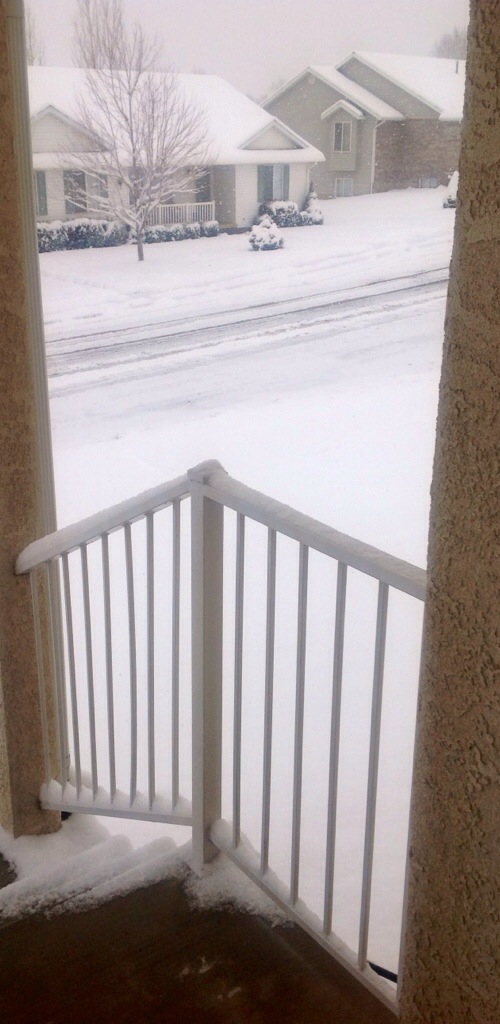
**Update** Here’s a picture out my front door this morning. The storm arrived right on schedule. **
Tell your friends about this!
Don’t do it! You’ll get in trouble!
What trouble can I get in? I wrote it.
I don’t care if you did write it. You cannot just write in the front of book at the Harvard University Book store!
I’m currently working on my latest book. It will be another technical book and is scheduled to be out in February. I’ll talk more about it more as we get a little closer to the publishing date. Back in the 90’s when I was working at Microsoft, I wrote a book about Microsoft Exchange. (Microsoft Exchange Connectivity Guide.)
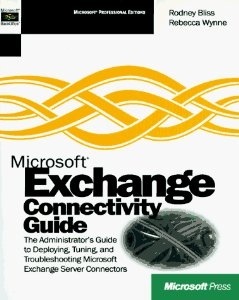
Actually, I cowrote it with a very talented engineer named Rebecca Wynne. It was an interesting, frustrating, draining and ultimately an exhilarating experience. Writing a book, you go through four stages.
Excited
When you sign the contract, it’s very exciting. The publisher will often show you the cover. You can picture your name on the cover. You picture sending a copy to your mom. You picture the family Thanksgiving dinner.
Rodney, I just bought a new boat. What’s new with you?
I wrote a book this year.
I hate you.
Okay, maybe that’s just my family. but, the point is that you are super excited. And then the reality sets in.
Overwhelmed
Especially if you’ve never written a book before, the enormity of the process can be overwhelming. I’ve written several and I still get a little short of breath when the first deadline looms. The Science Fiction writer Ben Bova wrote a very interesting book on writing. He said there are some writers who like to write. But, the majority of writers like to have written. The difference is important. Even a small book has deadlines and a schedule. The calendar marches on. Not sure what possessed me to schedule my current book over the holidays. It was probably the fact that the publisher said, “We want you to write it over the holidays.” Yeah, I’m pretty sure that was a big part of it.
Once you get into the flow, it becomes fun, but it definitely is like eating an elephant.
Resigned
If a book has a long development schedule, by the end I’m typically sick of the book. Not because it’s a bad book, just that I’m sick of looking at it. I’m sick of rereading the same pages looking for errors. I’m sick of my editor emailing me every week for the next chapter. The excitement from phase 1 is long gone. Now, I just want to be done. I don’t even care if they publish the book. I don’t even care if I get paid. I just want to be done. I feel the same way during the last mile of a 10K race. I don’t care who wins, I just don’t want to run any more. Fortunately, this phase is pretty short. And it leads to the fourth stage.
Excited
Yes, it’s the same name as phase 1, but the difference is that in phase 1 you are anticipating the results before you do the work. By the time you get to phase 4, you realize that you did it. You accomplished what few people in the world have ever done. You’ve written a book. And it’s going to be coming out. When I was writing the Connectivity Guide, everything was still hard copy. Now, the rage is ePublishing. So, your book might only exist as a downloadable PDF. Either way, it’s a book, and it has YOUR name on it. And you can give a copy to your mother. You know she’ll never read it, since she’s about as technical as a canary. But, she’ll put it on her shelf and show it to all her friends. And who cares if your cousin bought a boat. YOU WROTE A BOOK!
And if you’re lucky, there will come a day when you are browsing in the Harvard University bookstore with some of your coworkers, and you come around a corner and realize that sitting right there on a shelf where smart Harvard kids might pick it up, is a single copy of your book.
It was the first time I’d ever seen it on the shelf. And I was going to autograph it.
My friends thought it was a stupid idea. Can you be arrested for doing an unauthorized book signing? What’s the difference between vandalism and creating an “Author signed” edition?
I didn’t know and frankly, I didn’t care. So, while my friends tried to hide in the children’s book section, I pulled out a pen. After looking around to make sure the clerks were busy elsewhere I flipped open to the title page and scrawled the “autograph” signature that I’d been practicing since high school.
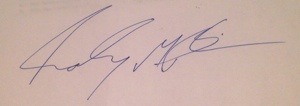
I slipped it back on the shelf and my friends and I beat a hasty retreat.
But, looking back, I almost wish I’d been caught.
Sir? Did you just write in that book?
Yes. Yes, I did.
Why would you write in one of our books?
Why? Because it’s actually my book. I wrote it!
Yeah, that would have been a better ending to the story. Either that, or I’d be out $24.95 and I’d end up being forced to buy an autographed copy of my own book.
Rodney M Bliss is an author, columnist and IT Consultant. He lives in Pleasant Grove, UT with his lovely wife and thirteen children.
Follow him on
Twitter (@rodneymbliss)
Facebook (www.facebook.com/rbliss)
LinkedIn (www.LinkedIn.com/in/rbliss)
or email him at rbliss at msn dot com
Tell your friends about this!
It’s easy to do this. Simply, get a chair, preferably a comfortable one, and a mirror and you are all set.
(Photo credit: Fem Central)
Rodney, that’s rude! I’m not the most boring guy in the world. . .In fact some of us aren’t even guys.
No. But, you could be. (The boring person. If you aren’t a guy, it’s hard to. . .never mind.) See, if you are in a room all by yourself, the conversation will be pretty predictable. You will do all the talking. You might ask questions, but, you’ll quickly answer them yourself. You might tell a joke and then laugh at it yourself. You will do a lot of talking and zero listening.
Now, put another person in your room and force THEM to listen to that? Chances are, they are going to think you are one of the most boring people in the world. Here’s one of those counterintuitive statements, that turn out to be true.
If you want people to think you are smart, ask them questions and then listen to the answers.
Do you have passions? Do you have a favorite movie? A favorite book? A memorable vacation? So do I. Which one do you think is most interesting? No, don’t try to imagine what exotic location I’ve been to and how your trip to the lake with your kids doesn’t compare. Your best vacation is much more interesting to you than hearing about my vacation would be. So, if you and I were to sit down and talk and I forced you to listen to me talk about how the heather in Scotland was glistening in the sunlight as somewhere down the glen someone was playing the bagpipes and I could smell the coming rain, you wouldn’t find it as interesting as your own vacation.
If we shared a train ride and it was clear that you were interested in talking, I might ask you about your vacation. You would relive the day in your mind. You would think of the little things that stuck with your years later. You would reminisce about family, gone now, and how much you enjoyed hearing the sound of their voices. At the end of our conversation, as we went our separate ways, someone might ask you, “How was your conversation with Rodney Bliss?” What will you remember about that conversation? You’ll remember the feelings and how much you enjoyed the vacation. And that enjoyment will be mixed up with your memory of our visit. You will think that I was one of the most intelligent people you’d ever met.
The key to being considered a good conversationalist is learning to listen. EVERYONE has a story. EVERYONE has hopes, dreams and passions. One day, we were taking a shuttle from Kennedy airport in New York City to our hotel. Our ten-year old daughter was with my lovely wife and me. We were returning from a trip to Haiti where we were completing paperwork to adopt four children. My daughter was very excited about the trip, and monopolized nearly the entire conversation between the airport and the hotel. An older couple mentioned the purpose of their trip and then was silent and patient as my daughter told them all about Haiti. She was not to be denied.
As we were arriving, I asked her
Do you know where these people are returning from?
No.
They are returning from the Olympics where their daughter was the winning pitcher on the gold medal girls softball team.
My daughter was a HUGE baseball fan. She had a million questions to ask them, but she had told her own stories through the entire trip and the opportunity was lost.
Yesterday was Thanksgiving. We had a house full of people, about 20 relatives from Washington, California, Minnesota and Utah. It was fun to ask lots of questions and get people to talk about themselves. The next time you come away from a conversation thinking someone is boring, try to remember how many questions you asked them, and decide if you really listened to their answers. Do that one thing: listen, and you will be amazed how it influences people’s feelings about you.
Happy Thanksgiving and Happy Hanukkah.
Rodney M Bliss is an author, columnist and IT Consultant. He lives in Pleasant Grove, UT with his lovely wife and thirteen children.
Follow him on
Twitter (@rodneymbliss)
Facebook (www.facebook.com/rbliss)
LinkedIn (www.LinkedIn.com/in/rbliss)
or email him at rbliss at msn dot com
Tell your friends about this!
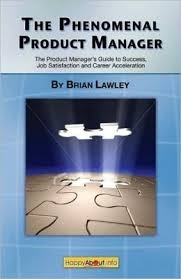
I have no doubt that author Brian Lawley was a phenomenal Product Manager. I’m less convinced he is a phenomenal writer, and even less that he can teach you to be a phenomenal product manager.
For those not familiar with the software development cycle, a Product Manager is the person who “owns” a software product that is in development. The PM should understand what the customers need and also understand how long it will take to build that product.
The Phenomenal Product Manager is a short book, only 84 pages. There’s nothing that says a book has to be a certain length to be valuable, of course. But, this one suffers from two fatal flaws: too broad and a lethal dose of arrogance.
First, Lawley tries to cover too much ground. In those short 84 pages, here’s what he offers to teach you:
Chapter 1: Product Marketing versus Product Management…(4 pages)
Chapter 2: What is a Phenomenal Product Manager?………….(4 pages)
Chapter 3: Influencing Engineers
– Credibility……………………………………………………………………..(3 pages)
– Building Rapport with the Team………………………………………(2 pages)
– Assessing Your Team and Adjusting………………………………..(3 pages)
– Communication……………………………………………………………..(1 page)
– Influencing…………………………………………………………………….(4 pages)
Chapter 4: Leveraging Your Sales Team
– Motivation…………………………………………………………………….(1 page)
– WIIFM…………………………………………………………………………..(1 page)
– Identify the Target………………………………………………………….(1 page)
– Great Leads………………………………………………………………….(1 page)
– Messaging…………………………………………………………………….(1 page)
– Excellent Sales Tools……………………………………………………..(1 page)
– Upsell and Ongoing Revenues………………………………………..(1/2 page)
– Planning……………………………………………………………………….(1/2 page)
– Ground Rules………………………………………………………………..(2 pages)
Chapter 5: Getting Management on Your Side
– Five Critical Relationships………………………………………………(1 page)
– Data, Data, Data……………………………………………………………(1 page)
– Short and Sweet……………………………………………………………(3 pages)
– Communication Often and With authority…………………………(1 page)
– Carrots and Stick…………………………………………………………..(2 pages)
…
And on for another five chapters. Chapter 6 has three topics and 4 pages. Chapter 7 has 10 topics and 18 pages. Chapter 8 has a staggering 19 topics covered in an efficient 16 pages. Chapters 9 and 10 are each a single page.
But, the worst failing is the arrogance with which Lawley approaches his topic. He assumes that the Product Manager will be an expert on every aspect of the software development process. This means he has no problem telling the testers how and what to test. He has no problem telling the developers not only what features to include, but what programming structures to use in building the code. Not even every developer is an expert on the development process. As a Product Manager, you’ll lose your credibility pretty quickly if you start telling your development lead how to write code. He’s good at it, you probably aren’t or you would be a programmer.
The last technique in terms of influencing is what I call the “Three Reasons” technique. I use this all the time. . . when you are debating a point you state your point and indicate that it is correct for three reasons. . .ofttimes you don’t have three reasons thought through, but saying this and talking about the first one will give you time to come up with the second and third. Even if the other reasons are weak it is better than a one-point argument.. . .This may sound far-fetched, but you will be amazed at how well this can work.
I’m never comfortable with authors who tell me to lie. Of course it’s effective. Lying often is. However, it does little to build trust.
What I Liked
Lawley does a great job of capturing the breadth of the Product Manager’s job. The PM really needs to know about all aspects of her product. You will be the one held accountable if it goes badly and the one to get the lion’s share of credit if it goes well. Lawley nails the fact that you have to overprepare. You have to actively manage relationships with entire product team. And he does a great job of explaining that each group needs to be handled differently.
What I Didn’t
Too much sizzle and not enough steak. Don’t tell me that if I bring doughnuts to my engineer meetings and speak with authority I can get them to do what I want. It’s not true. (Although the doughnuts help.) Instead, I wanted Lawley to take some time and explain the dynamics of an engineering team and how each group, engineering, testing, product management, is both cooperating and at odds with each other. There’s a natural tension built into the product cycle. The better you understand it, and especially how it impacts various team members the better you will be at influencing the team. Lawley didn’t provide any of this.
What It Means To You
If you’re a new Product Manager, or if you are part of an engineering team and you want to understand the PM’s role better, this is a good primer. But, if you are experienced in the product cycle, this book is as likely to annoy you as to educate you.
2.5 stars out of 5.
Rodney M Bliss is an author, blogger and IT Consultant. He lives in Pleasant Grove, UT with his lovely wife and thirteen children.
Follow him on
Twitter (@rodneymbliss)
Facebook (www.facebook.com/rbliss)
LinkedIn (www.LinkedIn.com/in/rbliss)
or contact him at (rbliss at msn dot com)