It was hardly their fault. We didn’t have a fire alarm. And we’d never had a fire drill. And despite what they say on the Learning Channel, there are two, not three responses to danger: Fight, flight or freeze. When smoke started pouring out of our break room, my team opted for the third option. . .all of them.
I was president of RESMARK. My title was president, but really, I was chief grownup. All of our developers except one were right out of school. They were bright and Dave (www.heartmindcode.com) was a good example for them. Our office was on the second floor of a small building in North Orem, Ut.
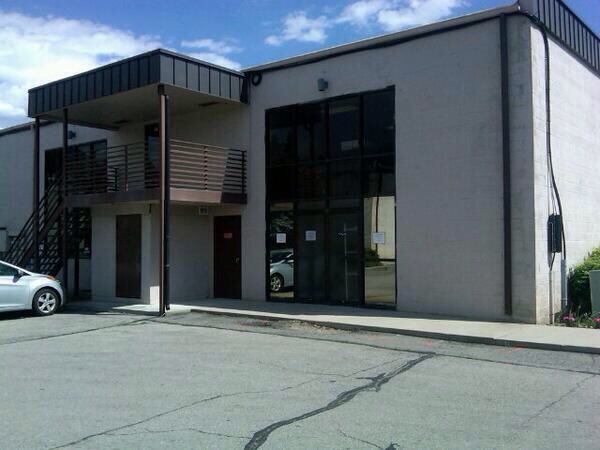
Our offices were on the second floor.
As president, I had an office to myself. This was not a point of prestige, it was an insistence from Dave that I stop bugging the programmers. We also had a small “walk through” room that doubled as our server room. The 8 developers all had desks and chairs, (Let Them Pick Their Own Chairs) in the “bull pen.” The other room was a break room. We stocked it with free drinks, a can crushing machine that was completely impractical and very cool looking, a refrigerator and a microwave.
The day of the fire started out like any other day. Around lunch time people started getting their sack lunches out of the fridge. We didn’t have many people who went out to eat. Edward had been to Olive Garden the day before and had some breadsticks wrapped in paper towels. (This was an important circumstance.) He threw them into the microwave on a paper plate and rather than pick a specific time, he pushed the “reheat” button. He then went back to his desk to work while waiting and closed the door to the breakroom.
Everyone knows you shouldn’t put metal into a microwave. It causes fires. Some people know you can put a CD into the microwave and create a pretty lightshow. But, no one in our office knew not to put butter soaked bread wrapped in a napkin on a paper plate in the microwave.
Our first indication that something was wrong was the thick grey smoke that started pushing out from under the breakroom door. Oh, and the smell. That was pretty strong too.
It was at this point that people got very loud and I realized that my team, while fantastic developers, were not the “act well in a crisis” types. They all froze and stared at the smoke.
As I came out of my office, it was clear that something was very wrong in the breakroom. However, we didn’t know exactly what it was. If the place was going to burn down, I was at least going to know where the fire started. I opened the heavy door to the breakroom. This let out a LOT of smoke, but also cleared the air a bit. There were no flames in the room. However, the paper plate in the microwave was starting to burn.
I quickly opened the microwave (more smoke) grabbed the unburned portion of the plate which still contained the smoldering napkin wrapped, butter soaked, breadsticks and rushed it out the back door, dumping it into the parking lot for later clean up. I then grabbed a box fan (poor air conditioning in that building) and stuck it in the open backdoor. I then opened the front door to create a cross-breeze and start clearing out the smoke.
Total time from my office to having both doors open and the burning bread out? Less than a minute. And all the while my team sat there in a daze. Maybe it’s the fact that with 13 kids, you are trained to react quickly to potentially life threatening situations. Maybe it was all that Boy Scout training. Maybe I really, really wanted to avoid losing a development day to a fire.
Fortunately, no one was hurt, and no damage was done, except that the inside of that microwave was a sick color of yellow from then on. I learned that there are times that you don’t consciously think through a scenario. You simply react. I also learned that I’m probably a “fight” guy. We all learned that bread will burn in a microwave.
After all the excitement was over and the smoke was clearing, I turned to the junior member of our team, “Edward, your breadsticks are done.”
Rodney M Bliss is an author, columnist and IT Consultant. He lives in Pleasant Grove, UT with his lovely wife and thirteen children.
Follow him on
Twitter (@rodneymbliss)
Facebook (www.facebook.com/rbliss)
LinkedIn (www.LinkedIn.com/in/rbliss)
or email him at rbliss at msn dot com
Tell your friends about this!

Last August marked the 50th anniversary of one of the most famous speeches in American history. Today we celebrate the life of Martin Luther King. It seems fitting to share this again.
Tell your friends about this!
I should be happy, right? I should be thrilled that someone who had worked for me was doing well? So why wasn’t I?
Mark was a great engineer, a great employee, but he lacked the experience on how to get promoted in a large company. That wasn’t a problem. When I became his manager we created a plan. I made sure he got a chance to work on high profile projects and that the rest of the department, especially the managers understood his contributions. He in turn, did great work and increased his visibility. I’ve always considered this one of the most important roles that a manager plays. I’m supposed to be able to help my team, many of whom are developers or engineers, to navigate the corporate political structure. And I was good at it. It was especially easy when I was working with great employees like Mark.
Aside from his political inexperience, Mark’s biggest liability was that, like many people, Mark was a terrible speller. As he increased his visibility he ended up sending more emails that went to a wider group of employees and managers. A typo, especially a misspelled word really stuck out. I worked with Mark to setup automatic spellcheck in Outlook, and I occasionally proofread his emails before they went out.
Our plan was a success. Eight months after I got put in charge of Mark’s team, he was promoted. I was thrilled for him. I knew how hard he had worked for that promotion and more importantly, how much he deserved it.
Fast forward a couple of years and we’ve gone our separate ways. Mark went to work for a Health Care provider in their IT department. And then I got laid off. It’s not the worst thing in the world. Work in IT long enough and you too will probably get laid off a time or two. But, the economy was struggling at that time and the job market was slow. As weeks turned into months, I continued to keep in contact with my support network. This included Mark, of course. In fact, he recommended me for a position in his company. I would have been his boss. Like so many interviews during that time, they decided I wasn’t the right fit.
And then I saw a LinkedIn update from Mark. LinkedIn sends out a notification to all your contacts when you get a new job.
Mark has a new Job. Send him a congratulation email.
Mark’s new job is Vice President of Domestic Techology
I should be happy right? I should be thrilled that I helped move his career along.
VP? Really?
It was one of the hardest things I’ve ever had to work through. I had to sit down and really look at not just how I felt about Mark and his new job, but how I felt about my career. Was I right to choose a management track several years earlier? Should I have stayed on the engineer track? Should I try to go back to the engineer track? Would I be okay working for Mark if he has an opening? How much of my enthusiasm for coaching my team is a result of the fact that I outrank them on the corporate org chart? Am I that guy?
Ultimately I decided I was okay with Mark’s new status. I was more than okay, I was excited for him. I could honestly say that I was fine with my career decision to move into management. And so I decided I didn’t begrudge Mark in the least. He deserved it. And I wrote him an email and told him that.
I also pointed out that he had misspelled “Techology” and he probably wanted to change that.
Rodney M Bliss is an author, columnist and IT Consultant. He lives in Pleasant Grove, UT with his lovely wife and thirteen children.
Follow him on
Twitter (@rodneymbliss)
Facebook (www.facebook.com/rbliss)
LinkedIn (www.LinkedIn.com/in/rbliss)
or email him at rbliss at msn dot com
Tell your friends about this!
Hey Rodney, how’s it going?
Ah. . .fine. . .
Are you working here now?
Yeah. . .first day. . .
You don’t recognize me, do you?
Ah. . .
I’m married to your niece!
I’m gonna need a bigger hint than that.
Okay, in my defense, it wasn’t entirely my fault. I was pretty wiped out. I was just starting as the manager of the Messaging Team for a large non profit organization in Utah. The company was doing a big migration from Novell GroupWise to Microsoft Exchange. The migration was scheduled for this weekend. I had really wanted to be there for the migration. The problem was that I had been working as a contractor with Microsoft in Washington and my contract ran through Thursday. And it was 1000 miles from Redmond, WA to Salt Lake City, UT.
I was a consultant with Caiman Consulting. They had placed me into the Microsoft Dynamics team where I worked as a Program Manager helping redesign Dynamics’ licensing. The initial contract was for three months but the understanding was that it would be extended in 3 to 6 month increments. I had applied for the Utah job prior to going back to Microsoft. It was a much better fit and while the money was less, it was fulltime, including health benefits. (That was a serious consideration when we had 13 kids.) Caiman had been great about letting me leave at the end of my contract. So, I really wanted to make sure I worked all the way through the end of the contract. That meant Thursday was my last day. And 1000 miles away a migration was going to start in less than 24 hours that would last all weekend.
The HR department at my new company agreed to let me kind of short-circuit the onboarding process so that I could be with my new team for the weekend. But, I had to be there before the HR department closed on Friday afternoon. I’ve driven that Salt Lake City to Seattle trip many times. It takes about 15 to 20 hours depending on road conditions and the number of stops you make. When you consider that Utah is an hour behind, I really had 23 hours to get there.
I packed my car the day before. The entire family was moving, but my wife would stay with the kids and finish packing. I had my Suburban and a tent trailer.
I finished work at Microsoft at 5:00pm and changed clothes. (I wear slacks to work, but no way I wanted to sit in them for an 18 hour drive.) And I left directly from work. I like road trips. And my Suburban is a great road car. Even pulling a trailer, it cruises great at 70 mph. I was making the trip at the end of June, so weather wasn’t going to be a concern.
If you’ve ever driven that route, it’s an interesting mix of gorgeous vistas and long stretches of boring plainness. After the first couple of hours none of that made any difference to me since it was the middle of the night. To keep myself awake, I would periodically calculate how many miles I had left and what time I would arrive. I estimated I would hit Salt Lake City between 3:00 and 4:00pm. That would be perfect, but if one of my six tires blew, or the pesky fuel pump went out, or if I found I just couldn’t keep my eyes open, I didn’t have much of a cushion.
In good weather there’s one nasty stretch of road in that 1000 mile trip. Mostly, you’re going 70-75 mph on a long straight stretch of road. However, as you roll across Eastern Oregon and go through Pendleton (they make the famous wool clothing there) you hit the Blue Mountains. And the 5 mile stretch of road to get from the valley floor to the top of the pass is one of the worst of any interstate. And with a loaded car, no way was I going 70 up that switch-backed road. In bad weather that pass is terrifying.
I don’t remember much about that trip. As I got closer and the day progressed at first I was sure I was going to make it. Then I was sure I wasn’t going to make it. Then, I was sure I would make it.
Finally, I got to the Wasatch Front, and realized it was 3:00 and I was 45 minutes away barring an accident, I had made it. I had to make one final stop before I rolled into Salt Lake City. I pulled into a McDonalds in Farmington, UT and went in and changed into a suit. This company I was going to work for had a dress code and it wasn’t the jeans and t-shirt I had just spent the night in.
Finally, I pulled into the company parking lot about 4:00. I quickly found the HR person who was waiting for me. She rushed me from one spot to another. We signed the employment agreement. I showed them my Social Security card and birth certificate. I got a parking pass. We barely got there in time to get my photo ID. For the next five years, my official company photo had me with 5 o’clock shadow and I looked like I’d spent the night in my clothes. Which was wrong, but strangely accurate. We were at times running to the various departments.
It was at this point that my niece’s husband stopped me.
I’m going to need a bigger hint than that.
Rachel!
Oh yeah, Eric! Great to see you. Sorry, but I have to go with this HR person right now. Talk to you later.
You might think that no matter how tired you are, it’s hard to miss recognizing a relative. In my defense, my wife is the 13th of 15 children. While none of her siblings have families as large as our 13, there are still a lot of them. My mother-in-law has over 100 grandchildren. So, just telling me you’re married to my niece doesn’t really narrow it down that much!
The migration went flawlessly. I had inherited a very talented team.
Rodney M Bliss is an author, columnist and IT Consultant. He lives in Pleasant Grove, UT with his lovely wife and thirteen children.
Follow him on
Twitter (@rodneymbliss)
Facebook (www.facebook.com/rbliss)
LinkedIn (www.LinkedIn.com/in/rbliss)
or email him at rbliss at msn dot com
Tell your friends about this!
Most people know that Redmond, WA is the home of Microsoft. Many people might also know it’s a suburb of Seattle. (Actually I think it’s a suburb of Bellevue. But since Bellevue is a Seattle suburb it probably doesn’t matter.) What most people probably don’t know is that Redmond has a limit on the height of buildings in the city. Yeah, Rodney, they don’t know because unless they are building a house there, they don’t care.
Redmond also has lots of overpriced I mean expensive housing. Lots of Microsofties (yes, that’s what we called ourselves) like to live near their work. Actually, given the number of people who lived in their offices, I think they just wanted to be close to a shower and a change of clothes.
But as far as businesses in Redmond, Microsoft is mostly it. Microsoft campus is large. But there is a limited amount of space. So, they try to balance office space, parking, and the open spaces that give so many high tech locations an open park-like feel. Microsoft tries to maximize all three. They build parking garages. They put in parks but try to leave many of the trees. But, there’s only a certain amount of space for buildings.
Office space was always very tight while I was there in the late 1990’s. We were chronically short of space, which was surprising considering how many buildings Microsoft was putting up. But, they ran up against a limit. The buildings had a maximum height on them.
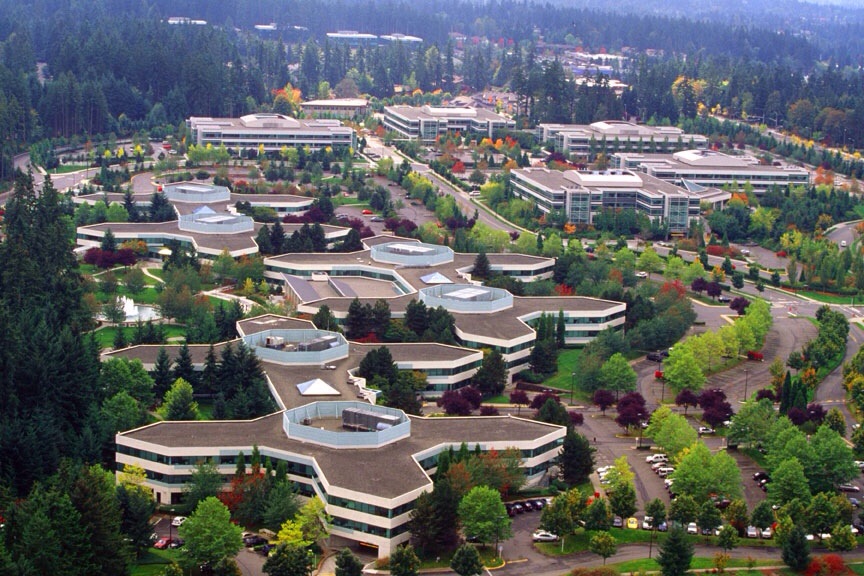
(Photo Credit: Microsoft via wikipedia)
Most of the “X” shaped buildings in this picture are two stories tall. This is the heart and soul of Microsoft and yet they were wasting space on these short buildings. The reason? That building code restriction. Redmond city wouldn’t allow them to be taller than about 25 feet. If you are building a house, two stories seems like a reasonable limit, but for an office building? Yesterday I talked about working on the 11th floor of the Hyatt Regency towers in Bellevue. And the towers went to 22 stories, over 200 feet. Bellevue was the city right next door.
Naturally, Microsoft tried to get a variance. They are Microsoft for pete’s sake. They can’t get an exception? Nope. The way the story was repeated inside the company, was that the Microsoft team met with the city planner guys.
We pay a lot of money in taxes into this city. Our employees own homes and pay property taxes. We eat in local restaurants. We contribute millions to this city, We don’t see why the city would restrict our growth like this.
I’m sorry, but we cannot allow any structures taller than 25 feet.
We’ve been over that. By the way, why 25 feet? How did the city arrive at that number?
That’s as high as our firetruck ladders will reach. If someone were stuck in a taller building we wouldn’t be able to rescue them. So, you see? We simply cannot approve your request for taller buildings.
Fire truck? Seriously? It’s the height of the fire truck?
Look, we take public safety very seriously!
What if we bought you a new fire truck that could reach higher? Then could we get our new building approved?
I never thought of that.
After that, Microsoft bought Redmond a bright shiny new million dollar fire truck that could reach the third floor. And the next round of buildings had three stories.
The point of this story, is NOT that if you have enough money, you can buy your way around the laws. The point is that many times the person standing in the way of your very good idea, has an equally good reason for not allowing you to continue. It wasn’t until Microsoft officials understood the city’s resistance that they could find a solution.
How often does this happen to us? We feel like someone is blocking our project or our product rollout. In our view we think there’s no good reason for the delay. But, that other person has to work within their limitations and the restrictions they’ve been given. And in their view there’s often a good reason.
This is the essence of searching for a win/win solutions. In the Microsoft building example, the city won because they got a new fire truck. The company won because they got to build taller buildings. The $1M price of the fire truck, while not insignificant, was probably substantially less than the price of the third floor of the new buildings.
So, the next time someone tells you that you can’t have something that you think should be perfectly reasonable, try to find out the real objection. Look outside of the current confrontation and really strive to see the issue from the other person’s point of view. Until you understand the real objections, you cannot get to the real solutions.
Rodney M Bliss is an author, columnist and IT Consultant. He lives in Pleasant Grove, UT with his lovely wife and thirteen children.
Follow him on
Twitter (@rodneymbliss)
Facebook (www.facebook.com/rbliss)
LinkedIn (www.LinkedIn.com/in/rbliss)
or email him at rbliss at msn dot com
Tell your friends about this!

(Photo Credit: Kilbeys Classics)
The year was 1995. I had recently moved from WordPerfect to Microsoft. (I Don’t Want To Know How Much That Cost Me.) In a lot of ways I didn’t feel like a “real” Microsoftie (Yes, that’s actually what we called ourselves.) It would be years before I warranted an office. My cubicle was not on campus in Redmond. It was on the 11th floor of the Hyatt Regency building in downtown Bellevue, about 20 miles from “campus.” You see, I was there to support Microsoft Mail. A nearly forgotten product. Support calls were so slow that my best and I who both worked the night shift on Wednesday would practice doing comedy. People would even stay late to watch us.
However, tonight was different. Tonight the phones were busy, but not with MSMail calls.
Microsoft Mail Support, how can I help you?
Is this Microsoft?
Yeah. Is there something I can help you with.
Hey guys, I’m talking to MICROSOFT! YEAH!!!
Ah. . .sir? Where are you?
I’m in line at Best Buy waiting to buy Windows 95!
It’s 15 minutes to midnight.
Yeah, I know. They won’t open the doors until the stroke of midnight. There must be 200 people in this line. I got here about 5 hours ago and there were people in front me!
Why?
I just can’t wait to buy Windows 95. I just can’t believe I got through to you. The main lines were jammed, but then I remembered the MS Mail number. And it WORKED!!
Well, thanks . . . Anything else I can do for you?
Nah. You have a good night.
You, too sir. And thanks for calling Microsoft support.
I had never seen anything like it. People all over the country were standing in line to buy Microsoft’s latest product. And stores that were contractually prevented from selling it before August 24th, were setting up midnight premier parties. And people were so caught up in it that they were calling random Microsoft support numbers just for a chance to talk to an actual Microsoft employee. That night, I felt like a Microsoftie.
It reminded me of a movie premier.
It was one of the most brilliant marketing campaigns I’d ever seen. It was certainly a revolutionary product for the PC. We take the graphic user interface for granted today. But, in the early 1990’s, if you were using a PC, you lived in the world of DOS and Windows 3.1. You booted your computer and when it got to the point where it showed you a black screen with a
c:\ prompt,
you entered the command to start Windows. Windows 95 did that itself. And where Windows 3.1 was kind of clunky looking (even for 20 years ago) Windows 95 was sleek and cool looking.
A couple of interesting notes on Windows 95. First, is all my friends who used Macs were like,
What is the big deal? You’re only about 10 years late to the party!
And the ironic thing about Windows 95 was that it did the same thing that Windows 3.1 did. By that I mean that the computer was still running DOS underneath. The only difference was that Microsoft put this shiny new package round it. It would be another 3 years before Microsoft released a version of Windows that finally did away with DOS and ran natively.
The other memorable thing about the Windows 95 launch was the name. Again, with the benefit of nearly 20 years, we take it for granted that products have a version that corresponds to the year they were released. But, prior to 1995 no one named them that way. In fact, the naming scheme was so radical that Microsoft went so far as to send a letter to their employees. Time has faded my memory of much of the text, but the important part was this
The fact that we are naming the next version of Windows 95, does not mean that we will be releasing a new version every year.
Prior to that it was only things like cars that got a year designation: The 94 Mustang, the 56 Chevy Bel Air, a 59 Cadillac. But, no car ever got the reception that Windows 95 did. It’s estimated that microsoft made$4.4B on Windows 95 that year. At $129 per copy, that’s a lot of Windows. It was very cool.
They even got the Rolling Stones “Start Me Up” as the theme song to introduce the new START button. However, the one small disappointment was at the company meeting that year. They always have a surprise guest. No, it wasn’t Mick Jagger and Keith Richards and friends. Now THAT would have been cool.
(Photo Credit: Softpedia
Rodney M Bliss is an author, columnist and IT Consultant. He lives in Pleasant Grove, UT with his lovely wife and thirteen children.
Follow him on
Twitter (@rodneymbliss)
Facebook (www.facebook.com/rbliss)
LinkedIn (www.LinkedIn.com/in/rbliss)
or email him at rbliss at msn dot com
Tell your friends about this!

Okay, Jacob your turn. Tell us two things that are true and one that is not.
Okay. I’ve been arrested and spent time in jail. I’ve done cocaine. My mother has been married 7 times.
The church young adult group sat in stunned silence. Jacob was a clean cut guy, had served a mission for his church and now was attending Brigham Young University in Rexberg, ID. BYU-I is a school run by the Church of Jesus Christ of Latter-day Saints. Jacob could see the stunned looks and the confusion on the faces of the group. No one knew what to say. Finally, somewhat nervously, a guy about the same age as Jacob, mid 20’s, suggested,
Only one of them is supposed to be a lie.
Yeah, I know. It’s the last one. My mother’s only been married five times, not seven.
Jacob told me the story years later. It illustrated the difference between who others perceive that we are and who we really are. And while we are shaped by our experiences, we are not defined by them. Most of the people at that young adult church group had backgrounds pretty similar to one another. They were all LDS, or Mormon. Many, if not most of them had grown up in a two parent home. The men had been missionaries for two years for the Church; serving from the age of 19 to 21. They were all in the engineering major at BYU and would most likely graduate in four years as part of the same class. The other people in the circle assumed that since Jacob looked like them, talked like them that he had the same background as them.
In reality, Jacob’s life was nothing like theirs. His father was his mother’s second husband. They were married for a couple years before splitting up. Jacob bounced back and forth between his dad’s house and his mom’s. Jacob, like too many children was abused. He was smart, but lacked focus. He’d been shot at on at least one occasion, maybe more, he never told me. After high school he was into drugs and petty crime. That landed him in jail.
Eventually he grew up. He realized, with the help of his mother and stepdad that his life was not going the way he wanted it to. He got clean. He put his life in order. He had to talk to people pretty high up in the Mormon church to be allowed to serve a mission. And wasn’t ready until he was older than most young men were when they finished.
He went on to marry a wonderful woman. He graduated from BYU-Idaho and has a very successful career as an engineer.
So, why tell this story? What’s this have to do with business? Some of you probably already suspect where I’m going with this.
You either are a Jacob, or you have one or more in your company. And like that youth group at BYU, you probably don’t even know it. Now, Jacob’s story is not so unique that you would need to manage him differently than anyone else. No, the message is to understand that the Jacob’s are out there and don’t assume that just because your coworker looks like you, talks like you, went to the same school you did, lives in a similar neighborhood, that his experience is the same as yours.
There have been times in my life where I was an emotional wreck. Events in my personal life were so out of whack, so out of control, that I couldn’t relate to my coworkers in the lunch room. They were talking about trying to help their son get his eagle project done and I was wondering if my daughter would ever be able to live in my house again. They were complaining that the line at Home Depot had been too long on Saturday and I had to take two hours off work on Wednesday to go to court where my kid was pleading guilty to a felony.
It wasn’t my coworkers fault of course, that our lives were different. In fact, I was happy that their biggest concern was a daughter who broke curfew by 30 minutes. But, my experience was so different that it was hard for me to connect. Don’t get me wrong. My kids are now doing great. My family is safe and healthy and things are much improved from those days.
But, as managers we have to realize that life does happen to our employees and life has happened to our employees. My boss never knew the struggles I was going through, because I didn’t need to tell him. The Jacobs in your company may not come to you. And that’s fine. But, always remember that you don’t know what challenges the people around you have faced or are currently facing. Don’t assume that because their tie is straight and their shirt is starched that everything is perfect in their life.
Because if you honestly look at it, your tie is straight, and your shirt is starched.
Rodney M Bliss is an author, columnist and IT Consultant. He lives in Pleasant Grove, UT with his lovely wife and thirteen children.
Follow him on
Twitter (@rodneymbliss)
Facebook (www.facebook.com/rbliss)
LinkedIn (www.LinkedIn.com/in/rbliss)
or email him at rbliss at msn dot com
Tell your friends about this!

Techies love clocks.
But they don’t necessarily expect them to tell time. Clocks, and watches are given out as awards, prizes and gifts to mark special occasions. And it’s been going on as long as programmers first sat down with a bunch of punch cards to program computers the size of a small house to perform tasks your office calculator can now do.
But, why clocks?
It makes no sense really. If you think about it, every tech guy has a smart phone. “Smart” meaning it knows how to tell time.
And even better than that, every tech guy has multiple computers. And every single computer is a big clock. A really expensive clock.
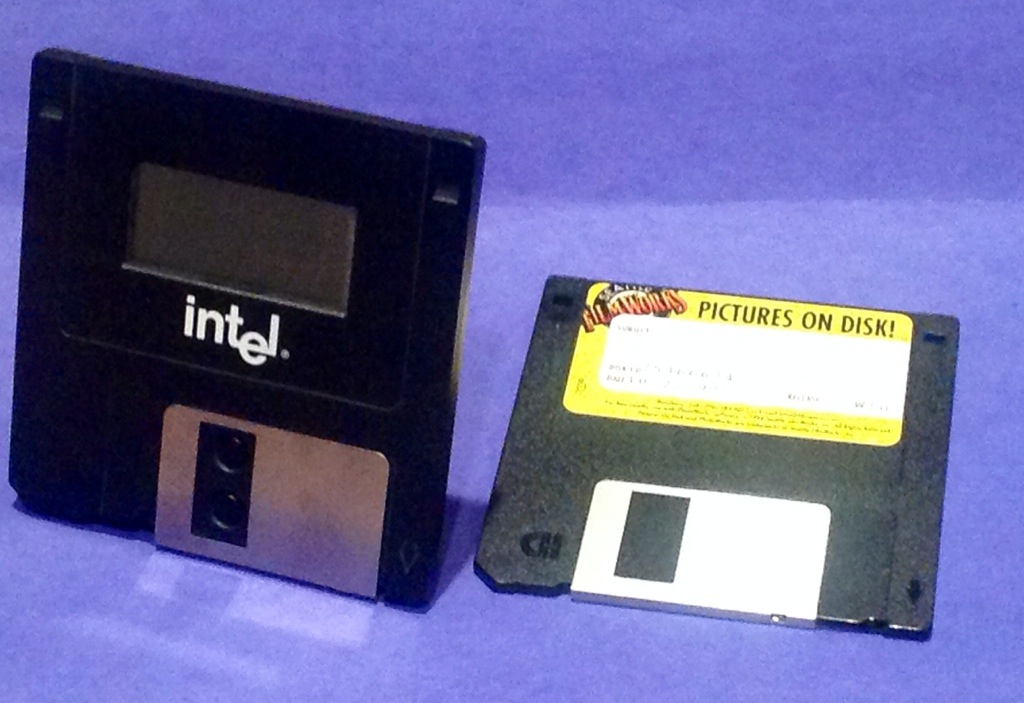
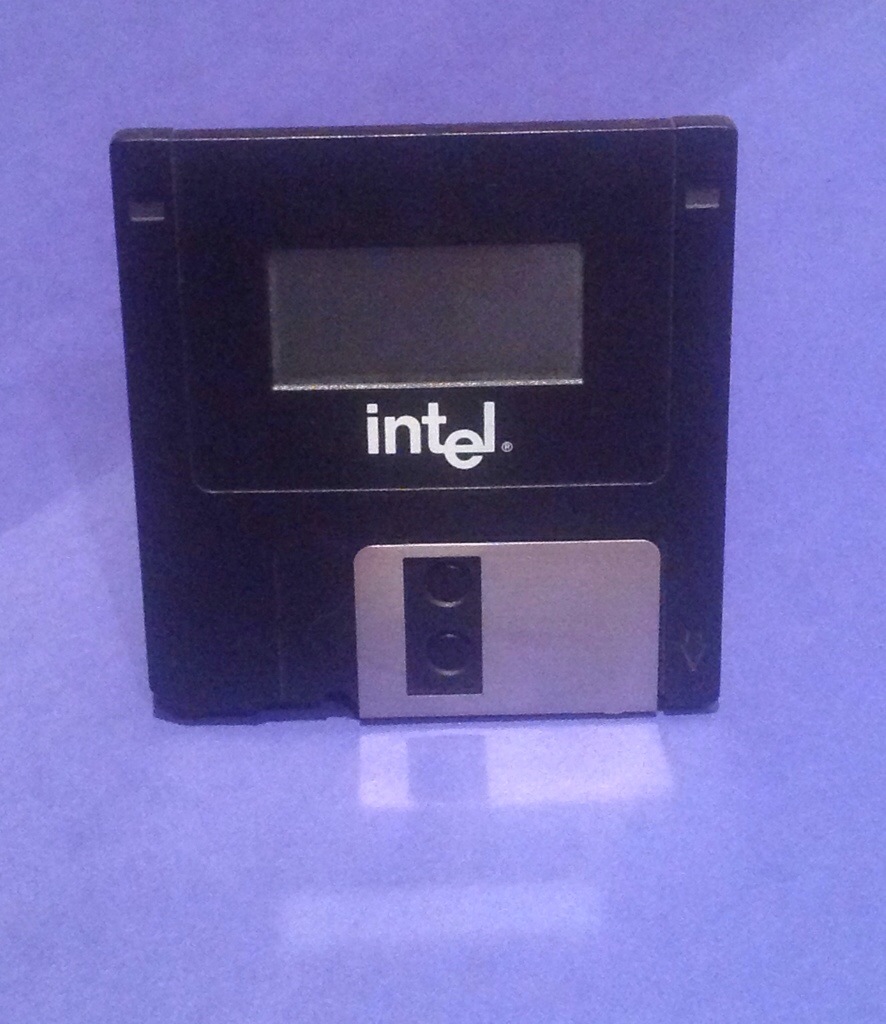
But, there’s no denying that computer people (guys and girls) have a thing for clocks. Yesterday I talked about That Time I Predicted The Future. . .And I Was Totally Right! My reward for predicting the future was a cool clock that looked like a 3.5″ floppy.
A couple years ago I spoke at a conference in Salt Lake City. The speaker gift?
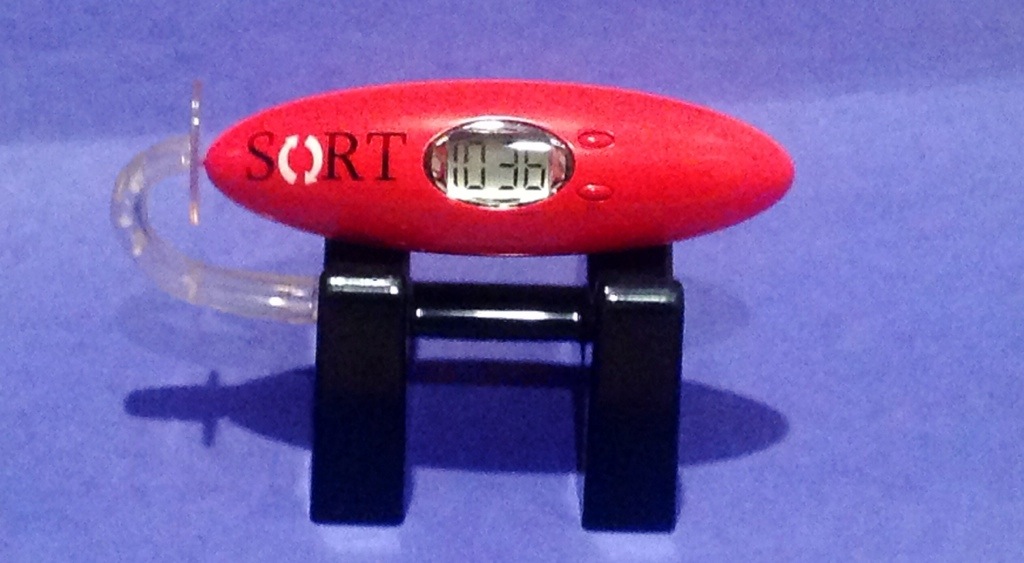
Of course it was a clock. This one is is “weightless.”

It’s fun to spin it and watch it like some sort of miniature blimp. Except a blimp won’t spin like that. Still very cool clock.
When I was president of RESMARK, I bought the staff a gift when we hit an important milestone. Of course, I got them clocks.

(Photo credit: Thinkgeek.com)
I didn’t buy one for management, so I don’t actually own one myself, but I still want one.
It probably doesn’t look much like a clock. It’s a binary clock. So, in order to read this clock you need to be able to read binary numbers. Those are the numbers where you can express any number if you just use enough zeroes and ones. Each light on the clock can be either a zero (off) or a one (on.) You then just have to read off the numbers to tell what time it is. The above clock is showing time 10:48:36.
Most people don’t set them up to display in true binary, because that would be too confusing. Instead the programmers set them up to display Binary Coded Decimal. The first two columns are the hours, the next two the minutes and the last two the seconds.
I know many of you are not computer people. You are probably looking at this and thinking
Why would anyone want one of those? That’s crazy.
Trust me, the computer people looking at this are thinking
That’s awesome. How much are they and where can I get one?
(They are $24.99 and you can order them from Thinkgeek here.)
Microsoft naturally adopted the geek-clocks theme as well. I was working for Microsoft in 1995 when they celebrated their 20th anniversary. They gave every employee a gift.
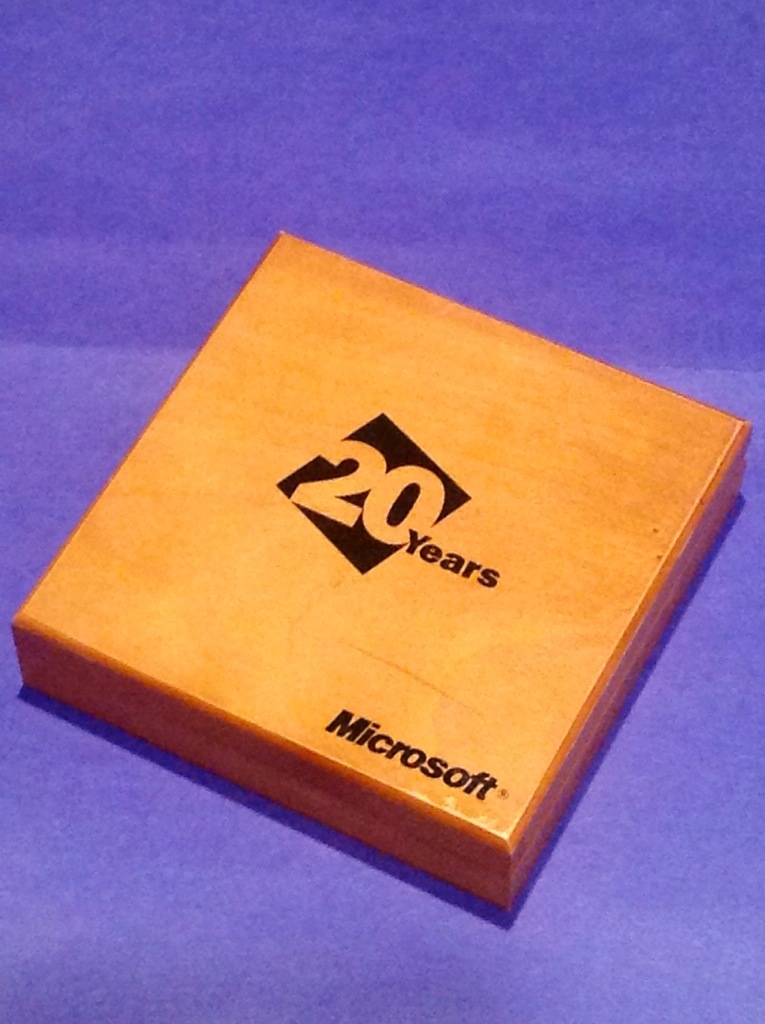
It wasn’t exactly a clock, but it was close.

As you see I never took mine out of the box. The thing was, I don’t really wear a watch. . .I have a smart phone. July 1999 was my five year anniversary at Microsoft. Naturally, the occasion was marked with a gift.
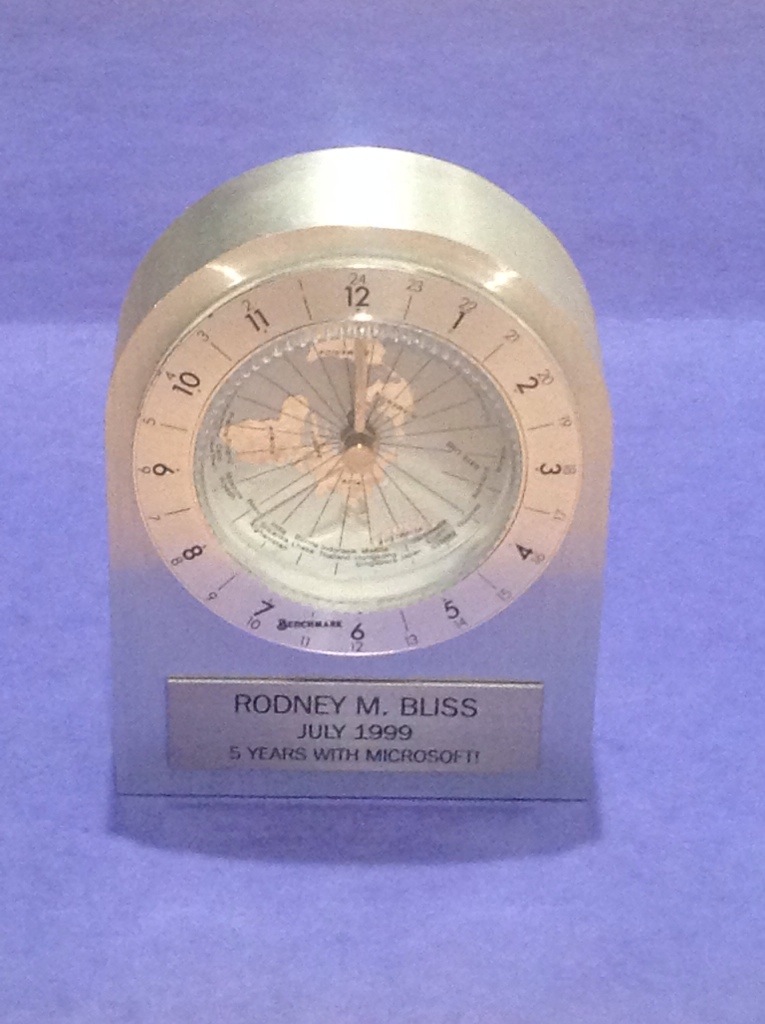
And just as predictably the gift was a clock. And here’s the really interesting thing about IT folks and clocks. We often don’t really care if the clock can keep time. My 3.5″ Floppy clock needed new batteries about every 30 days. Eventually I quit going to the trouble to replace them. My Microsoft Twenty Year Watch was a pretty cheap watch. We figured out the box was probably more expensive than the watch. My Five Year clock? It was analog and would lose about 5 minutes per month. The binary clocks? We typically didn’t bother to read them. It was enough to know we could.
So, it’s not about telling time. I think it has to do with the fact that computers are, at their hearts, time pieces. A computer that boasts a 3.8 Ghz (giga hertz) processor really means that the computer’s internal clock beats 3.8 billion times per second. Computers measure time very precisely. If a computer is set to run a process at 10:05 am, that process starts at 10:05:00.0. Not a micro second before or after. Being surrounded by machines that are literally governed by the cycles of their internal clocks, we tend to use that motif for our art and our awards.
Even “ordinary” clocks can be extraordinary. This is the clock that hangs in my office.
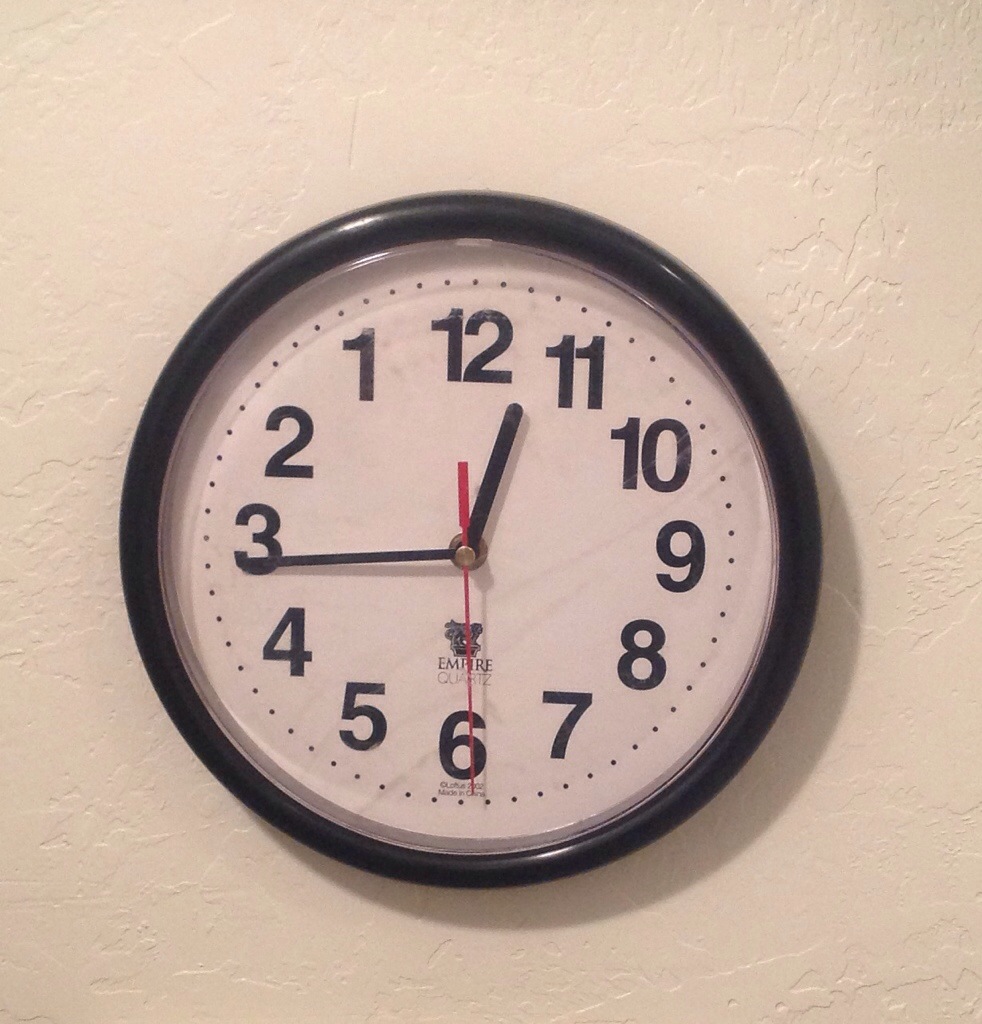
Yes, it goes backwards. I typically display it with a quote from Admiral Grace Hopper, one of the pioneers of Computer Science. She worked on the first computers back in the 1940’s. She invented the first compiler. She documented the first computer “bug.” (It was literally a moth that flew into the computer.) She said,
Humans are allergic to change. They love to say, “We’ve always done it this way.” I try to fight that. That’s why I have a clock on my wall that runs counter-clockwise.
So, if you have a tech geek friend and you are ever stuck for a gift, one word: clocks! (And that binary one is really cool. Trust me, he’ll like it!)
Rodney M Bliss is an author, columnist and IT Consultant. He lives in Pleasant Grove, UT with his lovely wife and thirteen children.
Follow him on
Twitter (@rodneymbliss)
Facebook (www.facebook.com/rbliss)
LinkedIn (www.LinkedIn.com/in/rbliss)
or email him at rbliss at msn dot com
Tell your friends about this!

The computer booth had a sign:
Predict The Future Of Computers. . . and win a chance to have your name in Network Computing Magazine.
My brother and I were at a computer trade show in Dallas in the early 1990’s. We didn’t have a ton of experience in computers, but neither did anyone. The entire industry was very young, and most of us engineers were young too.
Let’s write something down. What’s something you think will happen to computers in the future?
Let me tell you, neither one of us predicted anything like what we have today. Sure, you could predict general trends in light of Moore’s law (the number of transisters on a chip will double every 2 years) and Metcalfe’s law (the value of a network is proportional to the square of the number of users.) But, actual practical changes? That was tougher.
Computers in 1990 were pretty weak by today’s standards. A 1993 computer:
Processor: 133 Mhz (My most recent computer is 30 times faster at 3.8 Ghz)
Hard Drive: 40 MB (A 1 TB drive is 25,000 times bigger)
RAM: 2 MB (My current server has 32 GB, that’s 16,000 times bigger)
3.5″ floppy drive: (At 1.44MB per floppy, you would need over 5,000 to equal the storage on an 8GB thumb drive)
Also, back then, we were still bound by the 640 kb memory limit for RAM. That means that programs could only use the first 640 kilobytes of RAM memory. (yes, that’s kilo, as in 1/1,000,000 of a gigabyte). If you wanted to use more memory than 640 kb, you had to use extended or expanded memory. The two processes were different, but essentially worked by using a memory address in the 640 addressable range, and then, translating requests sent to that address to an address in the upper ranges.
The point was, you were always looking for more memory. And that was what led me to my prediction.
When a computer booted up, it had to load things into memory. Once something went into memory, it was hard to get it out without rebooting your computer. So, you had to be careful what you loaded. One of the pieces of software that might or might be needed were the network drivers. Your computer, even today needs to load software to talk to your network card. These are called drivers. And back 20 years ago, the network cards also needed drivers. But, if you had a laptop that only connected to the network occasionally, you didn’t want to load the network drivers every time. They took up memory that you could be using to try to squeeze a copy of WordPerfect into. So you had two different bootup scripts. (Typically by putting a DOS menu into your autoexec.bat file.) If you were in the office, you loaded the network drivers. If you were not connected to the network you choose to boot without them.
I predict that in the future computers will be able to autodetect the network and autoload the network drivers if necessary.
I added my contact information and dropped the prediction into a large fishbowl full of other guesses. I didn’t really think about it for a couple of weeks. Until I got a phone call.
Hello, this is Rodney.
This is Rachel from Network Computing Magazine. You entered a contest at Network World in Dallas a couple weeks ago.
Yeah, the prediction one, right?
I’m calling to say that our editors picked your prediction as one of the ten best at the show. Our publication deadlines won’t allow us to get the names into the magazine for next month, but we wanted to send you a gift.
Cool.
It’s a clock.
Even better.
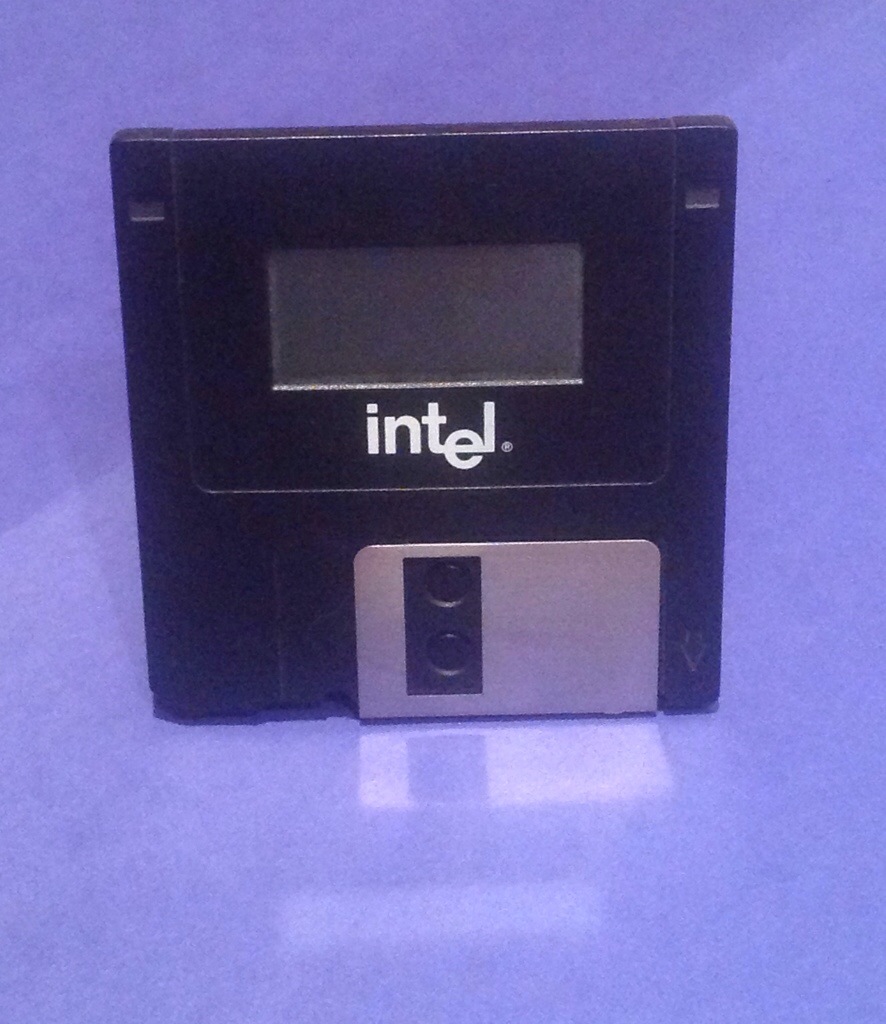
It wasn’t just a clock. It was one of the coolest looking clocks I’d ever seen.
These are floppy disks.
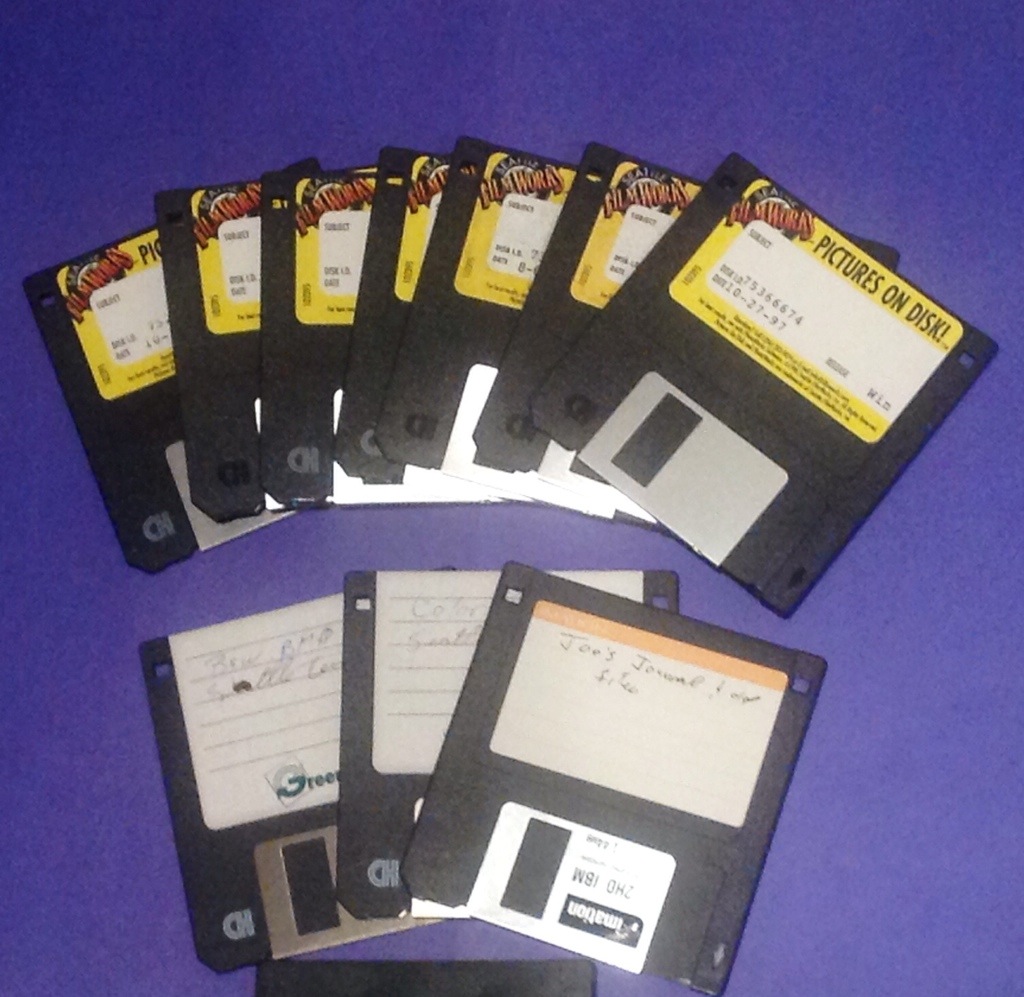
They are what we used before thumb drives.
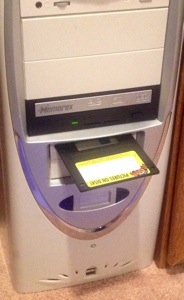
And this was the clock.
My prediction came about in two ways. First Windows came along in 1998 with a true memory manager. So, Windows could add and remove drivers in memory whenever it needed. Also, computers changed how they addressed memory. So, we broke the 640 KB barrier and megabytes and later gigabytes of memory were directly accessible.
Funny thing about the prize was, it was a terrible clock. It sucked down the tiny batteries very quickly and didn’t keep good time at all. But, it was cool looking. I’ve kept it all these years not because I use it as a clock, but to remind me of the time I predicted the future and totally got it right.
Rodney M Bliss is an author, columnist and IT Consultant. He lives in Pleasant Grove, UT with his lovely wife and thirteen children.
Follow him on
Twitter (@rodneymbliss)
Facebook (www.facebook.com/rbliss)
LinkedIn (www.LinkedIn.com/in/rbliss)
or email him at rbliss at msn dot com
Tell your friends about this!

(Photo credit: Viacom via watchcartoononline.com)
You want to name it what?
Osmium.
What is Osmium. Is that even a word?
Sure is. It’s an element. . . number 76 or 77 I think. Anyway, it fits are naming scheme.
I thought we were going to call it Iridium?
Yeah. . .about that. . .
Yesterday I talked about Novell’s problems rebranding the email system they bought when they acquired WordPerfect. (My Short But Unsuccessful Life As A Corporate Spy.) Novell wasn’t the only company with naming issues. The Microsoft Windows team seemed to have the naming issue figured out. Their beta products were often named after cities:
Chicago – Windows 95
Detroit – Windows 95 OSR 2
Nashville – Windows with IE 4.0
Memphis – Windows 98
Daytona – Windows NT 3.5
Cairo – Windows NT 4.0
Whistler – Windows XP
Or bars in Whistler, BC.
Lonestar – Windows XP Tablet
Longhorn – Windows Vista
Blackcomb – Windows 7
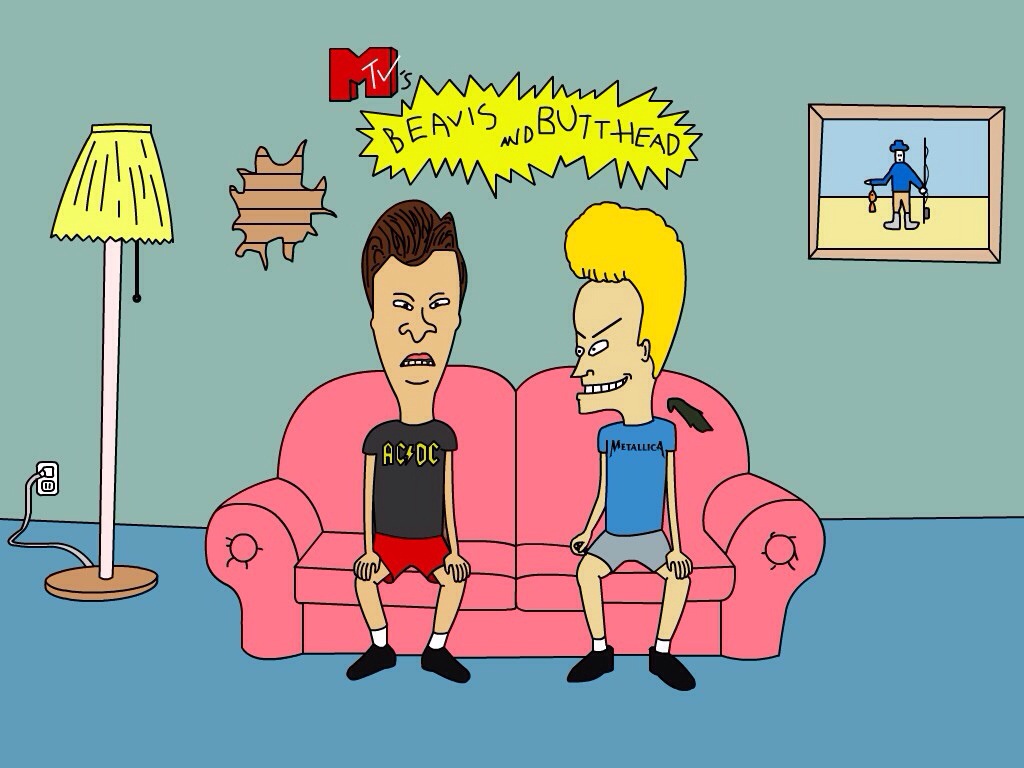
Exchange didn’t have such good luck. Previously I’ve talked about the fact that the initial version of Microsoft Exchange was called “Beavis and Butthead” when it was in development. (Racist Programs and Assaulting Servers.)
When the product that would eventually become Exchange 5.5 was in development the team naturally had to come up with a codename. The name they picked was Iridium.
(Photo credit: livescience.com)
Iridium? Okay, it’s got an interesting sound. It’s a metal, although no one knows that. Not computer geeks anyway. At the time it probably seemed like a pretty safe name. Certainly not a Beavis and Butthead name either. There was just one problem. Someone already owned it. Iridium Communications makes one of the best satellite phones in the world.
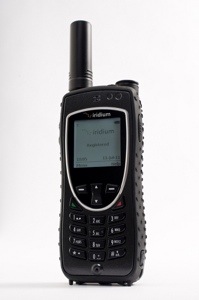
(Photo Credit: Iridium Communications)
I remember having a conversation with one of the senior Program Managers. We hadn’t announced Iridium publically yet, but internally we were all calling it that.
Edwin, I noticed in an article in PCWeek that there’s a company that already owns the name Iridium.
Yeah, so?
Well, won’t that be a problem if we release a product with the same name?
No, Rodney. There’s is a shipping product, ours is simply a code name. We aren’t going to ship with that name. By the way, what do they make?
Satellite phones.
See? We aren’t even in the same industry. Go back to writing training materials and let us worry about the marketing okay?
I had worked with Edwin for years, but once he started moving up the ranks of the Exchange team, he became much more difficult to talk to. I handed him the article I’d clipped out (that was back when magazines came in the mail printed on paper.) We announced Iridium to the press and we got an expected response from the satelitte phone folks in Virginia. For some reason they figured that since they made a communication device and we made a communication product, and given the fact that we were Microsoft, would we consider picking another name, and yes, I’m sorry we really must insist. Management had visions of Beavis and Butthead all over again. But, we had a naming scheme right? We go back to the periodic chart and take the next one in line.
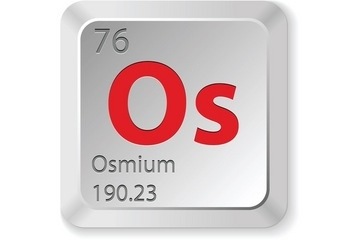
Osmium (Photo credit: livescience.com)
We didn’t know what Iridium was, we certainly didn’t know what Osmium was. But, that was the name. Everything got rebranded and that was our new name. Some chemists reading this are probably laughing. Why? Because they know what Osmium is.
Osmium, periodic number 76 derives its name from the Greek word osme, which means smell. Powered osmium emits osmium tetroxide (OsO4) when it is exposed to the air. In addition to being poisonous, osmium tetroxide smells very badly.
I always thought it was the Beavis and Butthead naming fiasco that pushed Microsoft to require all product names to be vetted by corporate. It turns out it was actually the Iridium/Osmium espisode. The corporate suits were probably more upset about the negative press from Iridium Communications. The programmers, testers and trainers were more upset that our product now literally had a smelly poisonous name.
The Exchange team did eventually figure it out. After having to endure their email server being the butt of jokes in the press. And then two versions later making a shift to a smelly poisonous gas, the team, or rather the managers went with a more conservative name. The product that would eventually become Exchange 2000 was code named Platinum. Platinum is a cool name. Platinum is a precious metal, more valuable than gold. Platinum is a sophisticated name for the color gray.
Osmium, or Microsoft Exchange 5.5 was released in 1997, or 2 A.W (After Web.) So, there are some stories of Osmium floating around on the internet. And you can find plenty of stories about Chicago, Windows 95. However, other than some of the stuff I’ve written, I’ve still never seen anyone owning up to Beavis and Butthead for Exchange 4.0.
I guess the moral of this story and the Symmetry and the Beavis and Butthead stories is to always doublecheck to see if someone already has the name you want to use. And when you do settle on a name, make sure you have a good backup. . .just in case!
Rodney M Bliss is an author, columnist and IT Consultant. He lives in Pleasant Grove, UT with his lovely wife and thirteen children.
Follow him on
Twitter (@rodneymbliss)
Facebook (www.facebook.com/rbliss)
LinkedIn (www.LinkedIn.com/in/rbliss)
or email him at rbliss at msn dot com

