KBAR, 101.5, we’ve got Rodney on the line. What can I do for you?
I’d like to request a song.
Sure, but today we are only taking requests by album and track number.
Yeah, I know. I’d like album number 235 track 10, Garth Brooks’ Ireland off the Fresh Horses album.
. . . How did you know that?
Every profession has it’s jargon. Often it is used to make talking to your peers easier. It’s much easier to explain to a network engineer that the DHCP address range excludes the addresses 0-210 in third octet of the IP address than to try to explain it in layman’s terms.
But occasionally jargon is used simply as a barrier to entry. I once met Shawn Nelson the founder of Lovesac. He explained how he got his first order. He accepted an order from a local Utah furniture store to make a series of fabric covered footstools. He then flew to China to arrange to have them made. The Chinese factory owners he met with attempted to drive a hard bargain. They would talk amongst themselves about what kind of margins they thought they could get. When their translator communicated their offer, the young brash American seemed to come back with a counter offer right at their breakeven point. More discussion and another offer, and again the American’s counter offer was very close to their cost of goods.
What they never figured out was that the American who sat patiently while they discussed their strategy was fluent in Cantonese. He understood every word. He was also smart enough to not let them know. He got the order at their bare minimum price and it helped him launch his company.

(Photo credit: lovethesac.com)
Every IT person I know has at one point grown tired of objections from a non-expert and simply resorted to jargon to attempt to shut down the conversation. Like the founder of Lovesac, it’s often advantageous and occasionally fun to let people know that you see through their ploy.
While a missionary for the Mormon church in Chicago, my companion and I were traveling on a bus. Elder Randal was deaf and we were talking in sign language. A group of young teenage boys in the back of the bus began to swear and make fun of the two “deaf” guys. I of course, was translating everything they said to Elder Randal. Neither one of us so much as glanced at the back of the bus. My companion had a great suggestion
You have to say something to them as they get off.
As the boys got to their stop they had to walk right between us. They were still laughing and joking. As they came even with me I looked up at the leader.
You should really watch your language on the bus.
He was so stunned that they all silently shuffled off the bus as quickly as possible.
So, how did I know that “Ireland” was on album 235 track 10? Well, I’d been listening to the station for a couple of hours. When the DJ started calling out track numbers he announced that album 235 track 6 was “Beaches of Cheyenne.” I’m a huge Garth Brooks fan. I pulled out my copy of Fresh Horses and saw that “Beaches of Cheyenne” was the 6th track.

(Photo credit: Wikipedia)
I just waited a couple of hours so that he wouldn’t remember he’d already played a song off that album.
He laughed and then played the song. . . one of my favorites.
Rodney M Bliss is an author, columnist and IT Consultant. He lives in Pleasant Grove, UT with his lovely wife and thirteen children.
Follow him on
Twitter (@rodneymbliss)
Facebook (www.facebook.com/rbliss)
LinkedIn (www.LinkedIn.com/in/rbliss)
or email him at rbliss at msn dot com
Tell your friends about this!

Grandpa?
Nah.
Grandfather?
Definitely not.
Papa?
Yeah, I think that will work. That’s what I want my grandkids to call me.
Those of you who check in each day to read my ramblings know that the focus of this blog is team building and leadership with a fair dose of computer history and an occasional side trip into home canning.
But, there are days when none of that seems to fit and I write on something else. Today is one of those days. I’ll try to bring it back to technology at the end.
Yesterday was a special day for me. A momentous day. I’m terrible at writing in a journal, but I’m pretty good at writing in my Bible. As this page shows, I write down the important names and dates of my family in the flyleaf of my scriptures.

I started this years ago. If I’d known I was going to have 13 kids, I certainly would have written smaller. Today I added two entries.
First, I recorded the date under my third son’s name with the notation:
Ordained to the office of Teacher in the Aaronic Priesthood by his father.
The Mormon church has a lay ministry. That means that all worthy men and boys in the church hold the priesthood. There’s currently a controversy brewing about whether women should also be allowed to hold the priesthood. I’ll leave that controversy to the religious blogs.
When a boy turns 12 he joins the Deacons quorum. At 14 he advances to the Teachers quorum and at 16 he moves on to the Priests quorum.
I now have three sons who are Teachers. Since I also hold an office in the lay priesthood I got to be the one to ordain him. It’s a uniquely Mormon experience to bless your son in this way.
The second big event that I recorded yesterday was that I also got to bless my granddaughter. My oldest daughter and her husband welcomed a new baby girl, our first grandchild into the world a few weeks ago. Like I did with my son, I got to bless her, this time holding her rather than placing my hands on her head. It was an experience I’ve gone through with my own children over the years. It was very cool to get to bless a member of the next generation. My mother drove down from Washington to be here for it.
So, what’s this have to do with technology, or was this just an excuse for me to brag about my kids and granddaughter?
A little of both.
Most people would consider me technologically competent. I started writing programs in 1983 on an old TI 99 with a cassette tape to store the programs. I write a wildly unpopular blog. I have multiple Twitter accounts. I have a facebook page and a fanpage. My profile on LinkedIn is up to date.
Technologist, right?
Not so much.
I have multiple computers in my home, but only recently networked them. I carry a cell phone and a pocket watch.

And I don’t put pictures of my kids or grandkids on the internet.
Many people do, and I’m fine with that. In fact, I enjoy reading about my extended family on Facebook and seeing pictures and staying connected. However, for my family, my lovely wife and I decided it wasn’t something we felt the need to do. It might seem crazy. If you read my posts, you hear me talk about my kids all the time. I mention them in my signature block, for Pete’s sake. How can I say I don’t post about my family online?
If you look back through my writings, you will see that I never mention any names. I don’t post pictures. That behavior sounds like someone who’s afraid of technology, not someone who remembers the birth and death of CompuServe and America Online (AOL).
So far, the Internet is forever. I think there may come a day when people will sell “cleaning services” that are designed to go and remove all or some information about you from the internet. We see the beginnings of them even today. I think those services will start out being very, very expensive.
My kids will have plenty of time to fill the internet with their posts and pictures. But, I want to make sure they are old enough to understand the repercussions. I want them to value their privacy and only surrender it when they choose to. Not sell it, or worse yet have someone else sell it for a few extra clicks on Facebook.
I admit that in this I’m a hypocrite. I already mentioned how much I love to follow along with my extended family and friends’ activities on Facebook. Isn’t it hypocritical for me to refuse to do the same for them?
Yes. Yes, it is and if I were forced to make a choice, I’d drop Facebook in a heartbeat if it meant keeping my kids safe for a few more years as they grow up. We do a Christmas letter each year and send it out to family and friends. We have regular family reunions where we get together with aunts and uncles, cousins and grandparents.
But posting my kids’ names and digital pictures all over the internet? No. I think I’m too old fashioned for that. Hopefully someday they’ll thank me for it.
Rodney M Bliss is an author, columnist and IT Consultant. He lives in Pleasant Grove, UT with his lovely wife and thirteen children.
Follow him on
Twitter (@rodneymbliss)
Facebook (www.facebook.com/rbliss)
LinkedIn (www.LinkedIn.com/in/rbliss)
or email him at rbliss at msn dot com
Tell your friends about this!
Chris, what would you guess I majored in at BYU?
I don’t know, Rodney. . .writing? Political Science?
Computer Science.
Really? I would have never guessed.
I used to be very technical. I wrote programming code before I realized I was too much of a people person to be a programmer. I deciphered network traces. I wrote technical books. So, why was Chris, the Project Manager assigned to the project I was a Program Manager on surprised to learn that?
Because I intentionally didn’t emphasis it. I relied on a group of engineers to help my projects be successful. I didn’t want the engineers to feel intimidated by the PM. Prior to the PM role, I was was a Team Manager over the messaging team. I had designed entire 5 day courses around Microsoft Exchange, but I didn’t emphasis my Exchange knowledge. In fact, I almost never even brought it up. I had some fantastic engineers and some that were good, but not yet great.
The way to get them to grow, to take risks, is to imbue them with as much confidence as I possibly could. I didn’t want them to worry I might second guess their decisions or their designs.
I called this strategy, “The Danger of Being The Smartest Guy In The Room.” Basically it means, if you are the smartest guy in the room, you are not hiring smart enough people.
I’ve worked with some brilliant people. I’ve worked with great programmers, fantastic database administrators, gifted datacenter architects. However, I’ve never worked with someone who was the best at everything.
Do you remember playing volleyball in junior high school? Remember the kid that decided he was better than everyone else, and so he’d run all over the court, bumping into people trying to get to every ball? He thought he was the smartest volleyball player on the court, but really he simply made his entire team worse because he refused to let others to their roles.
On an IT team, occasionally you find one of those guys. They don’t last long. Because to become an expert, really the top of your field in an area takes years. If you’ve devoted yourself to learning how networks are configured and tuned, you probably are not ALSO an expert on SharePoint. Today’s corporate IT world does not have room for the jack-of-all-trades master of none.
As a manager, it’s important to hiring the very best people you can possibly find for each role. Understand that if they are good, really good, they will be better at their job than you are. That’s okay. Let them shine in their own field.
The irony of management is that as you let your team shine and grow, you, as the manager look brilliant. Just don’t go thinking YOU did all that hard work. Don’t ever forget to not be the smartest guy in the room, even if it means people think you majored in English Literature instead of Computer Programming.
Rodney M Bliss is an author, columnist and IT Consultant. He lives in Pleasant Grove, UT with his lovely wife and thirteen children.
Follow him on
Twitter (@rodneymbliss)
Facebook (www.facebook.com/rbliss)
LinkedIn (www.LinkedIn.com/in/rbliss)
or email him at rbliss at msn dot com
Tell your friends about this!

(Photo credit; Hellomrowl.wordpress.com)
When we were kids, my friends and I used to build boats out of blocks of wood and float them down the rain gutters. We would man the boats with little plastic army men and then stand a ways away and attack them with rocks. The evasive maneuvers the boats executed were quite impressive. Sometimes the army men would even survive undrenched.
We quickly learned that if you aim at the boat when you are getting ready to throw, you’ll miss every time. Instead, you had to aim a ways ahead. The farther away you were, the more of a lead you had to give the boat.
I have friends at Microsoft who use this technique to schedule vacations. A software project like Windows, or Office can last for one to three years. During that time you have tons of release dates: Alpha, Beta I, Beta II, Pre-view, Release to Manufacturing, Ship.
Project and program managers spend long hours in Excel and Microsoft Project software to calculate exactly how long it will take to meet each date. They really put a lot of time into these projections. . .and they are always, ALWAYS wrong.
And just like my boats in the gutter, the further away (weird that this is one time where farther and further are almost interchangeable) anyway, the further away the target date is, the more likely it will be to slip.
So, what’s this have to do with vacations? A lot.
As you near a major milestone the entire development team puts in long hours. You see a lot less of your family. You pay a neighbor kid to mow the grass because you never see your house. You basically go on a death march to meet the deliverable. Once you’ve hit the milestone and the software is off to Beta or Manufacturing or whatever, you take a breather. That’s when you schedule some quality family time.
That’s especially true with the final release to manufacturing (RTM) version.That is your shipping version. Once that is shipped, you’re done until you start on the service packs.
Most people would schedule some vacation for the time after you ship. Maybe take the kids to Disneyland. Maybe reserve tickets for a trip to Hawaii. Maybe a cruise.
The problem is PM’s dates ALWAYS slip. If you plan your vacation in advance for the week after the ship date, you’re going to miss it. You’re going to be working that week. If you plan it for a month after ship, you might still be working. So, how do you figure it out? How do you pick a vacation date?
Easy. You schedule it for the week you are planning to ship.
On the surface this looks crazy. And the first couple times I saw someone try it I thought they were nuts. . and very lucky that the product slipped enough that they didn’t lose their deposit on the Disneyland tickets.
And then I realized that these PMs weren’t lucky, they were just experienced. The time you can guarantee you won’t have a conflict is on your ship date that is six months in the future. You will still be in the development mode at the point your vacation comes up, but if you plan it far enough in advance the ship date will have slipped far enough into the future that you won’t be in death march mode yet.
So sometimes you need to aim for the boat knowing you will miss.
Rodney M Bliss is an author, columnist and IT Consultant. He lives in Pleasant Grove, UT with his lovely wife and thirteen children.
Follow him on
Twitter (@rodneymbliss)
Facebook (www.facebook.com/rbliss)
LinkedIn (www.LinkedIn.com/in/rbliss)
or email him at rbliss at msn dot com
Tell your friends about this!

(Photo credit: animal-medical-clinic.com)
Rodney, I feel like we should give you a car.
Okay, that’s random. Any particular one?
Yeah. We’ve got a Lexus that someone gave to us and we’ve always felt like it really belonged to someone else. You’re the one we feel we should have it.
Any idea why?
Well, you said it’s 80 miles round trip to your new job. The Lexus is going to be much more economical than your Suburban.
Thanks. I appreciate it.
It does need a little work.

My Dad always said there are two kinds of free: free like a lunch or free like a puppy. This was the puppy. First we did the math. My suburban gets about 15 miles per gallon. If it’s 80 miles to work and back, that’s 5.3 gallons. At $3.30 per gallon it cost me about $17.60 to drive to work each day.
If the Lexus gets 20 MPG, that’s four gallons and $13.20 per day. Over the course of a month, that’s about a hundred bucks saved just on my commute. I’m currently averaging about 3000 total miles per month. Working thought the math, I’d save about $165 per month. Or about $2000 per year.
But, that new car has to be insured. That added $400 per year to my policy. So, now we’re down to $1600 savings. Registration pulls another $100 off that. But still $1500 savings per year is significant.
But remember that “little work”? The car has been sitting since 2009. Well, my neighbors of the “Smack It With A Hammer” story not only gave me the car, they did a bunch of the labor, but it still needed a new battery ($100) and a new antenna ($50). . .And new tires ($500.) My mechanic explained that the chrome wheels that came on the Lexus develop a problem when they got old.

The chrome started to flake off and it was almost impossible to keep a seal. So, add in new wheels as well ($700.)

I went to see a glass dealer about a new windshield.

What kind is it?
It’s a ’96 Lexus.
LOL. Probably $170. . . It’s a Toyota.
I also checked on the missing door panel.

Yeah, a new one would be $800 . . .its a Lexus!
Actually once the windshield guy got into it he realized the rubber gasket around the windshield would be about $100 extra, because. . .its a Lexus.

And we needed to repair some rust around the windshield. That’s another few hundred to a body shop.
As I made my way through the “little work,” I was reminded of a Jerry Reed song. Jerry Reed played the truck driver Cletus “Snowman” in the Smokey And The Bandit movies.

(Photo credit: Reocities.com
He was also a singer/songwriter and has a song called, Lord’ Mr Ford. It includes the line
I added it up and over a period of time,
This four thousand dollar car of mine
Cost fourteen thousand dollars, and ninety-nine cents.
Thinking about the movie, he even owned a puppy.
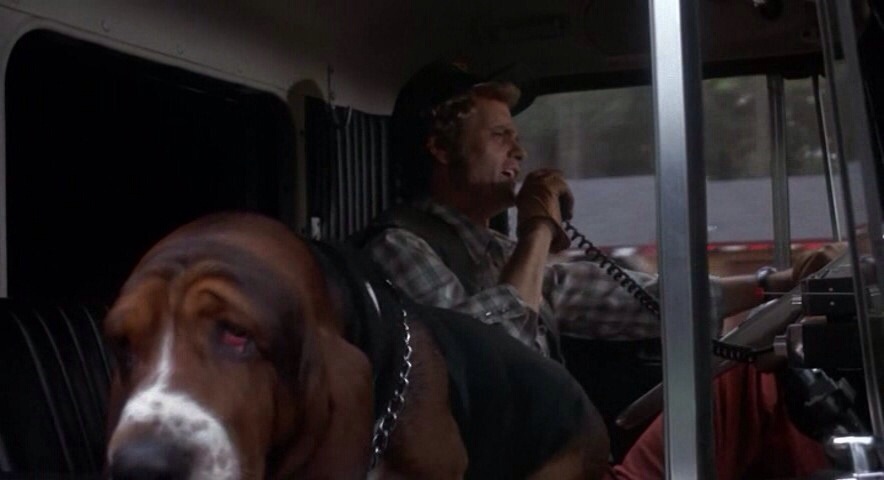
(Photo credit: technocratic.com)
Still, it was an incredibly generous gesture on the part of my friend and neighbor. Once we are done, it will hopefully keep returning the yearly savings for many years to come.
Oh. . .and it’s a Lexus!
Rodney M Bliss is an author, columnist and IT Consultant. He lives in Pleasant Grove, UT with his lovely wife and thirteen children, and across the street from the nicest and most generous neighbors in the world!
Follow him on
Twitter (@rodneymbliss)
Facebook (www.facebook.com/rbliss)
LinkedIn (www.LinkedIn.com/in/rbliss)
or email him at rbliss at msn dot com
Tell your friends about this!
Aaron was a light sleeper. It was a result of fibromyalgia, a condition he had developed several years earlier as the result of a high fever. He had to monitor his activity level very carefully. That’s hard enough when you are an adult, but when you are a 13 year old boy on a snow campout it’s especially difficult.
Aaron made sure that he didn’t over exert himself building the snowcave he was sharing with his brother and his friend Carson. He did everything right. He changed his clothes before getting in his sleeping bag. He put on clean dry socks. He put his clothes for the next day in the bottom of his bag. He made sure his bag was on a ledge with a slight slope and resting firmly on his insulated pad.
And then he climbed in and worked on getting warm. His body started to relax and his sleeping bag was soon a toasty warm. He’d been asleep for an hour or so when he woke up to the sounds of Carson moving around.
Carson hadn’t taken the same precautions Aaron had. His sleeping bag was in the bottom of the snow cave where the water collected. It got soaked and he got wet, an uncomfortable experience in a summer camp. A potentially deadly one in a winter camp.
Are you okay, Carson?
Carson?
Carson was on his way out of the snowcave with nothing but soaked pajamas and no socks or shoes.
Aaron didn’t even think about it. He knew that Carson had been too quiet to wake anyone else up. It was only because he was such a light sleeper that Aaron woke up. He quickly got his boots on, grabbed his coat and left his warm, dry bed to follow his disoriented friend out into the snow.
It was clear that Carson didn’t have a plan. He was simply wandering around in his barefeet. Hypothermia was fogging his brain, and frostbite was setting in making his feet numb.
Come on Carson, let’s go find one of the leaders.
He allowed Aaron to guide him to cave where the leaders were sound asleep. They rushed Carson home where his anxious parents gradually warmed his feet and plied him with hot chocolate and blankets.
Carson’s feet peeled, but he had no lasting damage. Aaron went back to bed that night, but later was recognized by Carson’s family for the role he played in literally saving the life of his friend.
In business we don’t often have life and death decisions. Sure, some do. Those maintaining hospital systems, or 911 emergency systems can have a direct impact on life and death. But for most of us, no one is going to die if we mess up a report. We are not going to save someone’s life if we get our project done a week early.
These aspects of business are important, of course. Just because it’s not life and death doesn’t mean it’s not important.
But, sometimes it’s good to be reminded that life savers come in all shapes and sizes, and we never know when we go to bed at night if we will have the chance to literally save someone from dying. I’m grateful that Aaron was prepared, and didn’t decide that Carson’s welfare was someone else’s responsibility.
Rodney M Bliss is an author, columnist and IT Consultant. He lives in Pleasant Grove, UT with his lovely wife and thirteen children.
Follow him on
Twitter (@rodneymbliss)
Facebook (www.facebook.com/rbliss)
LinkedIn (www.LinkedIn.com/in/rbliss)
or email him at rbliss at msn dot com
Tell your friends about this!
I don’t believe in intermittent issues.
Okay Jason, I’ll bite. Why not?
If you search enough there is always an explanation.
Jason runs the network team for a large telecommunication company. He’s earned his stripes in the trenches. He’s very good at what he does and what he knows.
In this case, he’s wrong.
I mean MOST of the time he’s completely accurate. IT people are always balancing getting the systems back online and searching for root cause of the outage. However, we don’t get paid to do research. Rebooting a server clears everything that’s in memory and reloads the programs from the hard disk. If your server is having an issue because something in memory is corrupt, often rebooting it will clear the problem and at the same time destroy your best evidence for figuring out what went wrong.
Sure, there are still log files and some other data bits, but often rebooting is an admission that “I’m not going to work on figuring out the issue any more. I’m going to try to get my system back up and running.”
And that is what IT engineers get paid to do. . .keep the system online. If you reboot and the problem goes away, but you never figured out what the problem was, you have no way of knowing if the problem will come back. But, customers can once again access your company’s webpage.
That’s what Jason was referring to. If you are willing to take the time and check enough variables you can explain every outage. . .But, not always.
Back when I was supporting WordPerfect Office 3.0, we talked to the programmer one time about how files got named. Every email was a separate file and had long names like
7F851B41
Well, we have an algorithm that runs on the client. It looks at the clock, message length and the information about the Post Office and Domain and then builds it from that.
So, if two people happened to send email at exactly the same time there’s a remote possibility we could end up with duplicate file names?
Sure. . .but you’d never replicate it in testing.
What separates a good engineer from a great engineer is that both of them are good at getting the system back online and keeping it running smoothly. The great engineer has the ability to think outside the box and spot root cause of a problem while still maintaining system integrity.
But they both still have to reboot the server on occasion.
Rodney M Bliss is an author, columnist and IT Consultant. He lives in Pleasant Grove, UT with his lovely wife and thirteen children.
Follow him on
Twitter (@rodneymbliss)
Facebook (www.facebook.com/rbliss)
LinkedIn (www.LinkedIn.com/in/rbliss)
or email him at rbliss at msn dot com
Tell your friends about this!
I really have to figure out how to cut down the length of the management rule titles.
Are you funny? Can you make people laugh? Is it just a polite chuckle, or can you make them shoot milk out their nose?
I love comedy. I have since I was a kid. My mother tells stories about me as a fairly young kid watching old Abbot and Costello movies and just rolling on the floor laughing. As an adult, I enjoy comedy clubs. Stand up comedy is an art form that is not for everyone. And what makes it unique among all performance art forms is that stand up comedy is the only art form that must have an audience to practice.
Over the past several years I’ve seen dozens of comedy shows. I’ve seen Brian Regan in an auditorium with 1000 people. And I’ve seen shows in local bars where the comics outnumber the audience 2:1 or more. I also enjoy youtube clips of comics. This clip by Welsh comedian Rhod Gilbert made me laugh so hard I couldn’t breath.
I especially enjoy open mics. This is where a performer has 3 minutes to be funny or die.
Everyone who gets up at an open mic thinks they are funny. My experience over the past several years is that 80% of them are delusional. They might be able to kid someone and make them laugh, but the ability to stand on a stage and make an audience laugh on cue is hard.
Comics, good comics, have the ability to make virtually anyone laugh and do it on cue. Maybe that is you. Not everyone who is a great comedian is on stage.
So, how do you use humor in the workplace? Joking with peers is typically accepted and expected in most fields and certainly in IT. What about when you are the boss? Can you crack a joke with the staff?
There are a few rules to consider. And the rules are different for managers than for staff. It’s not fair, but get used to it.
1. Never, EVER joke about race, religion or gender. There is no way for a manager to do it in a safe way. Probably throw sexual orientation into that mix as well.
2. Don’t make your employees the butt of jokes.
3. Self deprecating humor is allowed. . sometimes.
4. Never EVER use humor to cover an awkward situation.
If you are concerned with the time someone comes into the office, don’t joke about them “missing the train again.” As a manager, you hold a position of authority. Any joke you make “about” an employee will automatically be interpreted as a joke “at” that employee.
Here’s how I handled it. I told my staff that I would never use humor to cover an awkward situation. If I was teasing them about something, it meant that I really wasn’t worried about it.
Wait. Does that mean if you are NOT teasing us about something that you ARE worried about it?
That would be one of the red flags. Yes.
I once had an employee who screwed up really badly. (He Deserved To Be Fired.) But, he was a good employee and I really wanted to keep him. We worked through a 90 day Performance Improvement Plan. During that time, I never once teased him about the quality of his work, or anything that related to his job. He was fearing for his position. It would have been extremely cruel to laugh at his expense.
Once I set the rule that I won’t tease about serious issues, I’m free to engage in joking with the staff. (While keeping in mind the rules above.) So, you don’t need to completely suppress your personality when you become a manager. But, you should realize that when you take that manager role, the rules change. You give up some of your freedom of expression.
No joke.
Rodney M Bliss is an author, columnist and IT Consultant. He lives in Pleasant Grove, UT with his lovely wife and thirteen children.
Follow him on
Twitter (@rodneymbliss)
Facebook (www.facebook.com/rbliss)
LinkedIn (www.LinkedIn.com/in/rbliss)
or email him at rbliss at msn dot com
Tell your friends about this!
Rodney, Allstate is having an email issue and they need you onsite.
When?
Whenever the next plane can get you there. Preferably a flight today, if not, first thing tomorrow. You’re going to be be there until it’s resolved!
This was our life. We were the ultimate WordPerfect road warriors. (How I Saved the EPA, Don’t Tell Pete.) Each member of the WordPerfect SWAT team had their own speciality. I was an email expert. We had experts in networks, printers, database. . .if WordPerfect had a product they sold to corporate customers, we had someone on the SWAT team that dealt with it.
And we could be sent on a moments notice. These were pre-9/11 days. It was not uncommon to arrive at the airport 15 minutes prior to your plane leaving. I once ran from one end of Salt Lake City International airport to the other and literally had to make them open the door and let me on the plane.
But, the job was fun. We thought we were making a lot of money, and we knew we were making a big difference to our customers.
The SWAT Team had two managers, Chuck and Cary. I never really figured out why the team had two. It was rare to interact with them. We were all experienced engineers, and long time WordPerfect employees. We didn’t need a lot of management coaching or direction.
The managers were not always the most aware of how their actions affected the team. Every Friday on www.staging.rodneymbliss.com I explain one of my management rules. Generally, I’ve developed the rules from experiences that I’ve had. I’ve seen what worked and what didn’t. I’m not sure that Chuck and Cary had a set of management rules. They were very happy being in charge. That attitude showed up in multiple ways, but two instances stand out.
I’ve talked before about the beautiful landscapes here in Utah. And even talked about the view from WordPerfect’s offices like this picture of Building G where support lived.

Ironically, despite the gorgeous vistas, or perhaps because of them, the support cubicles on the 2nd floor, had six foot high walls, even next to the windows. Getting a seat by the window wasn’t necessarily a perk since the partition walls gave you the same drab view as everyone else.
After the team had been up and running for few months, C&C got booted out of their office and moved to cubicles. This isn’t uncommon and wasn’t a demotion for them. Although, like anyone they were disappointed to not have an office.
Imagine our surprise then when we came in the next week and found C&C in window cubicles with 3 foot partition walls. They had a gorgeous view and didn’t even need to stand up for it.
So, how’d you score a half-height wall?
We’re managers.
And that was their entire explanation. They had no concept of what effect it would have on their team. We had all been sitting in these exact same cubes for months without a window. We were told that company policy prevented lower walls. It pretty much soured us all on our managers. They weren’t looking out for us, but they were certainly looking out for themselves!
And that brings me to the second example of terrible leadership. As SWAT team members we went wherever the customers were. Sometimes, it was Nutley, NJ, or the suburbs of Chicago or Detroit. Other times it was downtown Washington DC or Seattle or LA. You pretty much had the luck of the draw when it came to locations.
So, imagine our excitement when a company in Hawaii started to have a network issue. We weren’t sure if it was really a network issue and Edward would go or if it was an email issue and I’d go. Either way, the prospect of a trip to Hawaii on the customer dime was pretty exciting and the entire team followed the developments closely.
Finally the decision was announced: Chuck was going.
Huh? Chuck NEVER went out on calls. And the absolute worst part of our job was the uncertainty. You were flying into a screwed up system and were expected to fix it. The fact that you might get a nice dinner afterwards, and get a chance to see some of the sights was almost an afterthought.
But, Hawaii. We were talking about maybe taking a vacation day or two after solving the issue and before flying back. Who knew when we’d get to Hawaii again, if ever?
And now, we were informed that management would take care of the Hawaii client. It was one more example of inexperienced managers not thinking about how their actions would impact the team.
In a few weeks I’ll address the management rule: Tell Them It’s All About You, Make It All About Them. If you treat your team well, they will move heaven and earth to live up to your expectations. I’ve had teams that literally created miracles because I asked them to. Doesn’t mean I’m a great manager, but I’ve always tried to make it about the team and not about me, the manager.
So what? you might think. It’s one trip. And it’s a trip to HAWAII!! The employees will get over it! Won’t they?
Think about this, it’s been more than 20 years since Chuck snagged that plum assignment to Hawaii rather than let it go to one of his employees. Did they get over it? Sure. Did they ever forget it? Not so far.
Rodney M Bliss is an author, columnist and IT Consultant. He lives in Pleasant Grove, UT with his lovely wife and thirteen children.
Follow him on
Twitter (@rodneymbliss)
Facebook (www.facebook.com/rbliss)
LinkedIn (www.LinkedIn.com/in/rbliss)
or email him at rbliss at msn dot com
Tell your friends about this!
Thank you for reading www.staging.rodneymbliss.com. Whether you are here for the first time, or you have been with me from the beginning, I appreciate everyone who takes a few minutes out of their day to come read my ramblings on leadership, teams, business, computers and the occasional sidetrack into canning or horticulture.
I typically don’t write about writing. There are many wonderful blogs and books about the art and science of putting words on a page, this isn’t one of them.
Today I’m making an exception. Hopefully you are reading this on Wednesday April 16th, starting at 7:00am Mountain Time. That’s when it’s been scheduled for. I’m writing it on Sunday April 13th at 8:30am.
Why is this significant? And why am I risking driving away the few readers who didn’t bail when I said I was going to talk about writing? Because there’s a chance that WordPress will screw up the posting and I’ll break a streak that is very important to me.
This blog started on November 26th, 2012 with Back Where It All Began. But, I was sporadic. I posted a couple of times per week. Starting on March 28th, 2013 I started writing every weekday with (Mom Always Said To Take a Coat).
Since then I have managed to post something every Monday – Friday for 56 weeks in a row. That’s not a hugely impressive streak when I compare it to my friend Howard Tayler. He’s been writing Schlock Mercenary every day since June 12th, 2000, over 13 years. Howard typically has a buffer of about 30 days of comics that are already complete. If he gets down to two weeks, he starts to panic and pushes other stuff aside to get his buffer back up.
But, I am terrible at keeping a buffer. Not traveling for the past year made it easy to be lazy, if you can call writing 500 to 1000 words every day lazy. I’m currently on a trip to San Antonio. I’m not sure if I’ll have internet access. So, I’m writing this buffer.
If you got this Wednesday morning at 7:00am, then my streak is intact. If not, I apologize for messing up my schedule and we’ll start a new streak when I get back on Thursday.
Again, I typically don’t find writing about writing very interesting and I appreciate you reading to the end of this post. But mostly, I appreciate you showing up every day to see what crazy thoughts on management and leadership I came up with.
See you tomorrow.
Rodney M Bliss is an author, columnist and IT Consultant. He lives in Pleasant Grove, UT with his lovely wife and thirteen children.
Follow him on
Twitter (@rodneymbliss)
Facebook (www.facebook.com/rbliss)
LinkedIn (www.LinkedIn.com/in/rbliss)
or email him at rbliss at msn dot com